The Sky This Week, July 20 - July 26, 2026
This is a week to follow the Moon. It swells from a first-quarter half-disk to a bright gibbous, and as it fattens it sweeps across the southern evening sky, pausing beside blue-white Spica on Monday and pressing close to the red heart of the Scorpion, Antares, by Friday.
First quarter on Tuesday brings the sharpest telescope views of the month, when low sunlight throws every crater along the terminator into long shadow. Lower down, Saturn completes its slow slide into the evening hours, Mercury climbs back into the dawn after passing between Earth and the Sun, and the Perseids scatter their first early meteors after midnight. Here's what to look for, night by night.
Also Read: 9 night sky events to see in July 2026
July 20 — The Moon Meets Spica, on a Date Heavy with History
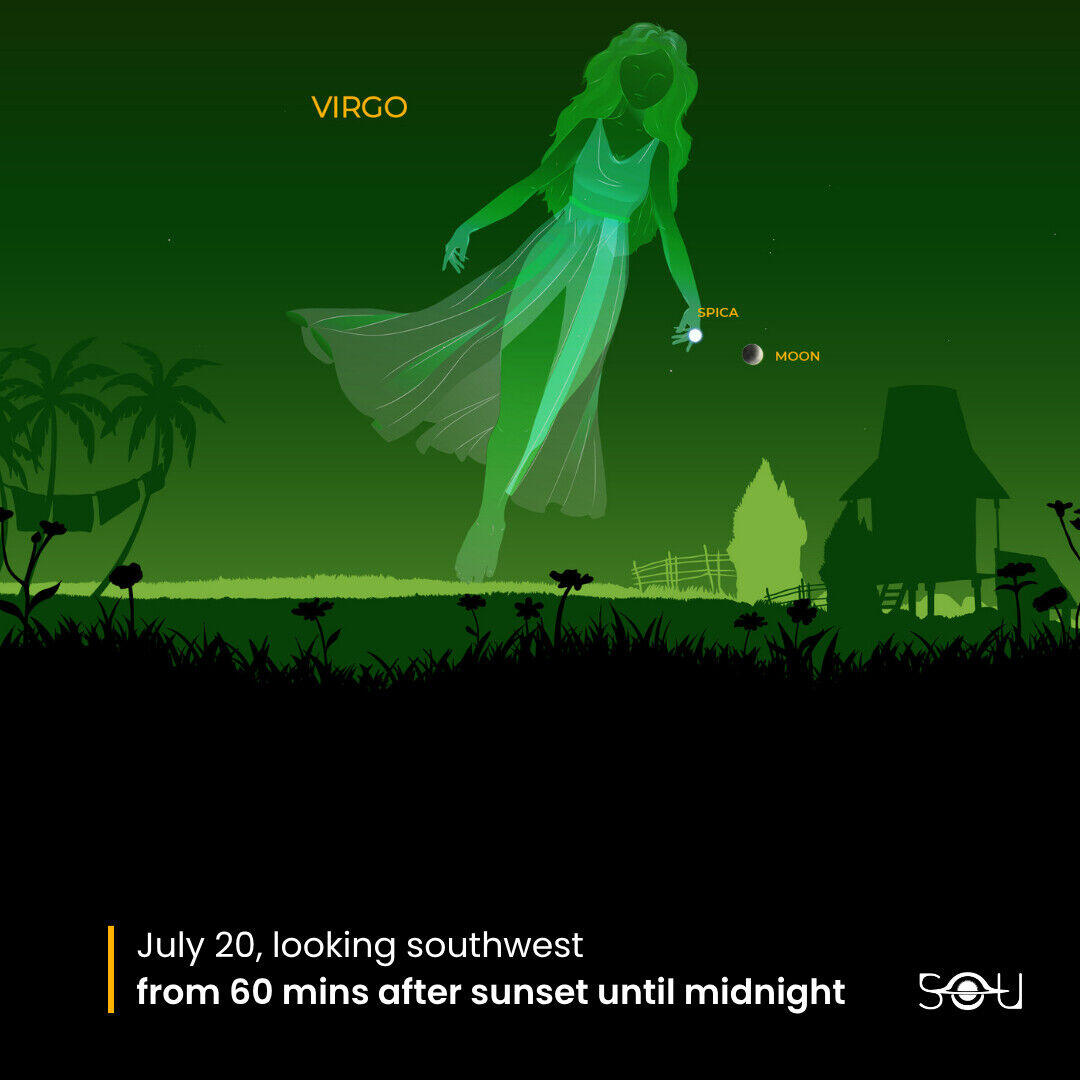
The first quarter Moon appears close to Spica in Virgo in the evening sky, the half-lit disk and the blue-white binary star riding the southwest together until they set near midnight.
While you're looking, consider the date. On July 20, 1969, Apollo 11 landed on the Moon you're watching; Tranquility Base sits on the dark eastern half of tonight's disk, on the boundary of visibility along the terminator. And exactly seven years later, on July 20, 1976, Viking 1 became the first spacecraft to land successfully on Mars and return pictures from its surface.
That makes tonight the 50th anniversary of humanity's first working presence on the Red Planet, which still glimmers faintly in the predawn east near Aldebaran, exactly the kind of unremarkable dot Viking transformed into a place.
July 21 — First Quarter, the Telescope's Favorite Phase
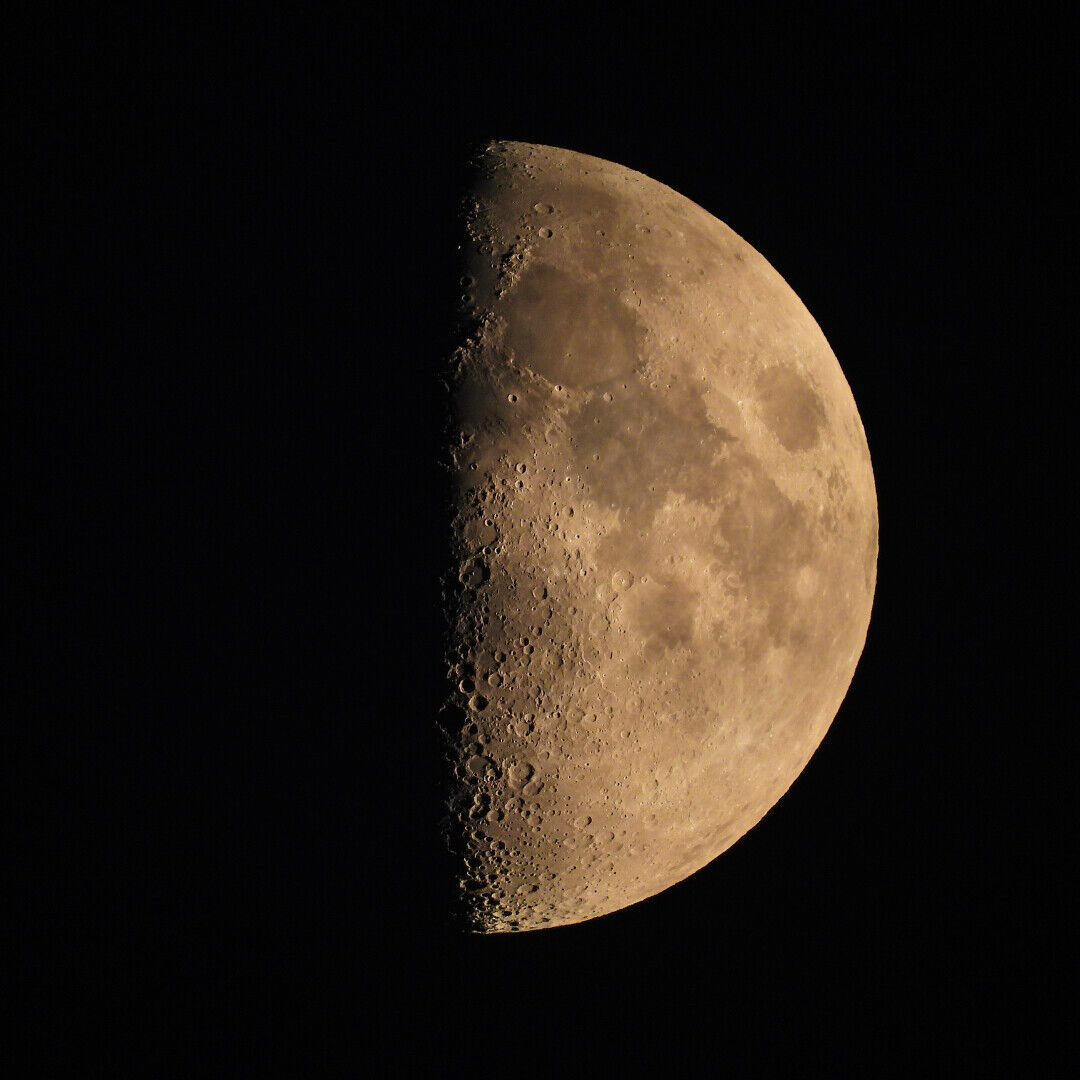
The Moon reaches first quarter in Virgo, and this is the night to point any optics you own at it.
Along the terminator, the line dividing lunar day from night, the Sun rises at grazing angles and stretches every crater wall and mountain into long shadow, giving the surface a relief that vanishes at full Moon.
July 22 — Saturn Crosses Into the Evening
A quiet calendar tonight hides a milestone worth marking: Saturn, which began June rising at 2:30 in the morning, now clears the eastern horizon around midnight, its slow migration into the evening sky nearly complete.
Each night it rises about four minutes earlier, the ordinary arithmetic of Earth's orbit, and by its October 4 opposition, when the rings make their return, it will be up all night. For now, night owls get it without the predawn alarm.
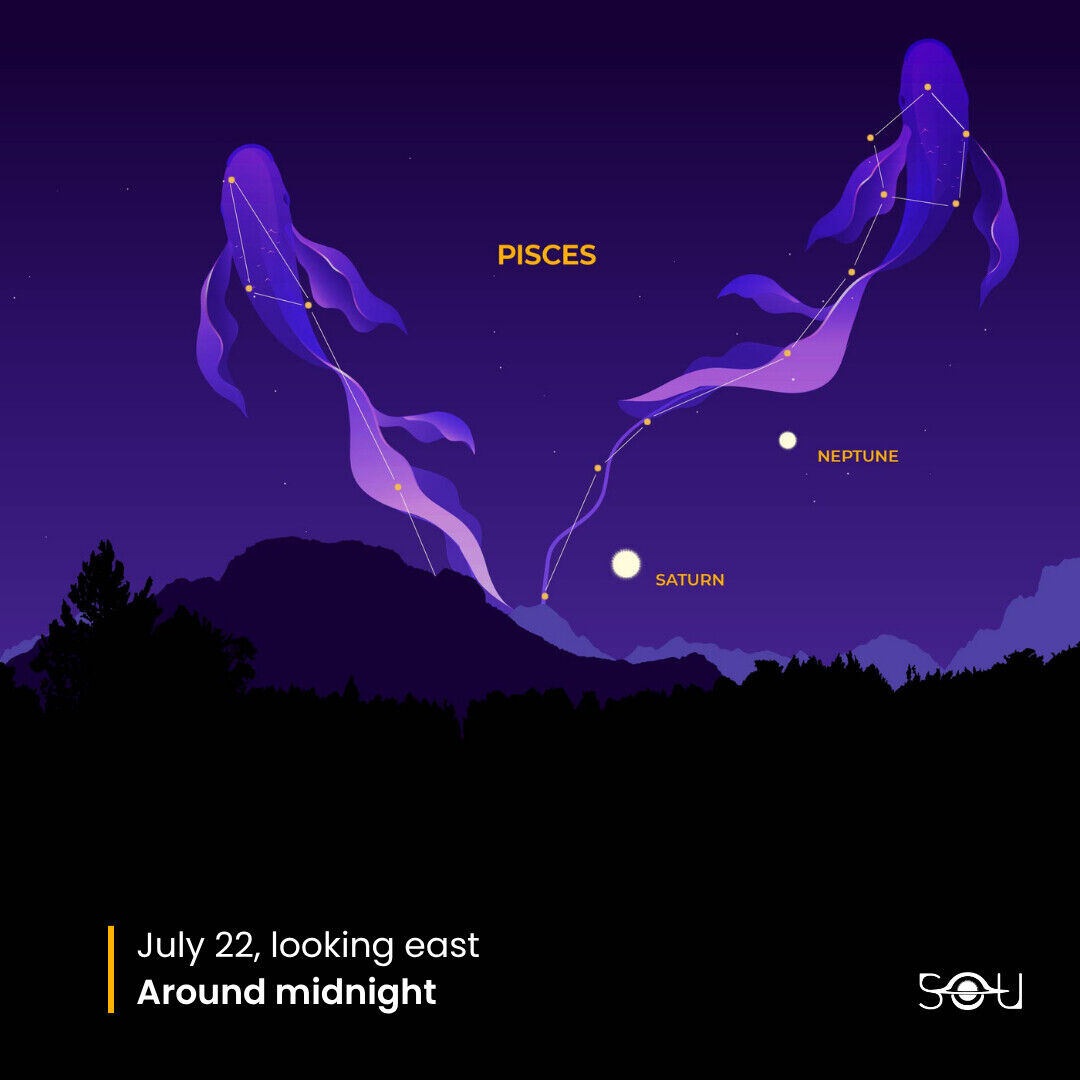
Saturn and Neptune sit close together in Pisces
The planet sits in Pisces, far from bright competition, the most conspicuous object in its region once risen. Telescopically it improves by the week as it climbs higher before dawn, the ring system continuing to widen after 2025's edge-on alignment.
The waxing Moon, meanwhile, brightens the evening sky, making this a planets-and-Moon week rather than a deep-sky one.
July 23 — Mercury Stops, Turns, and Runs Forward Again
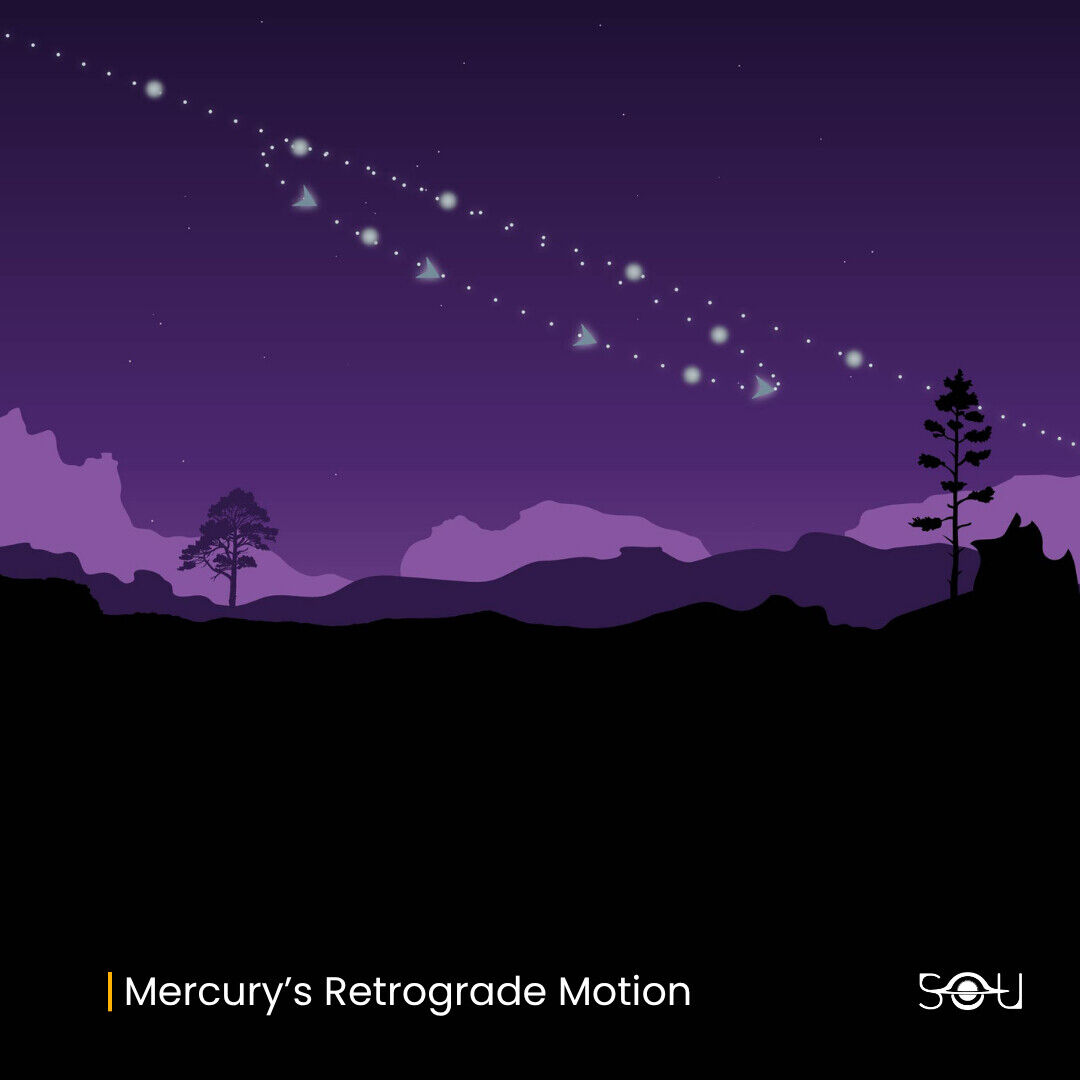
Mercury resumes prograde motion in Gemini in the morning sky. Nothing visible happens, but something conceptually satisfying does. For the past three weeks Mercury has been in apparent retrograde, drifting westward against the stars as it overtook Earth on its faster inside orbit, the same line-of-sight illusion that once tied geocentric astronomers in knots and forced Ptolemy to invent epicycles.
Today the illusion unwinds: Mercury's eastward motion resumes, and the planet, having passed between us and the Sun on July 13, is now climbing into the dawn sky.
Retrograde motion has no influence on anything on Earth, despite a thriving industry claiming otherwise. What it actually marks is geometry, two planets racing on nested tracks, and a turning point you can verify yourself within days, when Mercury reappears low in the east before sunrise.
July 24 — The Bright Moon Crowds Antares Again
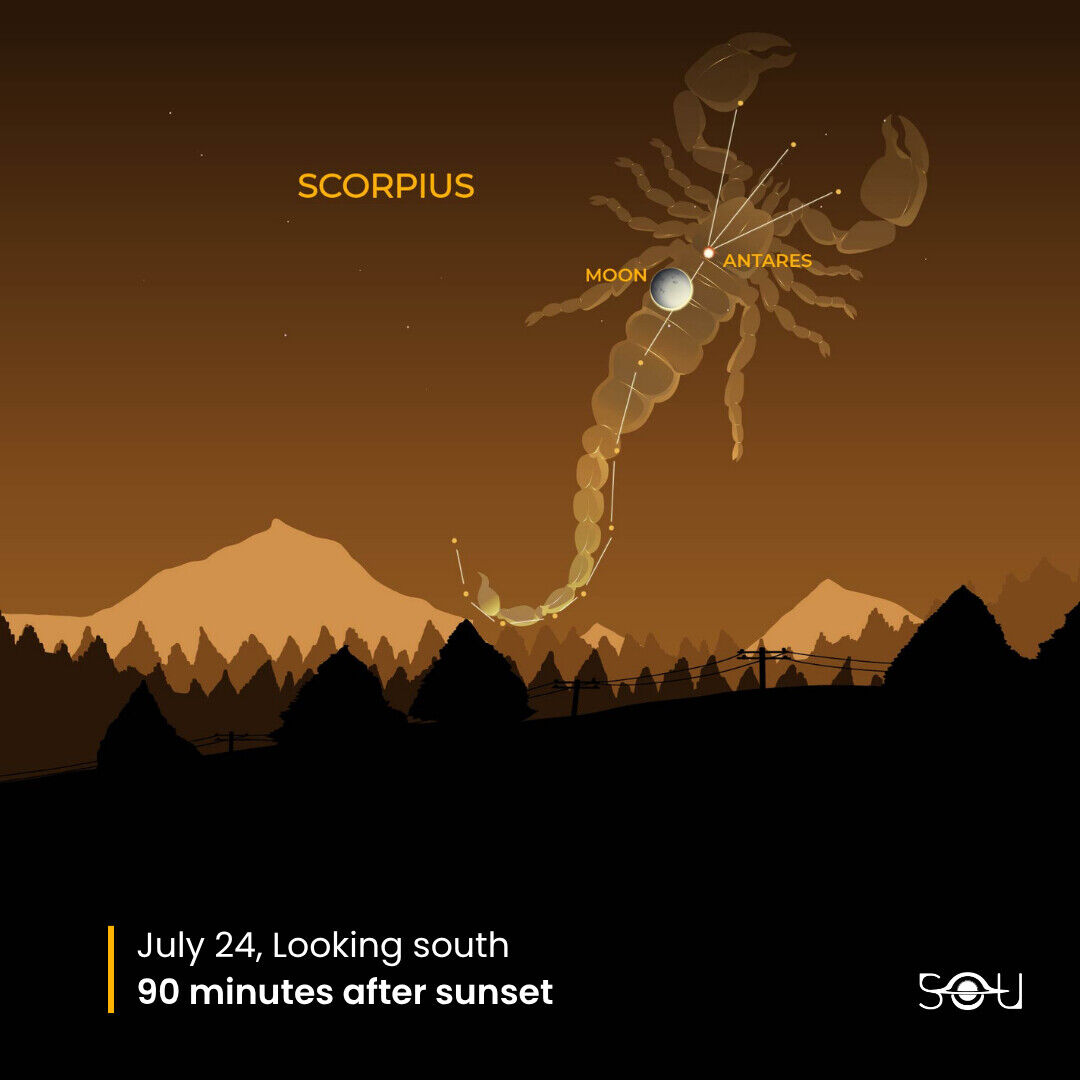
Looking south (overhead Southern Hemisphere)
The Moon returns to the Scorpion's heart. On July 24, the 81-percent-illuminated Moon passes very close to the bright red star Antares, magnitude 1.0, the waxing gibbous glare pressing against the red supergiant in the southern evening sky.
Last month's visit grazed closer and brought an occultation for far-southern latitudes; tonight's pass is a naked-eye pairing for everyone, the Moon's brilliance and the star's stubborn ember-orange making a striking color study. Binoculars help Antares hold its own against the moonlight.
The pair crosses the southern sky together through the evening, Scorpius hanging below like a lantern chain. Southern Hemisphere observers, with the Scorpion overhead, get the more dramatic framing.
July 25 — The First Perseids After Midnight
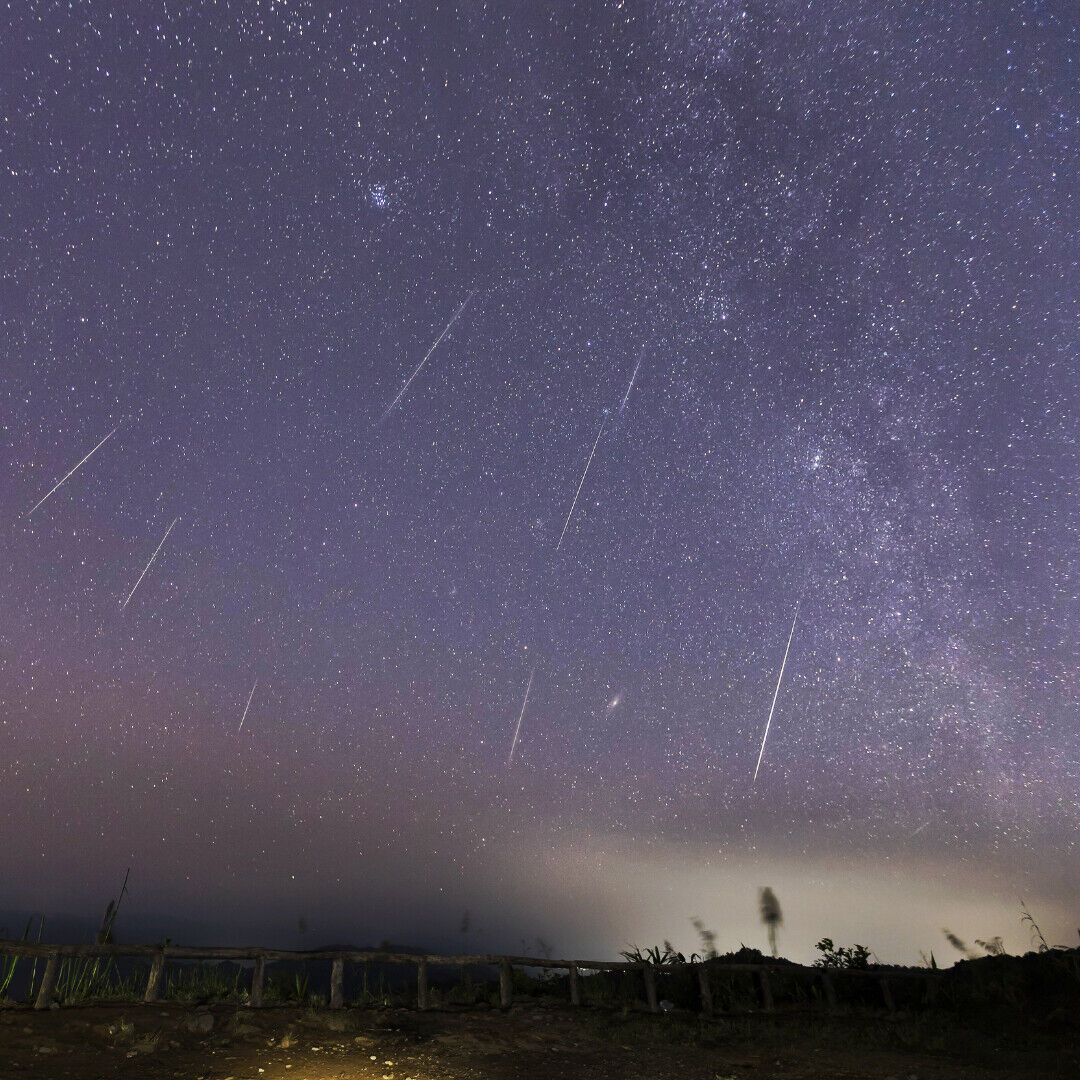
The Perseids are more than a week into their long run now, and although the shower won't peak until the night of August 12, a few early meteors are already slipping out of the northeast after midnight.
Rates are modest this far from maximum, a handful an hour at best under dark skies, and this week's bright gibbous Moon drowns most of them.
Your best chance is the short dark window before dawn, once the Moon has set and the radiant in Perseus stands high. Each streak is a grain of comet 109P/Swift-Tuttle, and a preview of August's moonless main event.
July 26 — Mercury Returns at Dawn
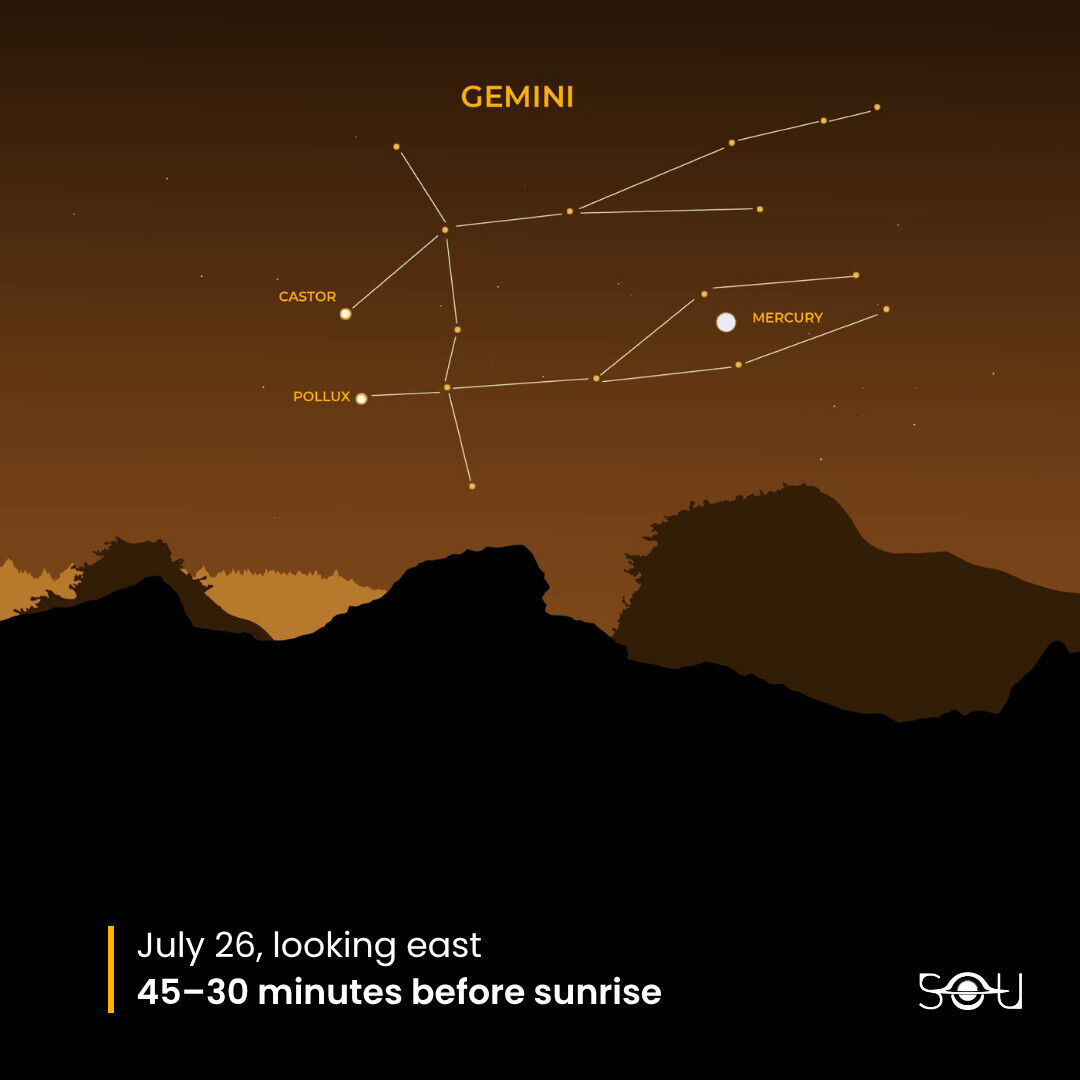
Mercury returns to the morning sky on July 26, 2026
The messenger completes its turnaround. Mercury's morning visibility window opens on July 26 and runs through August 16, the planet surfacing low in the east-northeast in the brightening twilight, 13 days after passing between Earth and the Sun.
Early in an apparition Mercury is a thin crescent through telescopes, dim and challenging; it brightens rapidly as more of its dayside turns toward us, heading for greatest western elongation on August 2, at 19.5 degrees from the Sun, its highest point above the horizon in the morning sky.
Start looking about 40 minutes before sunrise with binoculars, below and left of the Mars-Aldebaran pair. Catching Mercury this week earns extra credit; by next weekend it becomes genuinely easy.
Next week, asteroid Juno reaches opposition in Aquila, July closes with the full Buck Moon on the 29th, and the Southern Delta Aquariids peak on the 30th and 31st as the Perseids gather strength behind them.