-1920x1080.jpg)
The Sky This Week, July 27 - August 2, 2026
July closes loudly. The full Buck Moon rises Wednesday, two meteor showers peak together Thursday in defiance of its glare, and an asteroid named for a Roman goddess reaches its brightest of the year.
Then August opens with Mercury standing at its morning best while a short-period comet rounds the Sun. Through it all, the morning sky keeps quietly assembling the cast for the month's main event, now less than two weeks away. Here's what to look for, night by night.
Also Read: How to see the Milky Way, from anywhere on Earth
July 27 — Asteroid Juno at Opposition
Asteroid Juno reaches opposition on July 27, 2026, when it can be found shining at magnitude +9.1 against the stars of Aquila.
Juno was the third asteroid ever discovered, found by Karl Harding in 1804, and it remains one of the largest bodies in the main belt, an irregular rock roughly 250 kilometers across. At ninth magnitude it is far beyond naked-eye reach but comfortable in 10x50 binoculars from a dark site and easy in any telescope; the trick is telling it from the surrounding stars, which takes a finder chart and two nights of patience, watching for the one "star" in Aquila that moves.
Opposition means Juno rises at sunset and rides the sky all night, at its closest and brightest for the year. Tonight's bright Moon is an obstacle, so the better strategy is to chart the field now and hunt in earnest after midnight moonsets later in the week.
July 28 — The Moon Illusion, on Its Lowest Arc of the Year
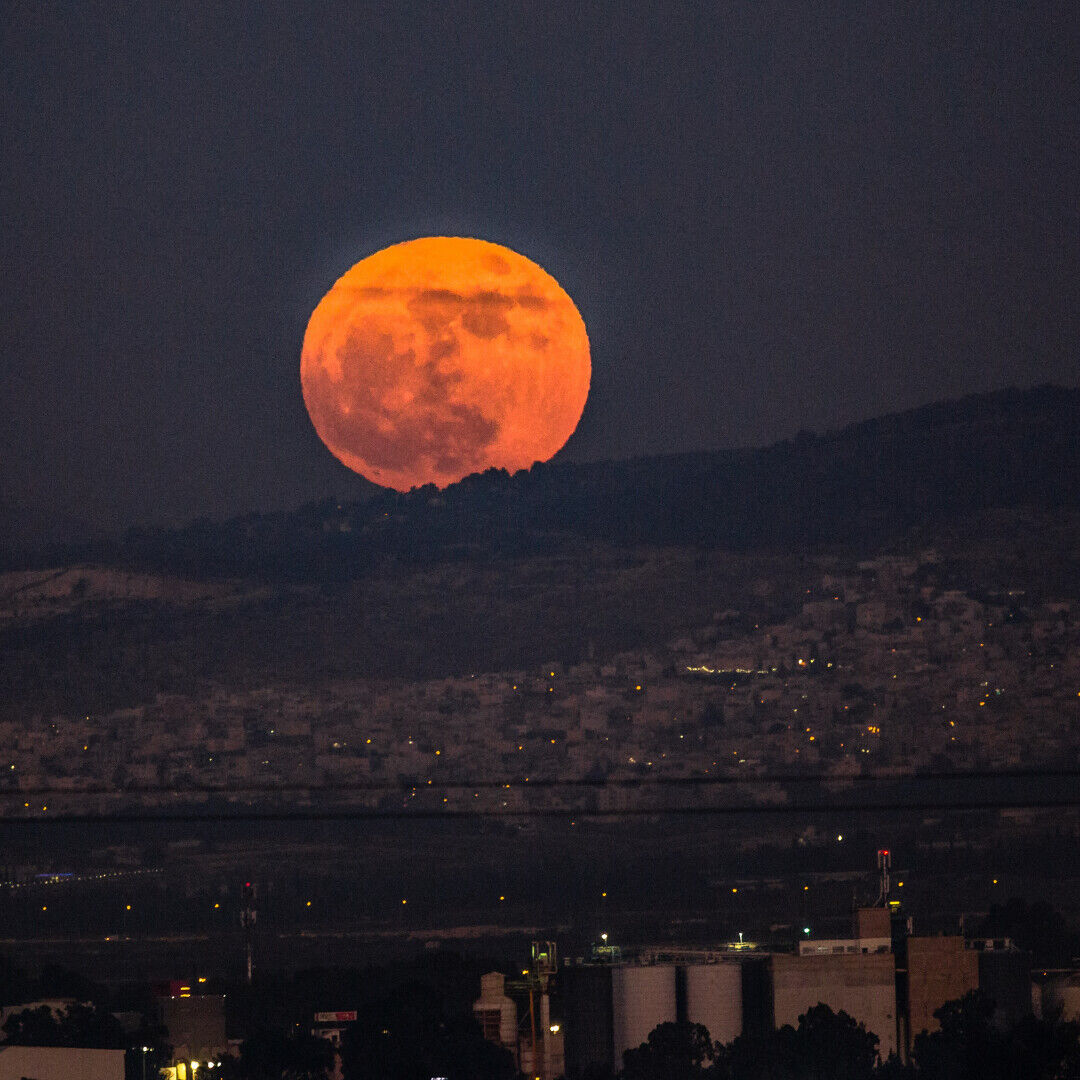
The nearly full Moon rises in the southeast around sunset, and from northern latitudes it will spend the night skimming the horizon on the lowest arc a full-phase Moon traces all year, the mirror image of the Sun's solstice height six weeks ago.
That low passage triggers two famous effects. The first is real: shining through a long slant of atmosphere, the Moon dims and yellows toward amber. The second is in your head. The Moon illusion, the conviction that a rising Moon near the horizon is enormous, has been debated since antiquity, and the proof that it's perceptual is in your pocket: photograph the rising Moon and it shrinks to its true half-degree self.
Hold an aspirin at arm's length and it covers the "giant" Moon completely. Psychologists still argue over the mechanism. Enjoy the illusion tonight; it's the best free special effect in nature.
July 29 — The Full Buck Moon
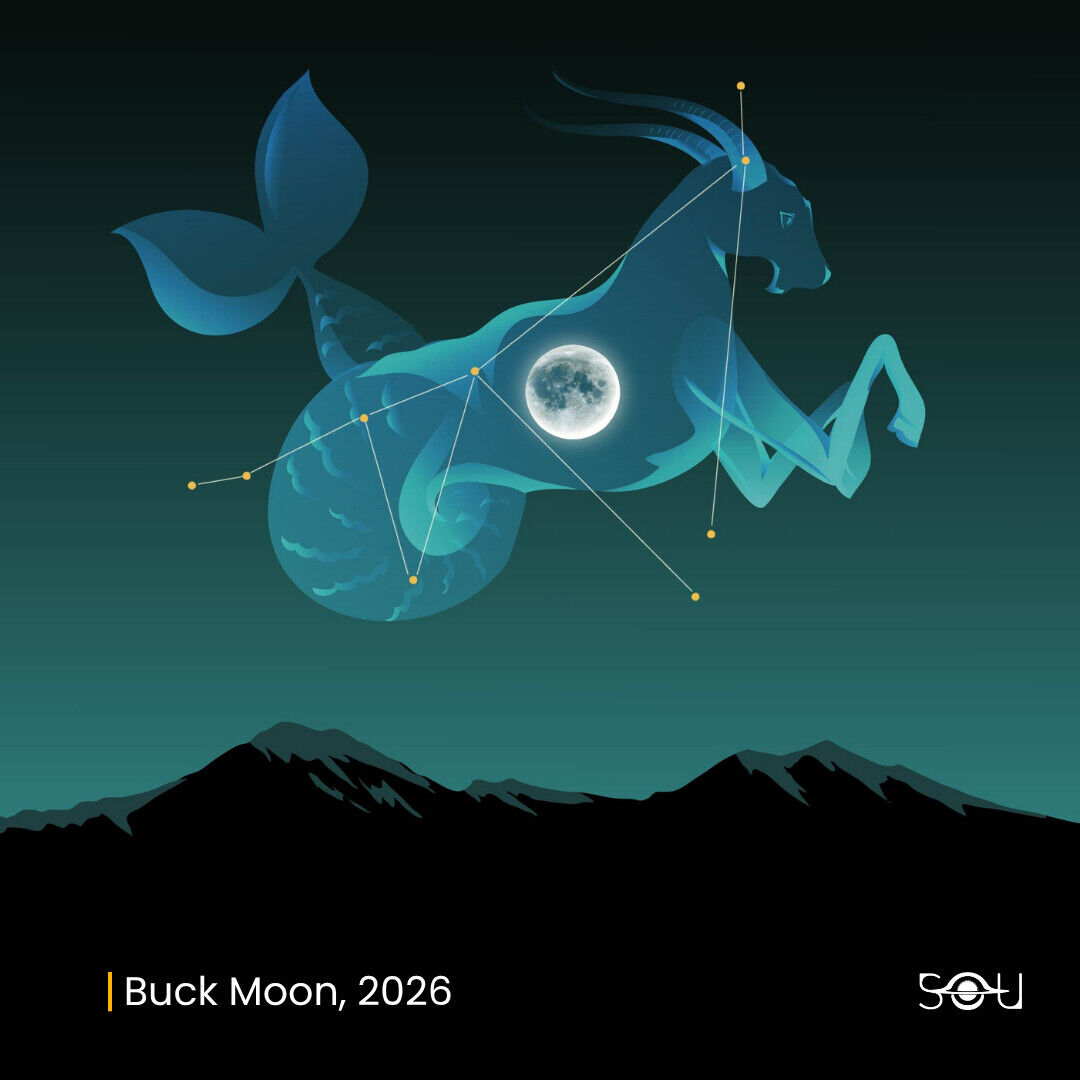
Buck Moon in Capricornus
The Moon reaches full at 14:37 UTC in Capricornus, fully illuminated on the opposite side of Earth from the Sun. Early Native American tribes knew this full Moon as the Buck Moon because male deer begin to grow their new antlers at this time of year; it has also been called the Thunder Moon and the Hay Moon. Both alternate names earn their keep in late July, the season of afternoon storms and harvest.
It rises at sunset, crosses the south during the night, and sets at dawn, washing the sky of faint stars and setting up a deliberate collision with Thursday's meteor showers.
July 30 — Two Meteor Showers Peak Under a Spotlight
A double feature with difficult staging.
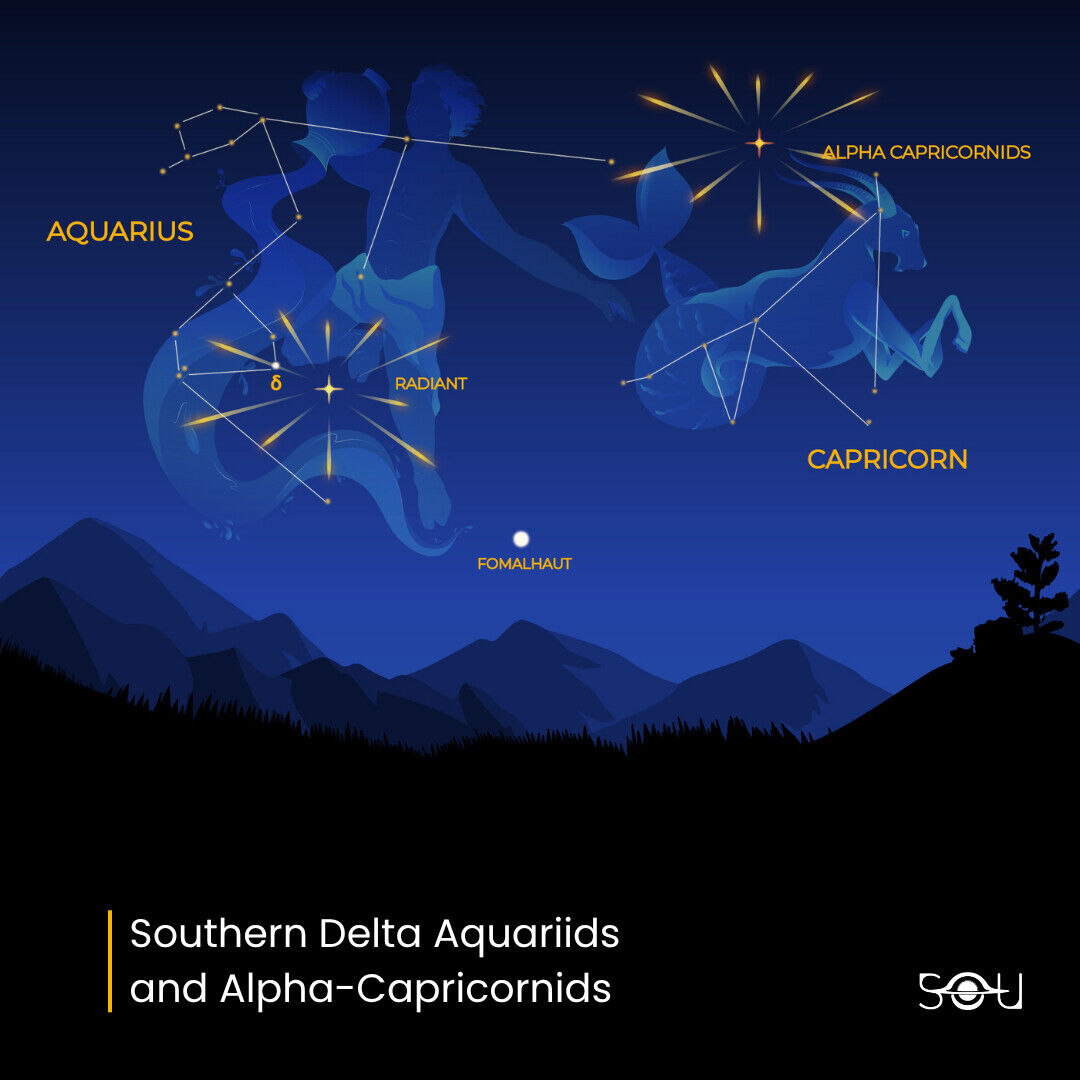
The Southern Delta Aquariid + Alpha Capricornids: Looking south-southeast (radiants in Aquarius/Capricornus), after midnight to dawn
The Delta Aquariids reach maximum activity on July 30, though the shower is known for its lack of a noticeable peak, maintaining consistent activity for several nights; conditions in 2026 are poor, as the peak comes right after the full Moon, which washes out many of the faint meteors.
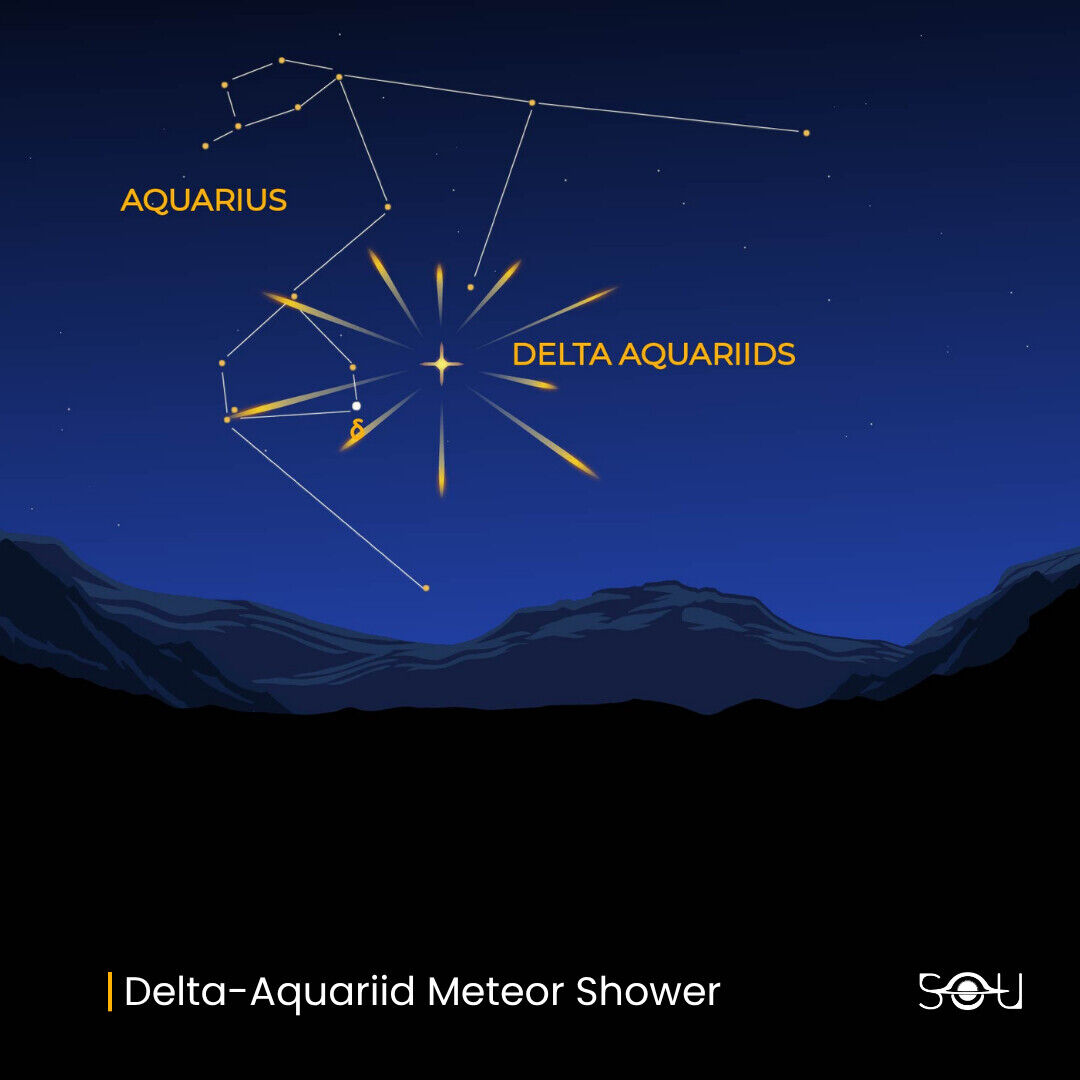
Radiant of the Delta-Aquariid Meteor Shower
The Alpha Capricornids peak the same night with a plateau-like maximum centered on July 31; the shower rarely exceeds 5 meteors per hour, but it is notable for the number of bright fireballs it produces, and it is seen equally well from either side of the equator. The fireballs are the realistic prize. Alpha Capricornid meteors are slow, lazy, and sometimes brilliant enough to ignore moonlight entirely.
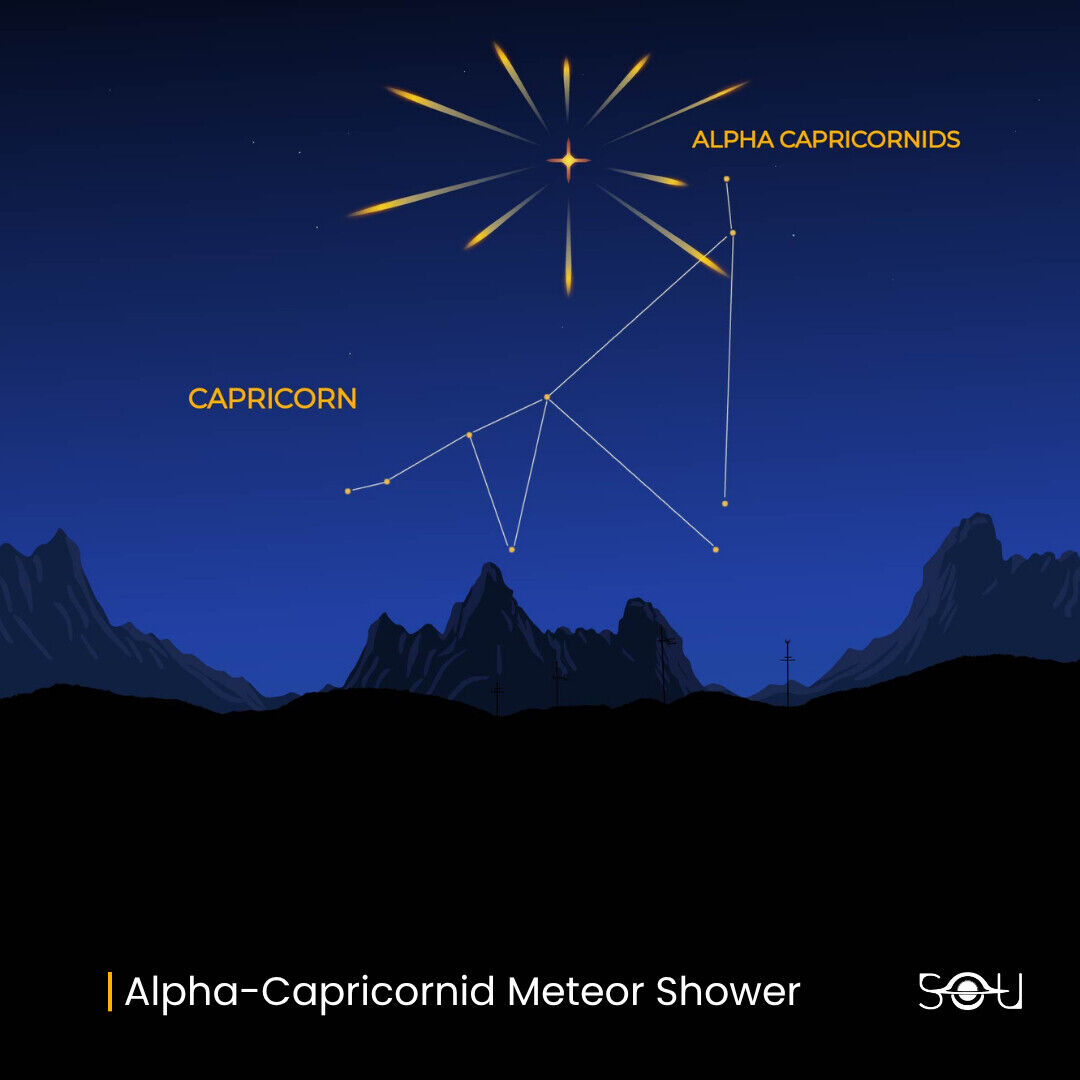
Radiant of the Alpha-Capricornid Meteor Shower
To improve your chances, observe from a spot where the Moon is hidden by a tree, building, or hillside, face away from it, and give the session an hour after midnight. The Southern Hemisphere, where both radiants climb higher, has the advantage.
July 31 — Mercury Brightens at Dawn
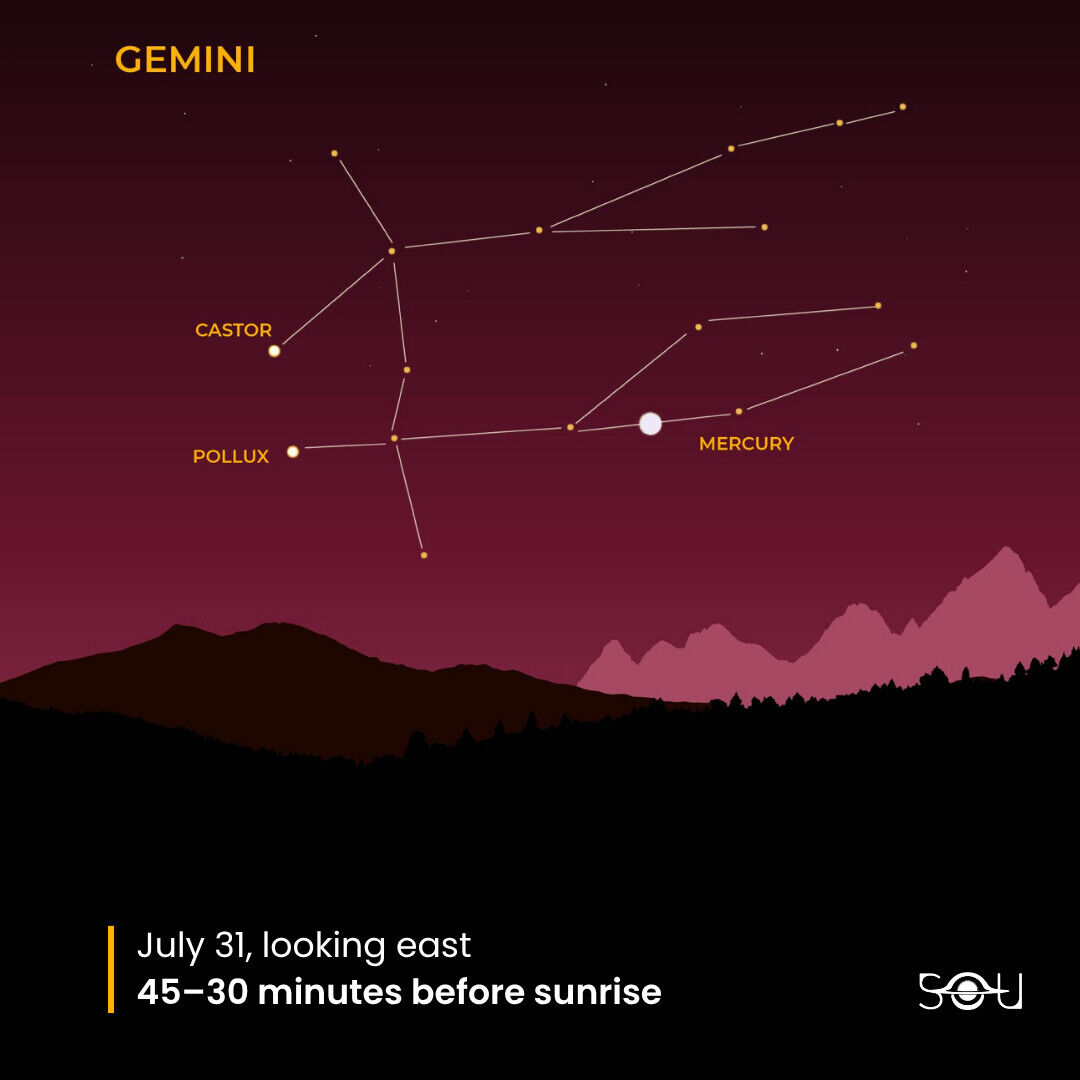
Mercury at dawn on July 31, 2026
The morning star understudy is ready for its cue. Mercury, which returned to the dawn sky last weekend, now stands higher and noticeably brighter each morning in the east-northeast, sharpening toward its weekend peak.
Find it about 40 minutes before sunrise, a solitary spark low in the gathering light, with the Mars-Aldebaran pair and the Pleiades well above it and Saturn blazing higher still in the south-southeast. Through a telescope Mercury shows a thickening crescent, the same phase behavior Galileo used on Venus to dismantle the Earth-centered cosmos.
Northern observers face the usual caveat: the shallow summer ecliptic at dawn keeps Mercury low, so a clear horizon matters more than optics.
August 1 — The Morning Sky Assembles
No single event tonight, but step out before dawn and count.
Mercury hangs low in the east-northeast. Mars glows beside Aldebaran under the Pleiades. Saturn shines high in the south-southeast, with Neptune lurking telescopically nearby in Pisces, and Uranus sits between Mars and the Pleiades for binocular hunters. That is five planets occupying the morning sky at once, and they are converging on something: a six-planet alignment on August 12, when the waning Moon and the Perseids join the same predawn stage.
This week is the rehearsal, and it rewards early risers with the year's best argument for setting a 4:30 alarm. The waning gibbous Moon, rising late in the evening, slides into Pisces by the weekend on its way to join the gathering.
August 2 — Mercury at Its Morning Best, and a Comet Rounds the Sun
Mercury reaches greatest western elongation of 19.5 degrees from the Sun, its highest point above the horizon in the morning sky; look for the planet low in the eastern sky just before sunrise.
This is the payoff morning, the easiest Mercury sighting until autumn, though at 19.5 degrees it is a modest elongation and binoculars still help pull the planet out of the twilight. Sharing the date, comet 10P/Tempel 2 reaches perihelion on August 2, swinging through the closest point of its five-year orbit.
Tempel 2 is one of the old reliables of comet astronomy, discovered in 1873 and observed on dozens of returns; it typically brightens to around tenth magnitude, a telescope target rather than a spectacle, but a chance to see a genuine comet with modest equipment. Check current brightness estimates and charts before hunting, as comets keep their own counsel.
Next week, the waning crescent Moon tours the morning planets, passing the Pleiades, Uranus, and Mars in turn, all of it building toward August 12, when a total solar eclipse sweeps across Iceland and Spain and the Perseids peak under a moonless sky.