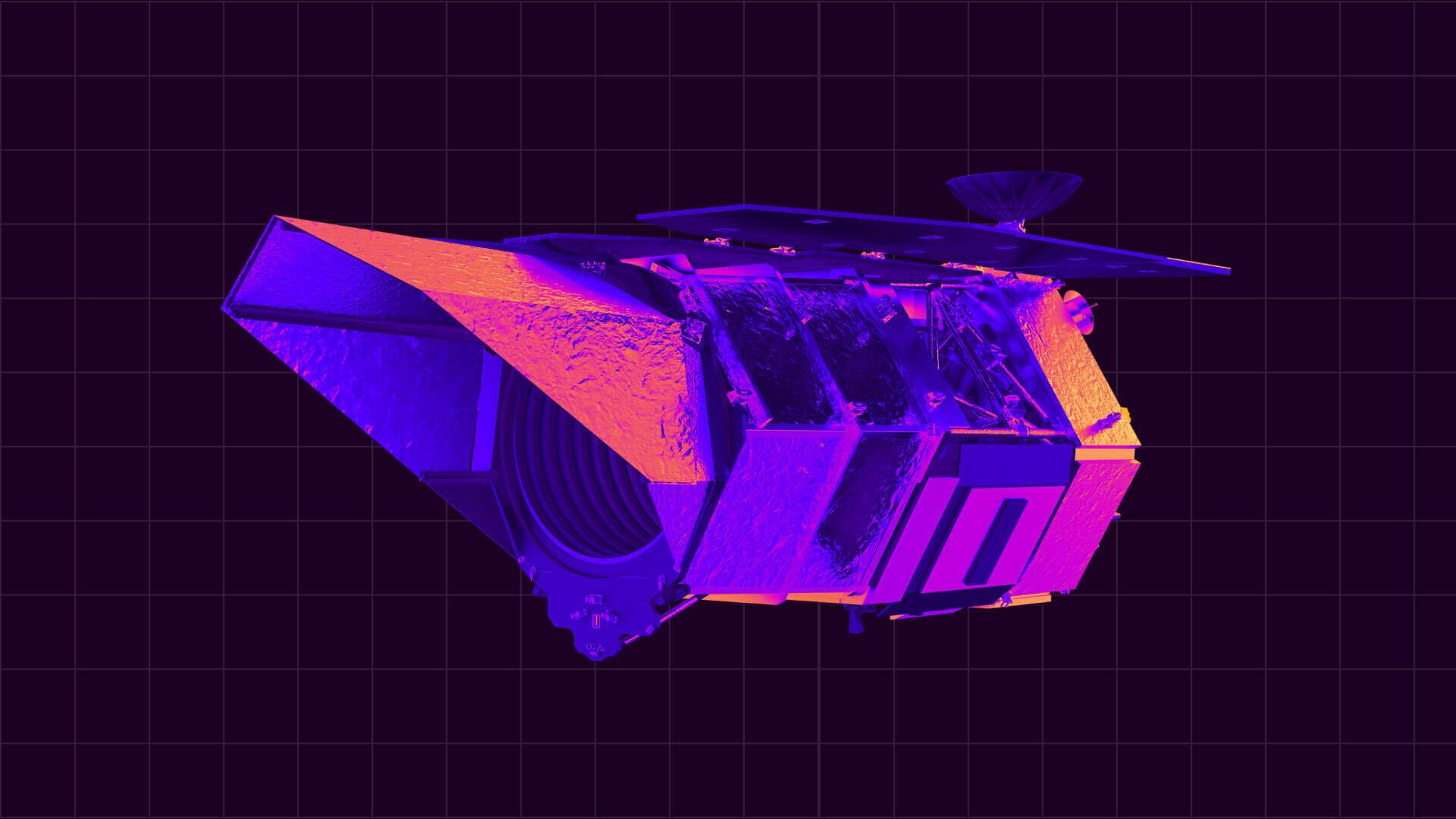
The Roman Space Telescope: NASA's Widest Eye on the Cosmos
On August 30, 2026, NASA will launch its most ambitious observatory yet. The Nancy Grace Roman Space Telescope will survey the cosmos over a thousand times faster than Hubble — in one single, sweeping gaze.
Bridging a Significant Gap
For decades, Hubble has been humanity's most beloved window to the cosmos. It revealed towering pillars of creation inside stellar nurseries, confirmed that supermassive black holes lurk at the hearts of galaxies, and handed us the startling proof that our universe is not merely expanding — it is accelerating. Then came the James Webb Space Telescope (JWST) in 2022, pushing deeper into infrared light and further back in time, showing us the universe's first galaxies glowing in the dark.
And yet both telescopes share a quietly frustrating limitation. Their field of view is tiny. Imagine trying to understand a city by peering at it through a straw. Hubble's famous Deep Field image — one of the most studied pictures in history — covers a patch smaller than a grain of sand held at arm's length. JWST's view is even narrower. To map even a modest stretch of the cosmos with either telescope would take decades of uninterrupted observing.

Wavelength coverage of some of the most powerful space telescopes.
This is exactly the gap Roman was built to fill. Dark energy — the mysterious force pushing galaxies apart at an ever-quickening pace — cannot be understood by staring at small patches. You need billions of galaxies, spread across vast distances and billions of years. That demands a telescope that can see wide, not just deep. NASA associate administrator Nicky Fox described the urgency well: "Within our lifetimes, a great mystery has arisen about the cosmos: why the expansion of the universe seems to be accelerating. There is something fundamental about space and time we don’t yet understand, and Roman was built to discover what it is"
The Woman Behind the Name
Nancy Grace Roman was born in Nashville, Tennessee, on May 16, 1925. By seventh grade she had already decided she would become an astronomer. Her love of the night sky began on childhood walks with her mother, tracing constellations overhead and watching the Northern Lights shiver across the dark.
The world was not especially welcoming. She was told repeatedly that women simply could not be scientists. Her high school counsellor tried steering her away from algebra toward Latin. A college professor, offering what he considered high praise, told her she "might" make it as a woman in physics. Roman took that backhanded compliment and ran with it, earning her doctorate from the University of Chicago in 1949 and joining a brand-new agency called NASA in 1959, six months after its founding.
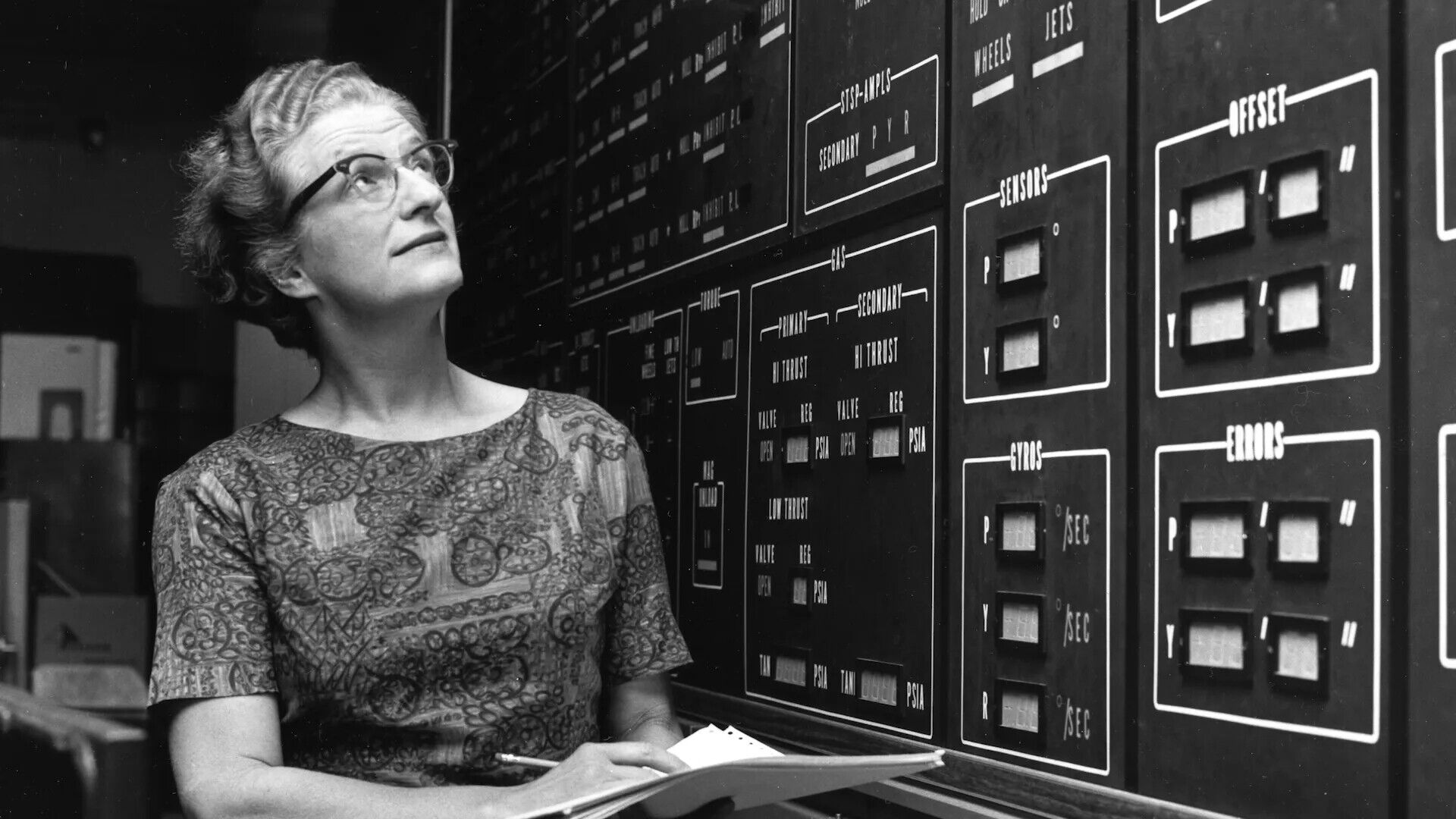
Nancy Grace Roman, shown here at NASA's Goddard Space Flight Center in approximately 1972, was the first female executive and the first Chief of Astronomy at NASA.
There she became NASA's first Chief of Astronomy and the first woman to hold an executive position at the agency. Her greatest achievement was one of the most consequential acts of scientific lobbying in modern history: she convinced a skeptical Congress to fund a large, space-based telescope. She gathered astronomers and engineers in the same room, defined the telescope's minimum scientific specifications herself, and championed the project all the way to Capitol Hill. That telescope became Hubble. Her colleagues called her the "Mother of Hubble."
Roman retired in 1979, eleven years before Hubble left the ground, and followed its journey closely until her death on December 25, 2018. In May 2020, NASA renamed its next great observatory — previously known as WFIRST — in her honor. She spent her entire career building tools so others could see farther. Now the telescope bearing her name is about to see even farther, carrying forward her legacy.
Goals of the Mission
Roman has three overarching science goals, each targeting an unresolved question at the edge of human knowledge.
The first is dark energy. The universe's expansion is speeding up — a discovery that stunned astronomers in the 1990s and has never been adequately explained. Roman will observe hundreds of thousands of supernovae and survey billions of galaxies, mapping how cosmic structure has evolved over billions of years to determine whether dark energy is a fixed constant or something that has shifted over time. The answer could rewrite the laws of physics.
The second is mapping dark matter. Everything we can see — every star, planet, gas cloud, and galaxy — makes up just 5% of the universe's content. Dark matter constitutes most of the rest, detectable only through the gravitational pull it exerts on visible things. Roman will use gravitational lensing, watching how massive structures bend and distort the light of background galaxies, to map dark matter across cosmic time.
The third is hunting new worlds. Roman will use two techniques at once. The transit method — detecting faint, periodic dimming as a planet crosses its star — should reveal roughly 100,000 new planets. Gravitational microlensing, which watches a foreground star briefly magnify a background star, should uncover more than 1,000 additional worlds, particularly planets in wider orbits that other missions have largely missed.
Roman will also be a machine for the unexpected. Transient events — stellar explosions, fast radio bursts, colliding neutron stars — flare and vanish within hours or days, and only a wide-field telescope moving at Roman's speed can reliably catch them. Program scientist Dominic Benford says: "We'll trace the history of the universe through exploding stars."
How it Works
At Roman's heart sits a 2.4-metre primary mirror, the same diameter as Hubble's. The similarity ends there.
The Wide Field Instrument (WFI) is a 300-megapixel camera covering wavelengths from 0.48 to 2.3 micrometers. In a single exposure it captures a patch of sky roughly the apparent size of a full Moon — about 100 times larger than Hubble's main camera can see at once. Overall survey speed works out to more than 1,000 times faster than Hubble's. Over its five-year primary mission, the WFI should generate around 20 petabytes of data, roughly 50 times more than Hubble has produced in 35 years.
The WFI will conduct three core surveys accounting for about 75% of observing time. The High-Latitude Wide-Area Survey will chart more than a billion galaxies. The High-Latitude Time-Domain Survey will photograph the same region repeatedly, capturing enormous numbers of Type Ia supernovae — the "standard candles" used to measure cosmic distances. The Galactic Bulge Time-Domain Survey will monitor hundreds of millions of stars toward the Milky Way's dense heart for microlensing signatures.
The second instrument, the Coronagraph Instrument (CGI), was built at NASA's Jet Propulsion Laboratory to photograph planets around other stars directly. A planet next to its star is like a firefly beside a lighthouse. The CGI cancels the star's glare by generating a precisely tuned "opposite" wave so the two cancel out, leaving only the faint reflected glow of any nearby planet. It can detect worlds 100 million times fainter than their star.
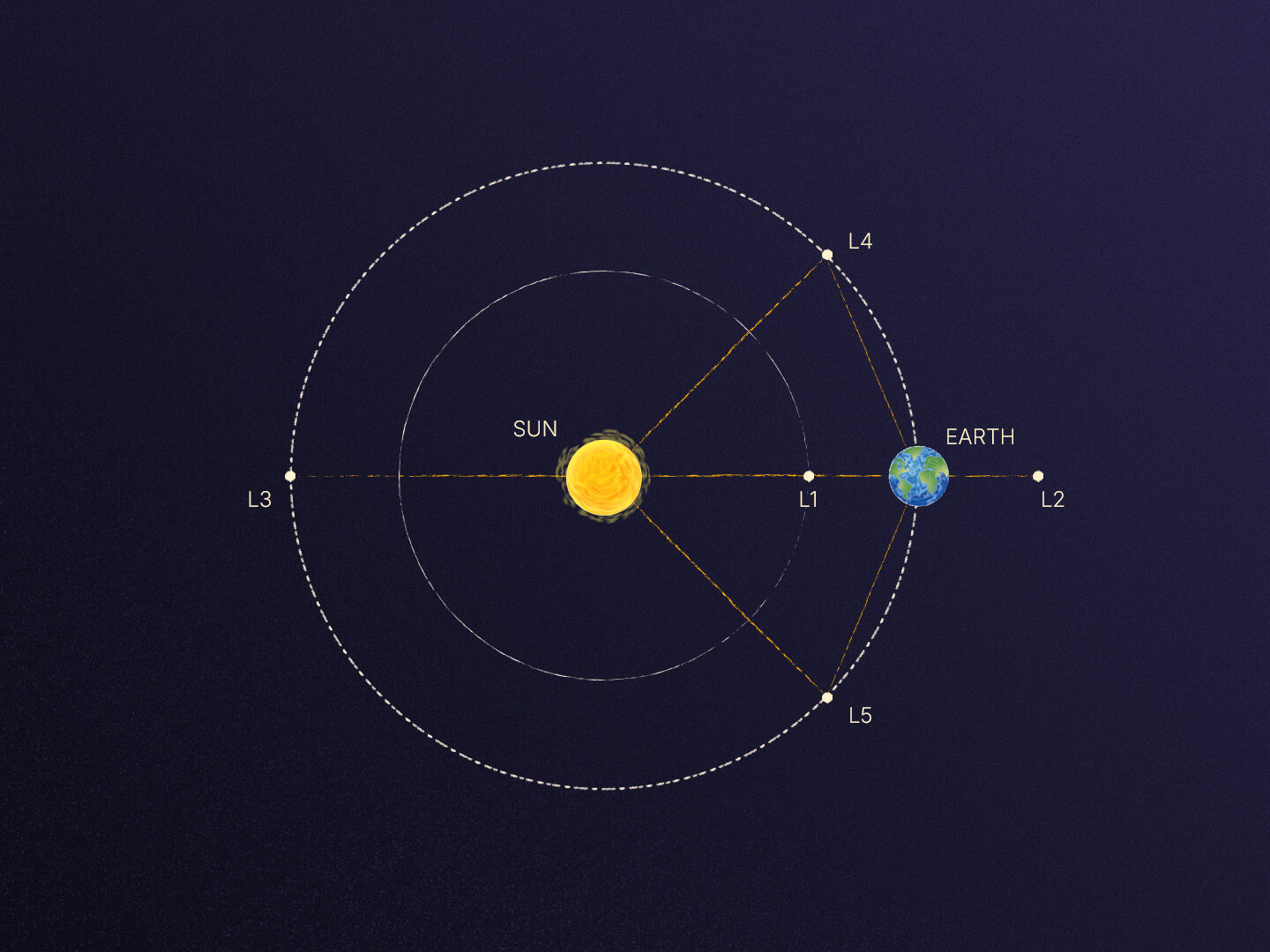
Five Lagrange points of the Earth-Sun system.
Roman will operate from Sun-Earth Lagrange Point 2 (L2), about 1.5 million kilometers from Earth, sharing this cold, stable orbit with Webb. L2 is one of five points in space where the gravitational pull of the Sun and Earth balance out, letting a spacecraft stay in a fixed position relative to both without burning much fuel to hold its orbit. It also keeps Roman's instruments shielded from the Sun, Earth, and Moon all at once — critical for an infrared telescope, since heat from nearby sources would otherwise wash out the faint signals it's trying to detect. The tradeoff is distance: L2 is far beyond the reach of any repair mission. Roman has to work right the first time.
Roman, Hubble, and JWST

Comparison of mirror and wavelength coverage between Hubble Space Telescope, the Roman Telescope and the James Webb Space Telescope.
Roman shares its mirror size with Hubble — both are 2.4 meters across — but the similarities largely end there. Hubble, launched in 1990, orbits close to Earth and remains unmatched for ultraviolet imaging. JWST, launched in 2021, carries a much larger 6.5-metre mirror and sees deepest into the infrared. Roman's superpower is neither depth nor ultraviolet reach, but breadth: sky coverage that would take Hubble decades, Roman can finish in a fraction of the time.
The real excitement lies in how they work together. Roman will sweep enormous swaths of sky, flagging unusual galaxies, rare transients, and exoplanet candidates. Hubble can then zoom in with ultraviolet detail; JWST can examine them in deep infrared. Together they cover the spectrum from ultraviolet to mid-infrared.
Timeline of the Mission
In 2010, the US National Research Council's Decadal Survey named WFIRST the top priority for the next decade of American astronomy. In 2012, NASA received an unexpected windfall: two surplus 2.4-metre mirror assemblies donated by the National Reconnaissance Office, giving the mission its Hubble-sized mirror at a fraction of the usual cost.
Official approval came in 2016. The renaming followed in 2020, Critical Design Review in 2021, and a substantially completed spacecraft bus by September 2024. On November 25, 2025, technicians at NASA's Goddard Space Flight Center joined the telescope and spacecraft assemblies in the facility's largest clean room — eight months ahead of schedule and under budget.
Through summer 2026, Roman completes final testing before shipping to Kennedy Space Center. The launch window opens at the end of August 2026 aboard a SpaceX Falcon Heavy from Launch Complex 39A. After several months of commissioning at L2, science operations begin in 2027, with the five-year primary mission running through roughly 2032 and a possible extension beyond.
How Roman Will Change Astronomy
Roman is not simply a better version of what we already have. It marks a shift from targeted observations of individual objects to sweeping surveys of the entire cosmos at once.
In five years it should measure light from over a billion galaxies, discover around 100,000 exoplanets by transit alone, catch thousands of supernovae, and map dark matter and dark energy with unprecedented precision. Its images will be so vast that no screen currently in existence is large enough to display them at full resolution.
Perhaps the most honest thing anyone has said about Roman came from senior project scientist Julie McEnery during a press conference: "I very much hope, and in fact, expect, that the most exciting science from Roman is going to be the things that we didn't expect, that we couldn't predict, but that will set the new deep questions for future missions to address"
That is how the greatest observatories work. Nobody planned to use Hubble to discover cosmic acceleration; that discovery found Hubble. Nobody quite anticipated the detail JWST would pull from the universe's first few hundred million years. Roman is poised to hand us something we have not yet thought to ask for.
Nancy Grace Roman spent her life insisting we needed to see more of the universe — not just more clearly, but more of it. She fought for that vision in an era when women were told they had no place in science. She won. The universe is vast. Roman is finally wide enough to look at it whole.
Also Read