-1920x1080.jpg)
The Sky This Week, May 3 - May 9, 2026
This week, the Moon glides past the red heart of Scorpius, dust from Halley’s Comet returns as the Eta Aquariid meteor shower, a quieter stream of Eta Lyrids reaches its brief window, and the Moon’s last quarter phase opens a useful evening window for spring galaxies. Here’s what to look for, night by night.
Read the full report on night sky events in May 2026 here
May 3–4 — The Moon Meets Antares
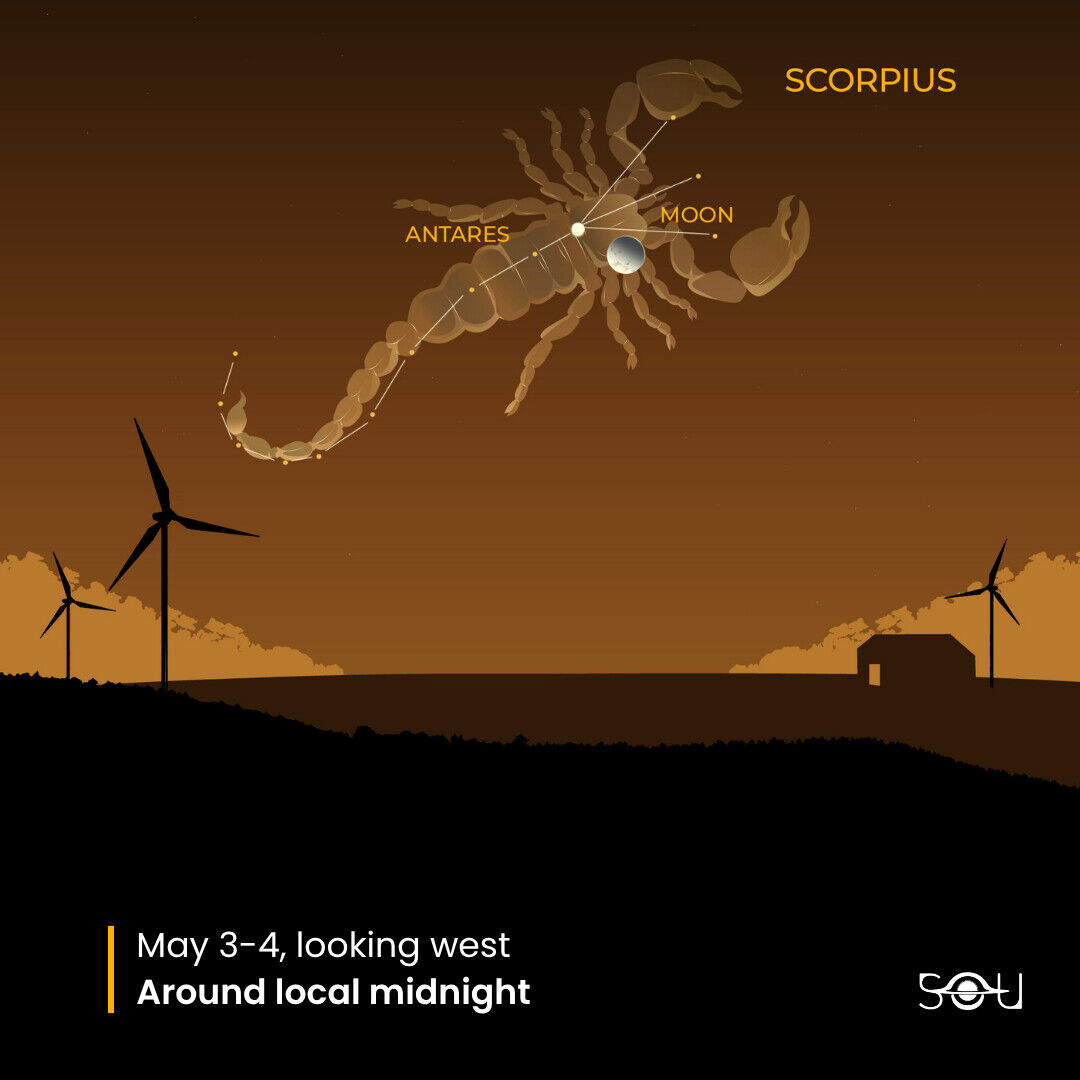
The Moon glides past Antares in Scorpius on May 3, 2026
The week begins with one of the most striking lunar pairings of the month. Late on May 3 into the early hours of May 4, the waning gibbous Moon passes close to Antares, the bright red heart of Scorpius. The closest approach occurs at 02:56 UTC on May 4 (10:56 p.m. EDT on May 3), with the Moon and Antares separated by less than half a degree in the sky.
For Northern Hemisphere observers, Scorpius remains relatively low, especially from higher latitudes. From the Southern Hemisphere, the constellation climbs much higher, making the pairing more impressive.
May 5–6 — The Eta Aquariid Meteor Shower Peaks
The Eta Aquariids are one of the few meteor showers that can be traced directly to one of the most famous objects in the solar system: Halley’s Comet.
Every year, Earth crosses a stream of debris left behind by the comet, and tiny particles burn through our atmosphere as fast, bright meteors. In 2026, the Eta Aquariids peak on the night of May 5–6, with the best viewing in the predawn hours of May 6. NASA also lists May 5 and 6 as the key mornings for watching the shower.
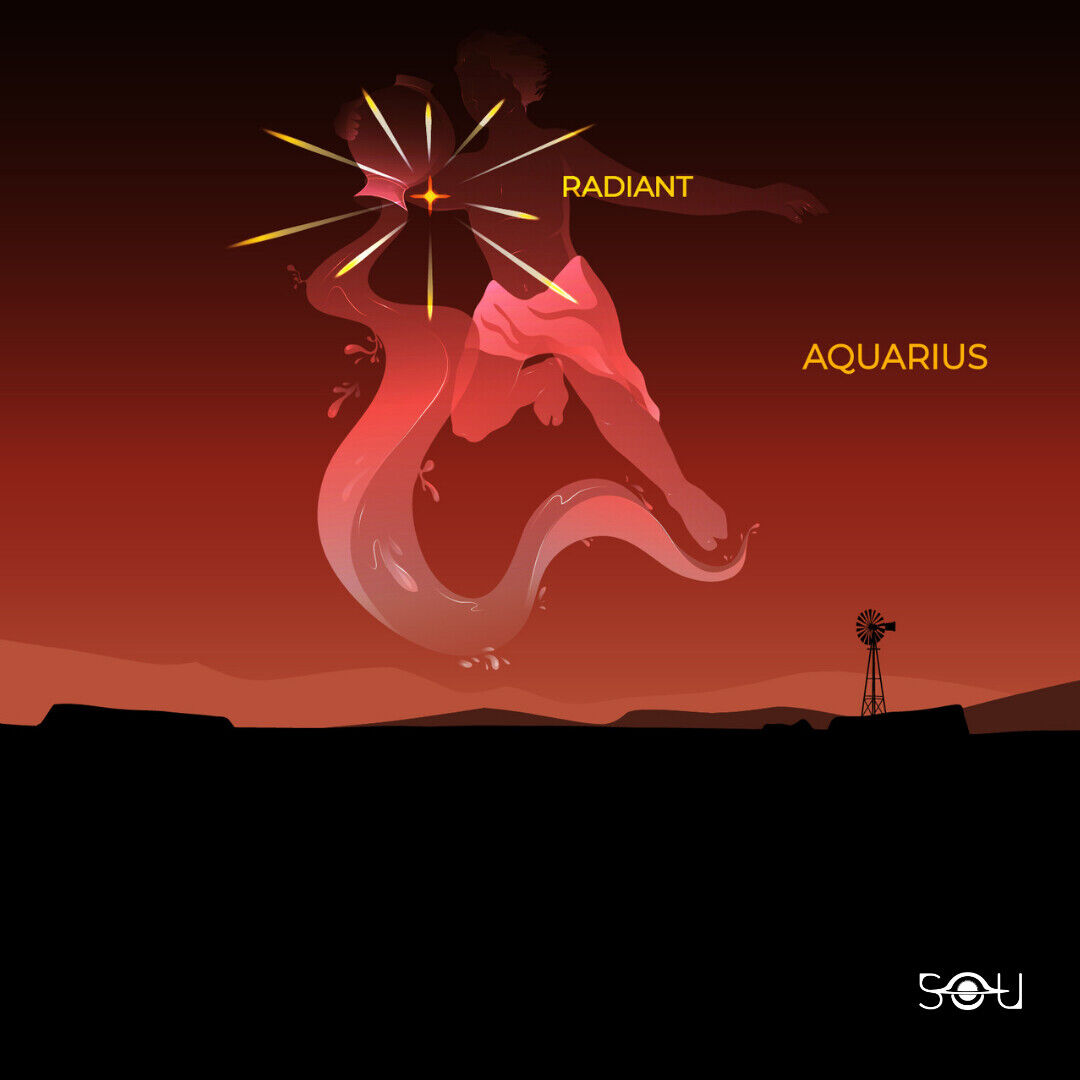
The radiant of the eta Aquariid meteor shower in Aquarius
This is a shower that strongly favours the Southern Hemisphere. From the southern tropics and nearby latitudes, the radiant in Aquarius climbs higher before dawn, allowing more meteors to appear across the sky. From the Northern Hemisphere, the radiant stays lower, so the shower usually produces fewer visible meteors.
There is one complication this year: the Moon. A bright waning gibbous Moon, around 84 percent full, will be in the sky near the peak and will wash out many of the fainter meteors. The shower is still worth watching, but expectations should be realistic. The best strategy is to observe from a dark location, look away from the Moon, and block its glare behind a tree, wall, or building.
No telescope is needed. In fact, optical aid only narrows your view. Lie back, give your eyes at least 20–30 minutes to adapt, and look broadly across the sky.
May 8–9 — The Eta Lyrids
After the Eta Aquariids, a quieter meteor stream reaches its own brief window.
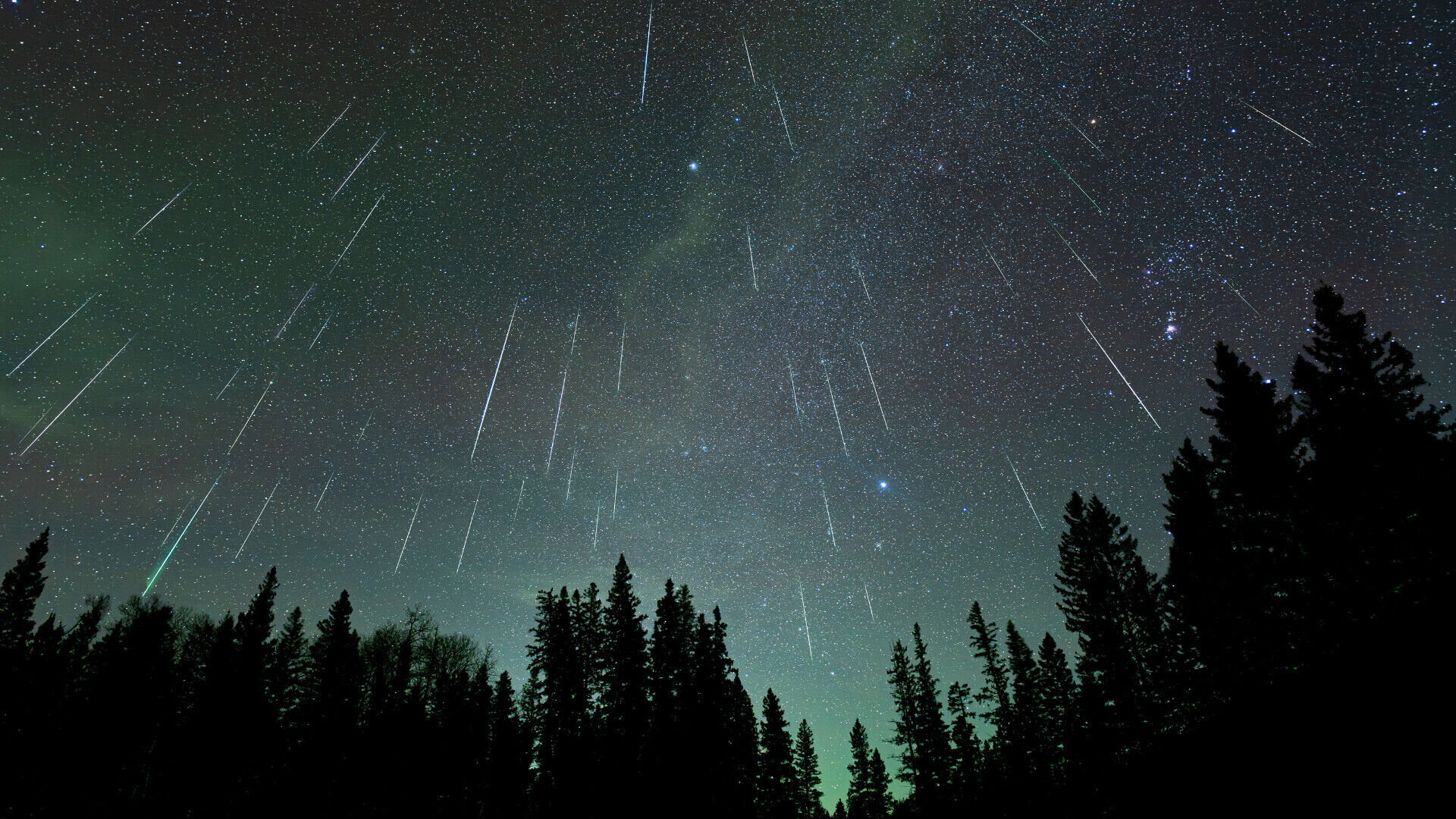
The Eta Lyrids are a minor meteor shower active in early to mid-May, usually peaking around May 9. They are linked to Comet C/1983 H1, also known as IRAS–Araki–Alcock — a comet that made a notably close pass by Earth in 1983. Unlike the Eta Aquariids, this is not a rich shower. At best, it may add only a few meteors per hour under dark skies.
That makes the Eta Lyrids a subtle event rather than a spectacle. The radiant lies near Lyra, a constellation anchored by Vega, one of the brightest stars in the northern sky. This makes the shower better placed for Northern Hemisphere observers, especially in the late night and predawn hours.
May 8–9 — A Good Window for Spring Galaxies
The Moon is still bright this week, but by May 8 and 9, it rises late enough to leave part of the evening sky darker after twilight. That creates a useful window for deep-sky observing before moonrise.
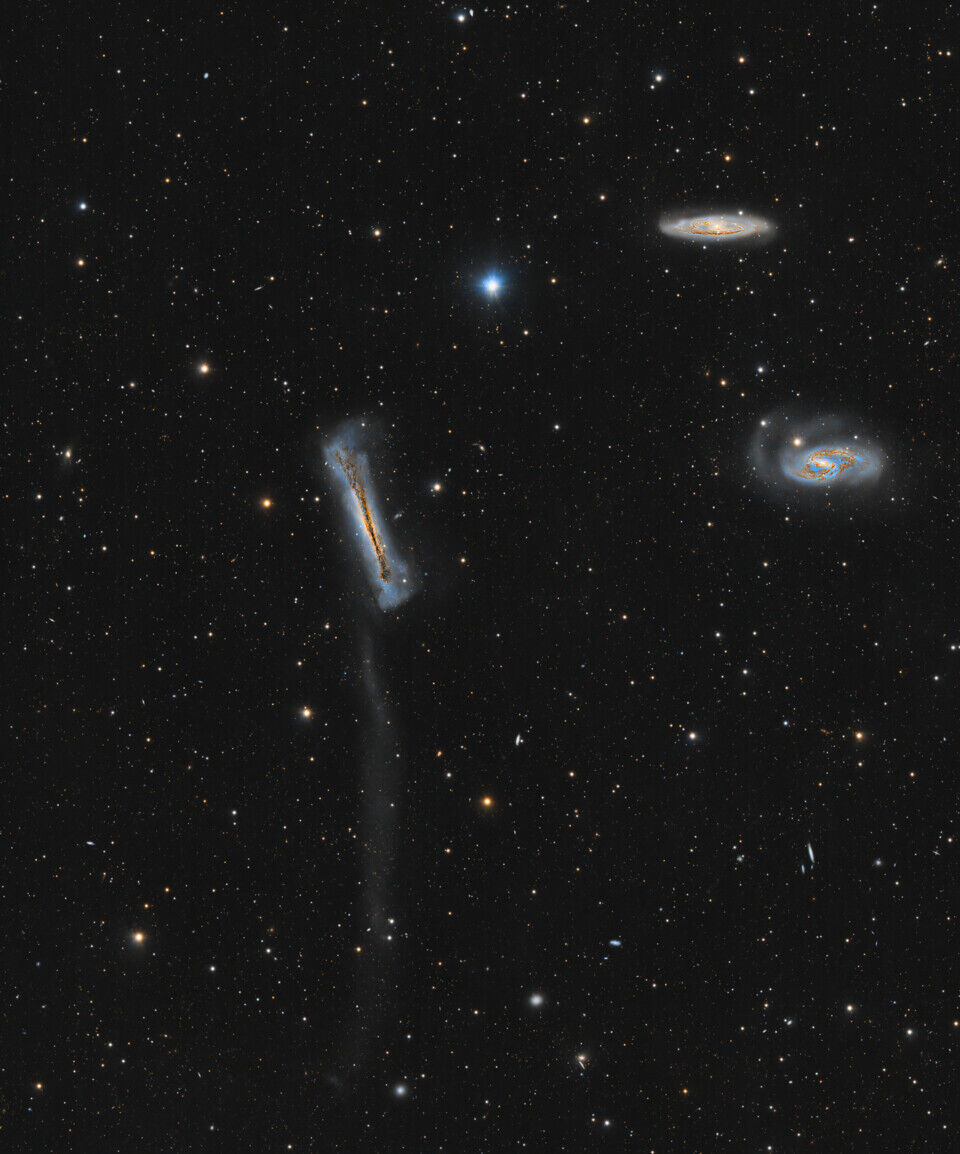
This is the Leo Triplet with the Hamburger Galaxy sporting a nice tail (which spans 300,000 light-years long) by amateur astronomer Chuck Ayoub. Target: Leo Triplet Imaging Telescope: Celestron RASA (400 focal length) Focuser: Celestron Electronic Focuser Mount: Sky-Watcher EQ6-R Pro Imaging Camera: ZWO ASI533MC Color Total Exposure Time: 16 hours
For Northern Hemisphere observers, May evenings are galaxy season. Leo, Virgo, Coma Berenices, and Canes Venatici are well placed after sunset, holding some of the richest galaxy fields accessible to backyard telescopes. The Leo Triplet, the Black Eye Galaxy, the Whirlpool Galaxy, and the broad Virgo Cluster are all classic spring targets.
These galaxies are not naked-eye objects. They require dark skies, patience, and usually at least a small telescope. Even then, most will not look like colourful astrophotographs. They appear as faint smudges of light — soft, grey traces from systems containing hundreds of billions of stars.
May 9 — The Moon at Last Quarter
The Moon reaches last quarter on May 9 at 21:10 UTC (5:10 p.m. EDT). At this phase, half of the Moon’s visible face appears illuminated, though the Moon is actually three-quarters of the way through its orbit since new Moon.
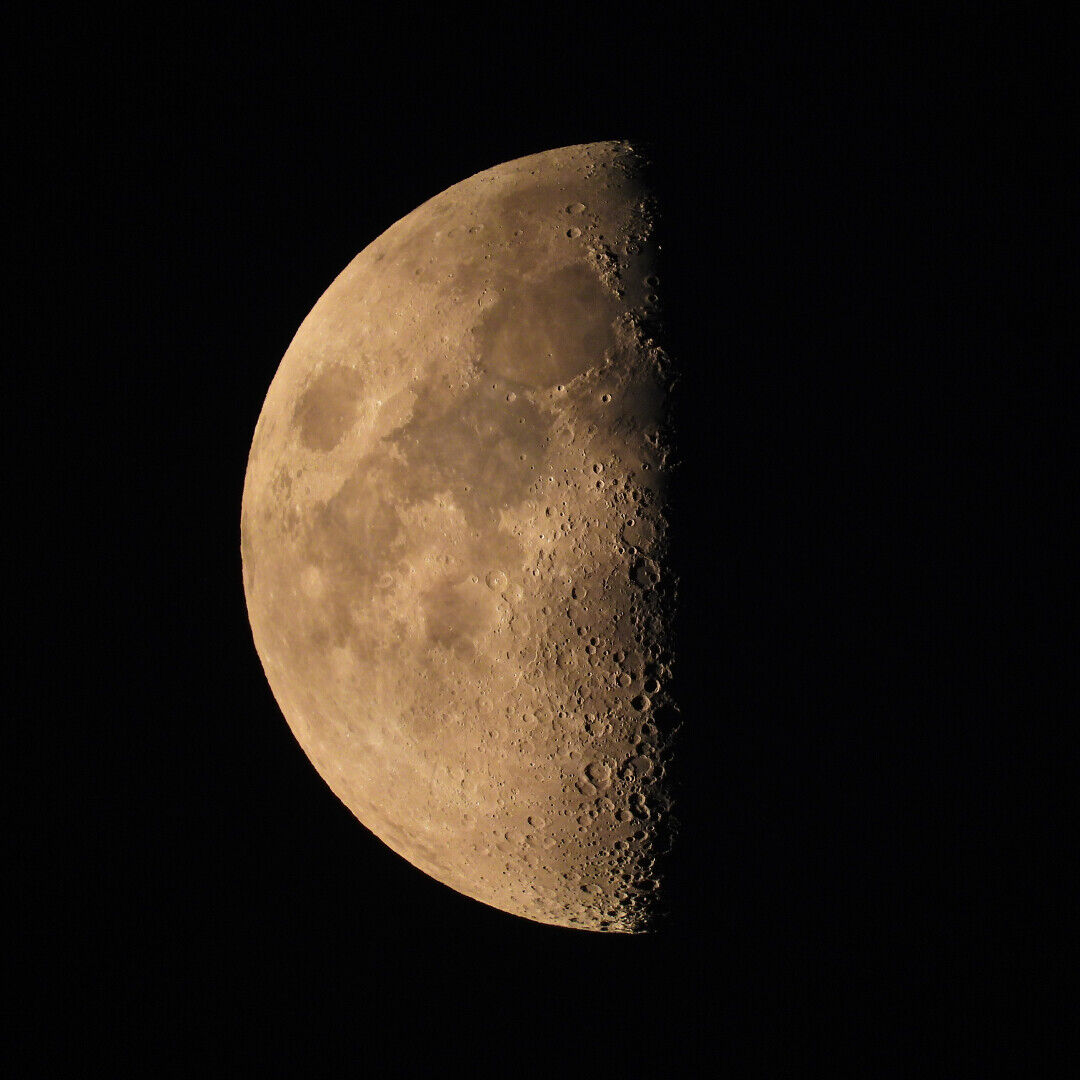
Last quarter Moon, as seen from the Northern Hemisphere
A last quarter Moon rises around midnight and remains visible into the morning. For casual observers, it is a beautiful predawn sight: pale, high, and sharply divided by the terminator — the line between lunar day and night.
Next week, the thinning crescent Moon returns to the predawn sky, passing Saturn and Mars before the Moon disappears into new phase and the month’s best dark-sky window begins.
Also Read
10 night sky events to see in May 2026
The 5 space apps that will change how you see the night sky