10 Night Sky Events to See in January 2026 — From the Wolf Supermoon to Jupiter at Opposition
January opens 2026 with a sky full of contrasts: a brilliant supermoon, one of the year’s best meteor showers, and Jupiter shining at its absolute best. From predawn meteors to elegant lunar encounters, the first month of the year offers plenty of reasons to step outside and look up.
Here are the key night sky events to watch in January 2026, and when to see them.
Before we begin, make sure to download one of these space apps so that you can easily locate the planets according to your place.
January 3 – The Super "Wolf Moon" Rises
The year kicks off with a spectacular lunar display as the Full Wolf Moon rises worldwide. This isn't just an average full moon; it is the first supermoon of 2026 and the final act in a series of four consecutive supermoons. Because the Moon is reaching its full phase near perigee—its closest approach to Earth—it will appear roughly 14% larger and 30% brighter than when it is at its farthest point.
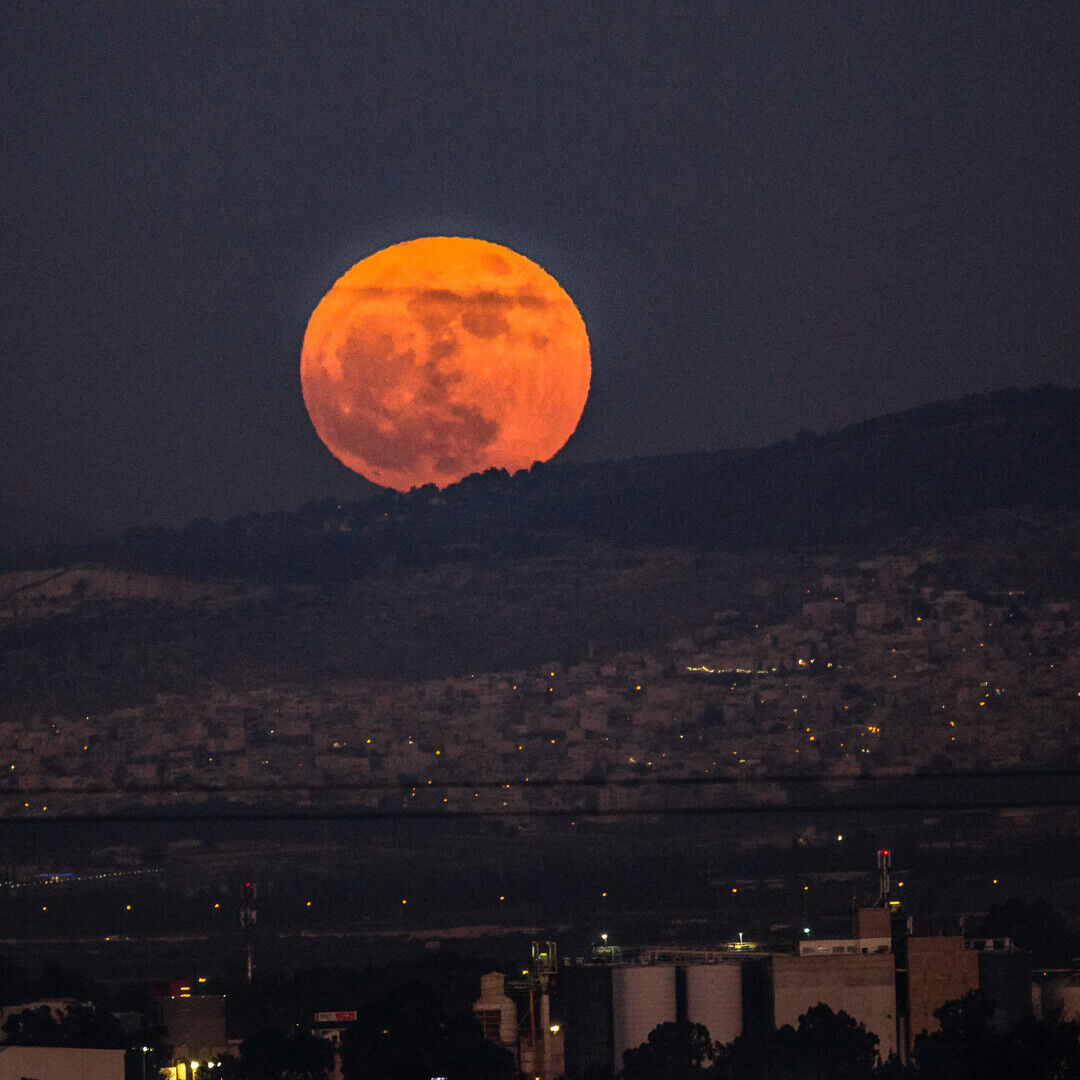
A Wolf Supermoon will rise across the world on January 3, 2026
Historically, this moon was named the "Wolf Moon" by various cultures, likely referring to the howling of wolves heard more often during the long, cold nights of midwinter. As it crests the eastern horizon at sunset, look for the "moon illusion," a trick of the mind that makes the orb appear strikingly massive against foreground objects like trees or buildings.
- When & Where: Look East at sunset; visible globally.
- Gear: None needed; naked eye is best.
PS: On the same day, Earth will reach perihelion—its closest point to the Sun—sitting about 3 million kilometers closer than average. Despite the proximity, this does not cause seasons; winter continues in the Northern Hemisphere due to Earth’s axial tilt.
January 3-4 – The Quadrantid Meteor Shower Peaks
Just hours after the Wolf Moon rises, the Quadrantid meteor shower reaches its annual peak. While the Perseids and Geminids often steal the spotlight, the Quadrantids are a "sleeping giant" capable of producing up to 120 meteors per hour. Uniquely, this shower originates from an asteroid rather than a comet and is named after Quadrans Muralis, a defunct constellation that has since been absorbed into Boötes.
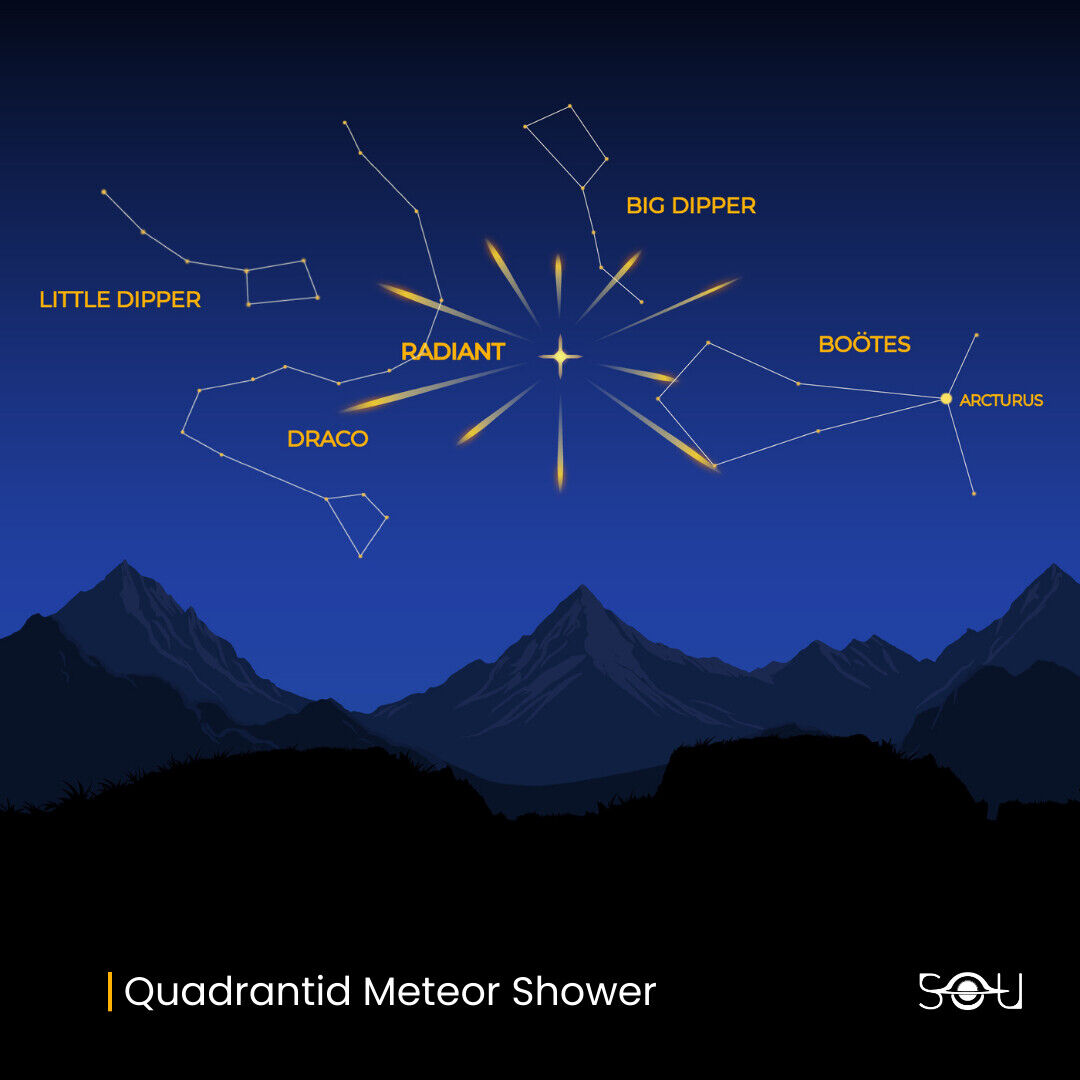
The radiant of the Quadrantid meteor shower
However, skywatchers face a challenge this year: the brilliance of the nearby Supermoon will wash out the fainter meteors. But don't let that deter you—the Quadrantids are known for producing bright fireballs that can cut through the lunar glare. The best chance to spot these "shooting stars" is during the dark, predawn hours of Sunday morning, looking north.
- When & Where: Predawn hours of Jan 4; best in the Northern Hemisphere.
- Gear: A lawn chair and a warm blanket; naked eye.
January 4 – The Moon Dances with Jupiter and the Twins
As the weekend winds down, a brilliant celestial grouping forms high in the winter sky. A glowing, near-full Moon will glide incredibly close to Jupiter, the solar system's largest planet. Framing this pair are Castor and Pollux, the twin stars of the constellation Gemini.
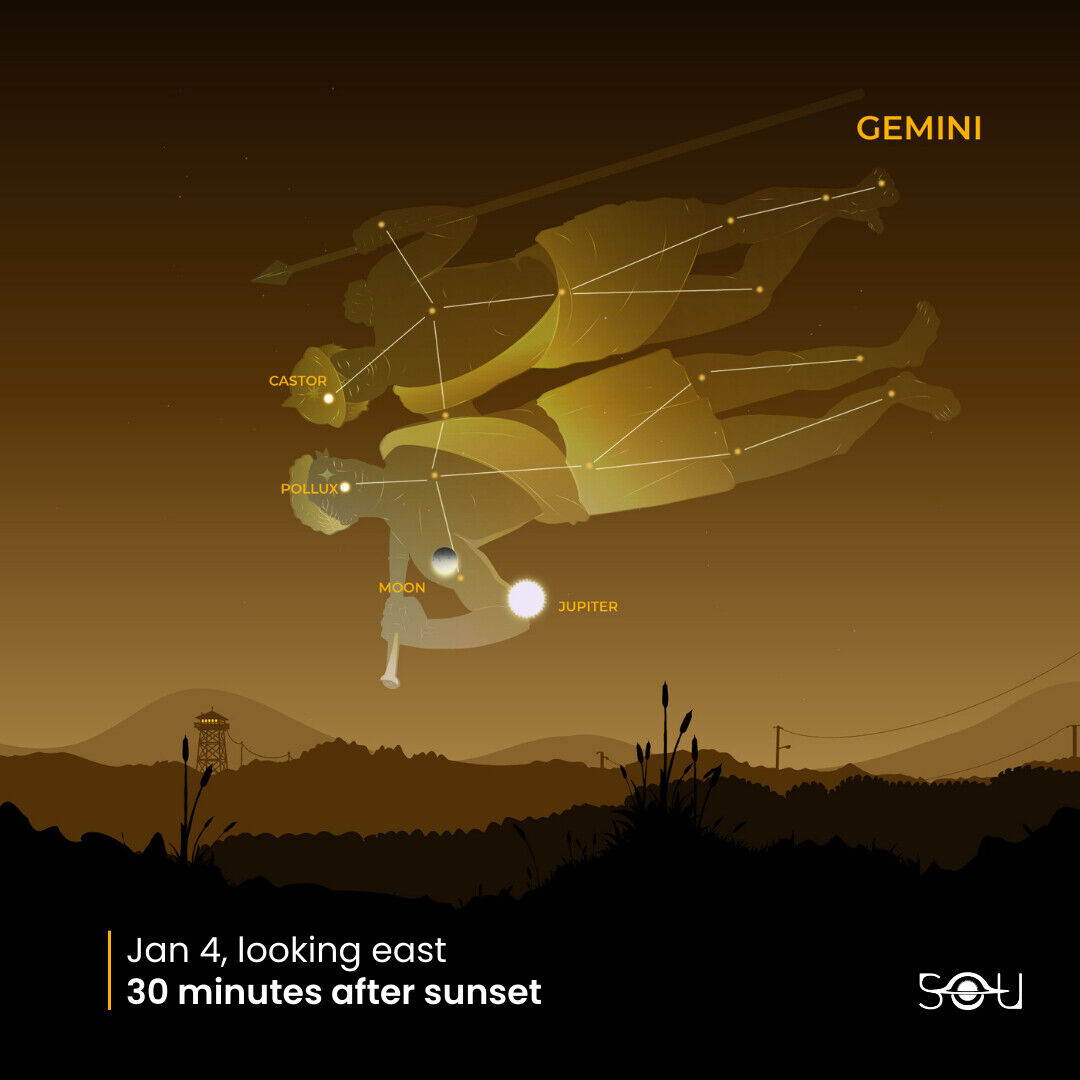
The quartet rises shortly after sunset, dominates the zenith (the highest point in the sky) around midnight, and sets at dawn, offering spectacular views all night long.
- When & Where: All night; look high overhead around midnight.
- Gear: Naked eye; binoculars will reveal Jupiter’s moons.
January 5 – A Lunar Visit to the Beehive
On this night, the waning gibbous Moon moves into the constellation Cancer, the Crab, to pay a visit to one of the night sky’s jewels: the Beehive Cluster (M44). This open star cluster, a swarm of hundreds of young stars born from the same nebula, sits about 600 light-years from Earth.
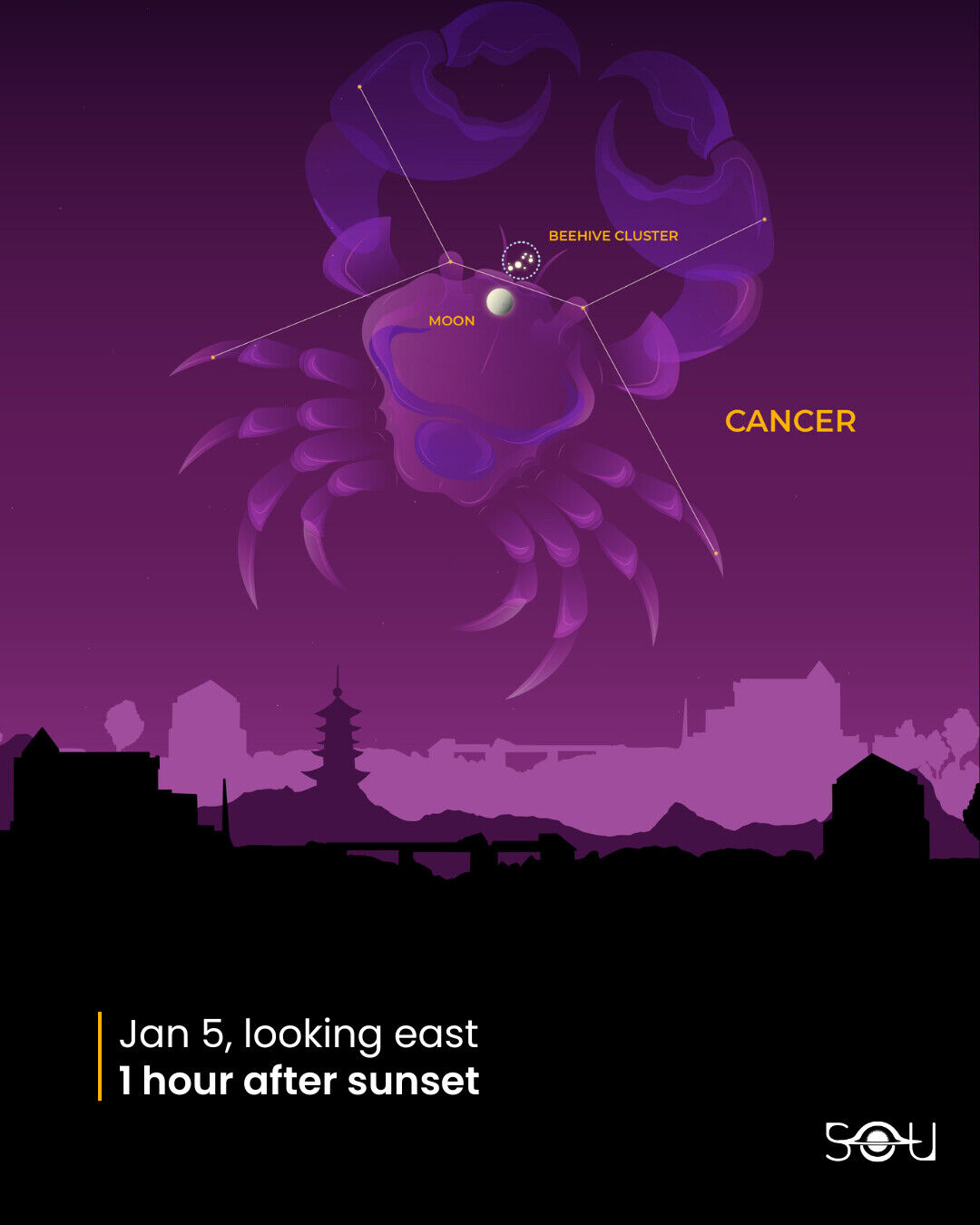
Normally, the Beehive looks like a faint, fuzzy patch of light to the naked eye. With the bright Moon passing so close, the cluster may be difficult to spot without optical aid. However, pointing a pair of binoculars at the Moon will reveal the glittering stars of the cluster "buzzing" just beside the lunar limb—a beautiful depth-of-field effect.
- When & Where: Evening sky; look East/Southeast.
- Gear: Binoculars are essential to resolve the cluster against the moonlight.
January 6 – The Moon Meets Regulus
Continuing its monthly journey across the ecliptic, the Moon—now 18 days old and waning—slides past Regulus, the brightest star in the constellation Leo. Known as "Cor Leonis" or the "Heart of the Lion," Regulus is actually a system of four stars, though it appears as a singular blue-white diamond to the naked eye.
- When & Where: Late evening to dawn; look East.
- Gear: Naked eye.
January 10 – Jupiter at Opposition
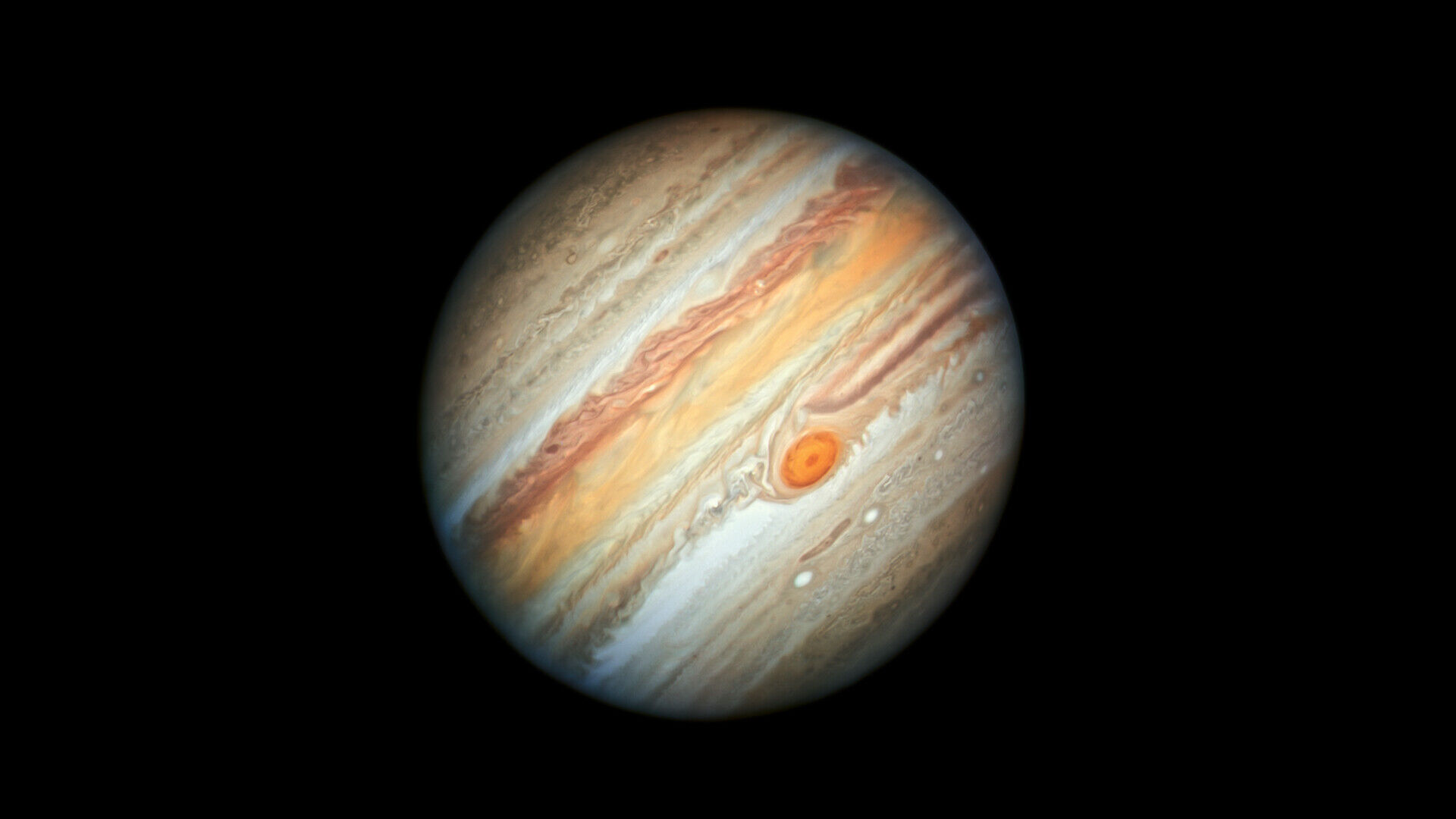
January’s headline event arrives on January 10, when Jupiter reaches opposition—its closest approach to Earth and the best time of the year to observe the gas giant.
During opposition, Earth passes between Jupiter and the Sun, placing the planet directly opposite the Sun in the sky. Jupiter rises at sunset, stands highest around midnight, and sets at dawn.
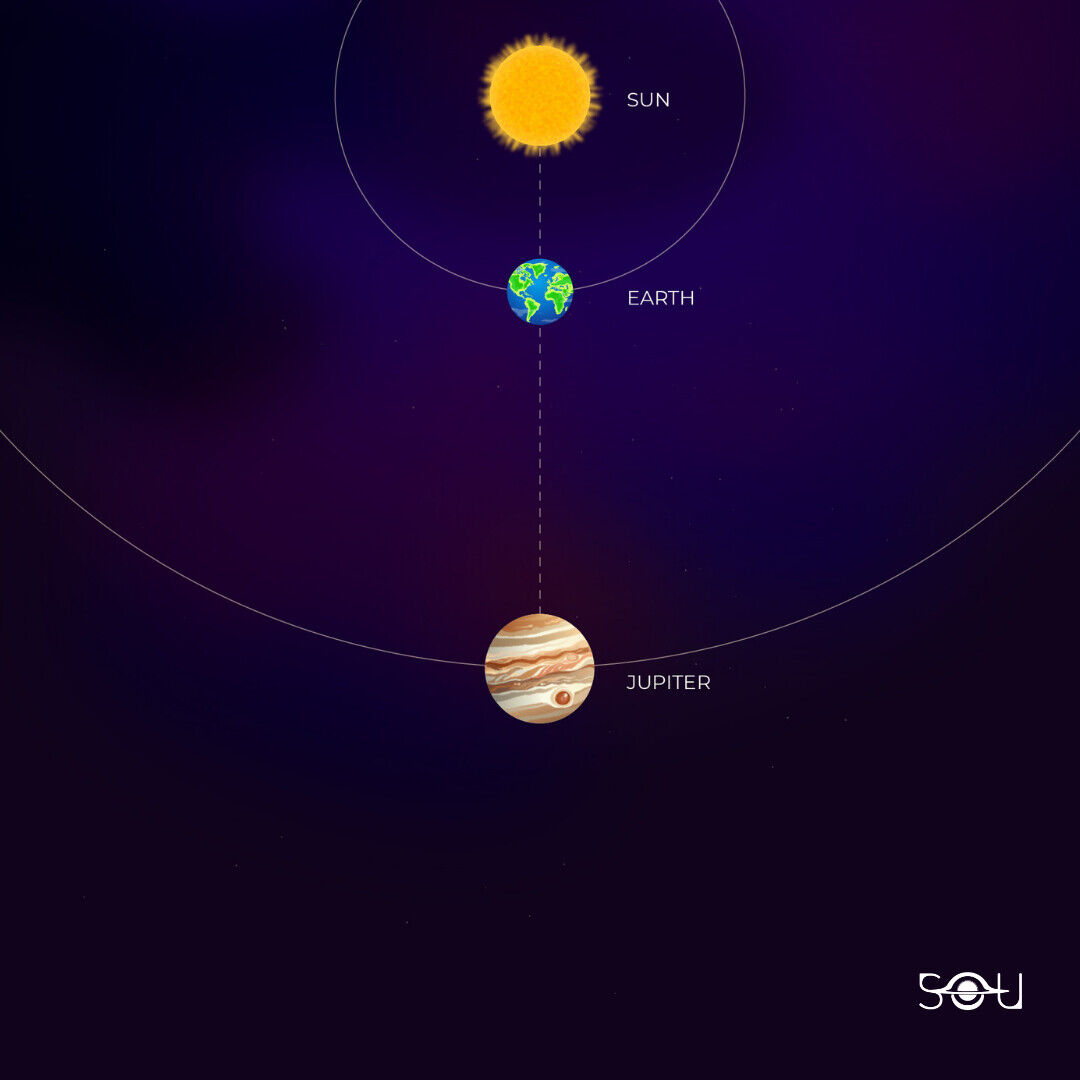
On this night, Jupiter will be about 166 million kilometers closer to Earth than average. After Venus sets shortly after sunset, it becomes the brightest object in the night sky, earning its title as the undisputed King of January’s skies.
January 18 – Dark Skies Return with the New Moon
Mid-month brings the New Moon, rendering our satellite invisible as it passes between Earth and the Sun. For city dwellers, this might seem like a non-event, but for stargazers, it is a golden ticket. Without moonlight to pollute the sky, the true depth of the cosmos is revealed.
This is the ideal night to hunt for "faint fuzzies"—deep-sky objects that are usually hidden by lunar glare. Turn your gaze toward the constellation Orion to find the Orion Nebula (M42), a stellar nursery glowing faintly in the Hunter's sword, or look for the Andromeda Galaxy, the most distant object visible to the human eye.
- When & Where: All night; darkest skies found away from city lights.
- Gear: Telescope or binoculars recommended for deep-sky objects.
January 23 – A Trio of Moon, Saturn, and Neptune
A challenging but rewarding sight awaits observers in the western sky shortly after dusk. A delicate, waxing crescent Moon will hang beautifully close to the golden planet Saturn. While Saturn is easily visible to the naked eye, a third guest is hiding in the twilight: the distant, icy giant Neptune.
Neptune is far too faint to see without help, but the Moon and Saturn act as excellent guideposts. By using binoculars or a telescope to find Saturn, you can hop over to spot the blueish dot of Neptune nearby. It’s a rare chance to visualize the sheer scale of our solar system, from our nearest neighbor to its outer limits.
- When & Where: Western sky, shortly after sunset.
- Gear: Binoculars or a telescope are needed to spot Neptune.
January 27 – The Moon Meets the Seven Sisters
One of the most photogenic conjunctions of January occurs as the 9-day-old Moon glides past the Pleiades star cluster (M45) in the constellation Taurus. Also known as the "Seven Sisters," this cluster is a tight grouping of hot, blue luminous stars that resembles a tiny dipper.
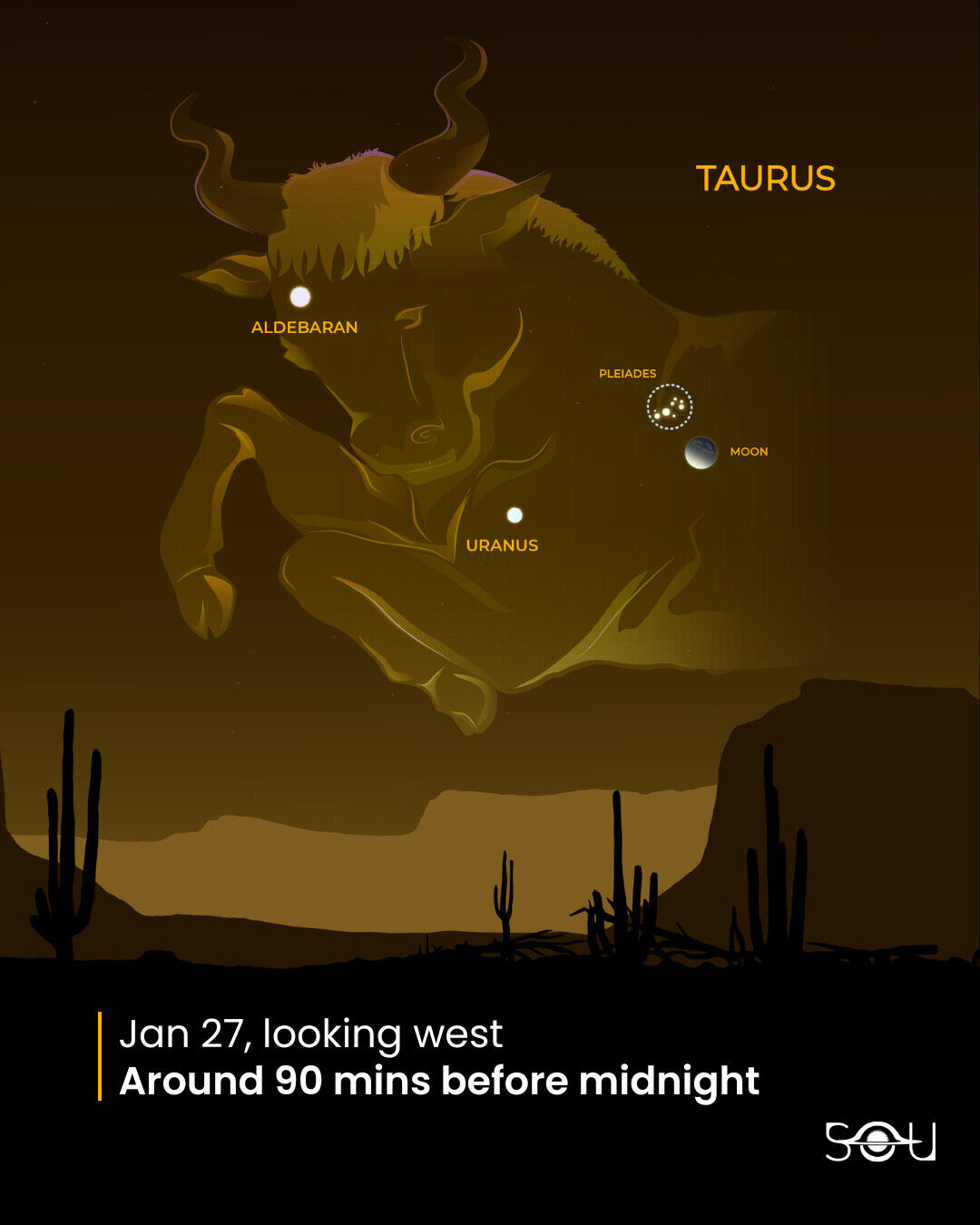
The bright Moon will be within one degree of the cluster. While the moonlight will drown out the fainter members of the group, the brightest stars of the Pleiades will sparkle like diamonds beside the lunar cratered landscape. It is a stunning sight through wide-field binoculars.
- When & Where: High in the southern sky after dusk.
- Gear: Binoculars provide the best view of the pairing.
January 31 – The Moon Meets Jupiter (Again)
The month ends much the way it began, with a reprise of the celestial waltz between the Moon and Jupiter. Because the lunar cycle is shorter than the calendar month, we get a second chance to see these two giants pair up near the twin stars of Gemini.
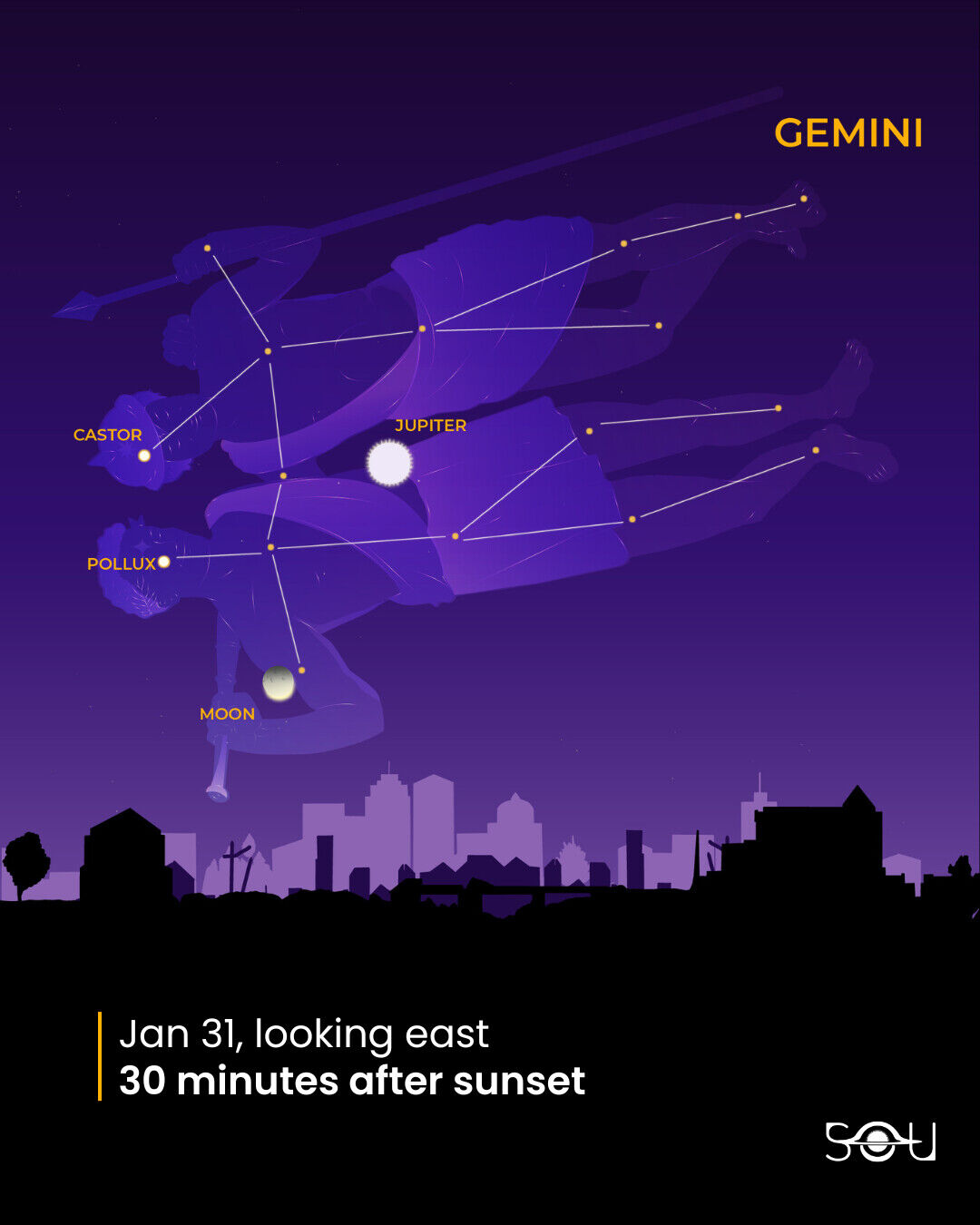
Jupiter will still be incredibly bright following its opposition earlier in the month. Seeing them together again serves as a reminder of the clockwork nature of our universe—a grand, predictable cycle that will continue to unfold as we head into February.
- When & Where: All night; high in the sky.
- Gear: Naked eye.
January 2026 – Planet Round-Up
☿ Mercury
Mercury remains hidden in the Sun’s glare throughout January as it heads toward superior conjunction on January 21.
♀ Venus
Venus stays invisible all month, passing directly behind the Sun on January 6.
♂ Mars
Mars is lost in solar glare and reaches superior conjunction on January 9, making it unobservable this month.
♃ Jupiter
Jupiter is at its absolute best, reaching opposition on January 10 and shining brilliantly all night in Gemini—the brightest speck of light after the Moon.
♄ Saturn
Saturn appears as a steady golden light in the southwestern evening sky, setting later as the night progresses.
♅ Uranus
Uranus sits high in the evening sky near the Pleiades in Taurus and can be spotted with binoculars under dark skies.
♆ Neptune
Neptune remains a telescopic target in Pisces, visible in the early evening just east of Saturn.
Happy skygazing, and Happy New Year!