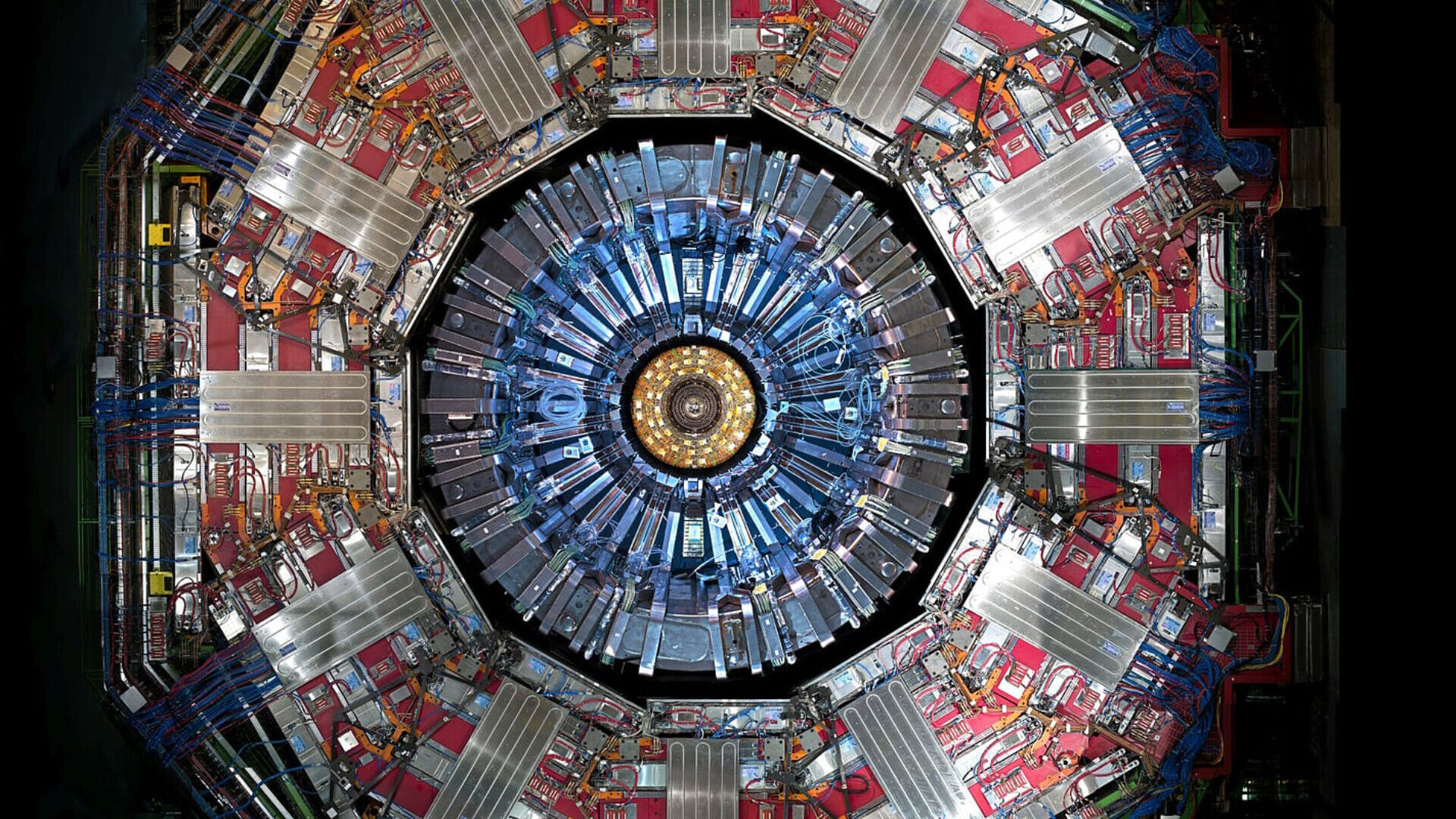
The LHC Just Went Dark. Here’s What Happens Next.
For seventeen years, the most powerful machine humanity has ever built ran almost without pause, smashing protons together 40 million times a second beneath a quiet stretch of the French countryside. In June 2026, the beams stopped.
They will not come back for the rest of the decade.
This is not a failure. It is the plan. The Large Hadron Collider has been switched off on purpose, and the silence in its 27-kilometre (16.8-mile) tunnel is the sound of the biggest rebuild in the machine's history getting under way. What comes out the other side in 2030 is meant to be a collider up to ten times more productive than the one that found the Higgs boson.
The catch is what the LHC has to survive first. Not a pause. A near-total gutting.
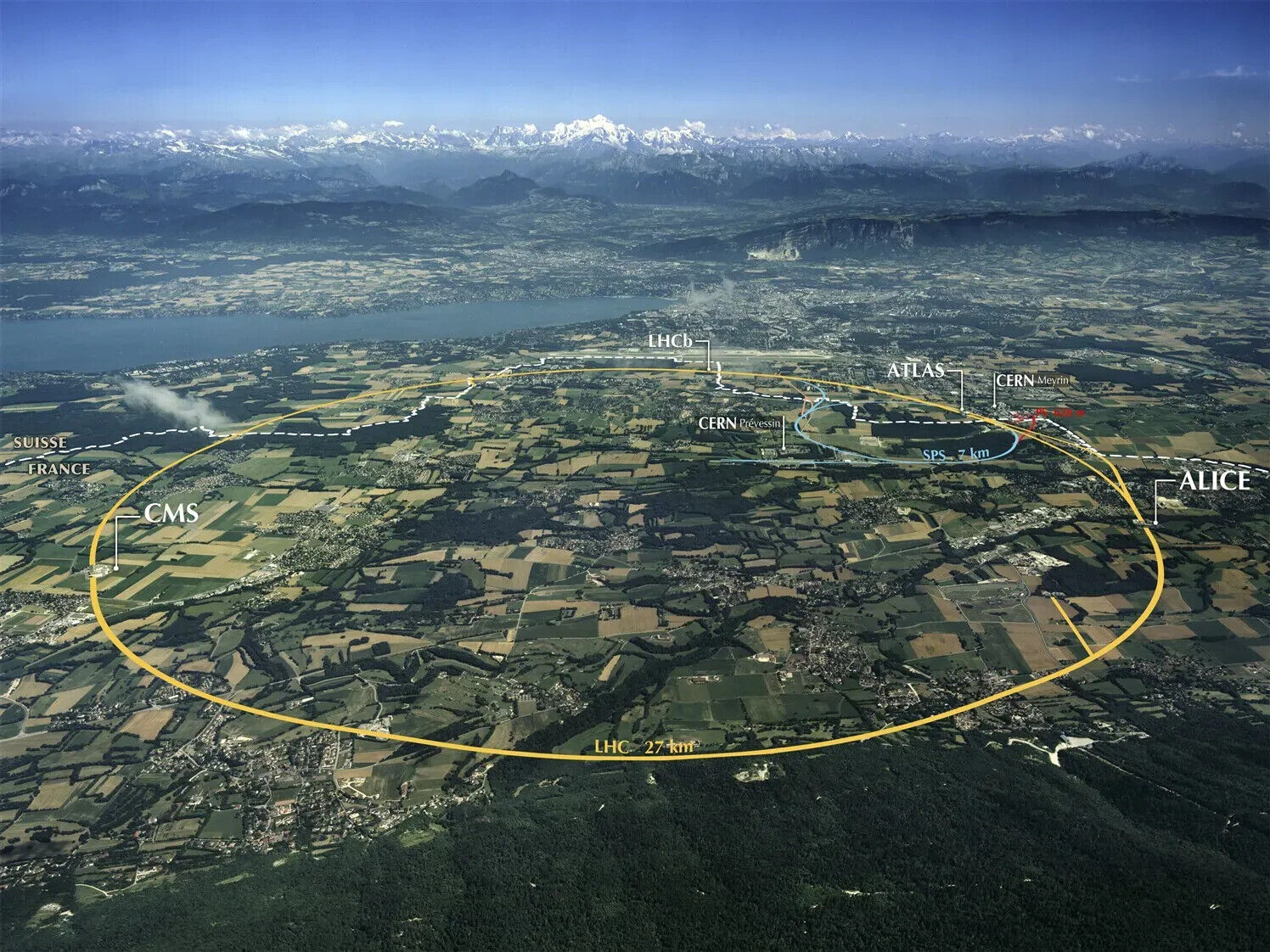
An aerial view of CERN showing the 27-kilometre Large Hadron Collider ring and the locations of the ATLAS, CMS and ALICE experiments.
Why Stop A Machine That Works
The LHC did not run out of collisions to make. It ran into a wall physicists saw coming years ago.
Every accelerator eventually hits diminishing returns. The headline discoveries arrive early, when the machine is exploring territory no experiment has reached. The rare events, the ones that might reveal cracks in the Standard Model of particle physics, show up so infrequently that catching a meaningful number of them would take decades at the current collision rate.
The fix is luminosity: the number of collisions the machine delivers over time. More collisions mean more chances for something rare to happen. The upgrade now under construction, the High-Luminosity LHC, is designed to raise the collision rate by a factor of up to ten beyond the original design.
That is the entire logic of the shutdown. To collect ten times the data, you first have to tear out and replace the parts of the machine that cannot handle ten times the intensity.
What Actually Happens Down There
Long Shutdown 3, as CERN calls it, began at the start of July 2026 and runs until 2030. It is the most extensive intervention on the accelerator complex since the LHC was built.
Teams will dismantle 1.2 kilometres of the accelerator and replace it with new hardware. That figure alone signals the scale. This is not maintenance. It is surgery on a machine the size of a city.
Two pieces of new equipment sit at the centre of the work. The first is a set of more powerful focusing magnets, which squeeze the proton beams tighter just before they collide. A tighter beam packs more protons into the same crossing point, and more protons crossing means more collisions.
The second is stranger, and it is one of the reasons the upgrade took so long to engineer. They are called crab cavities.
The Cavities That Tilt A Beam
When two proton bunches meet head-on inside the LHC, they do not collide cleanly. They cross at a slight angle, which means the bunches only partly overlap, and a lot of collision potential is wasted.
Crab cavities fix this by giving each bunch a sideways kick, rotating it just before the crossing so the two bunches meet face to face. The name comes from the sideways motion, like a crab walking. The bunches tilt, overlap fully, then continue on their way.
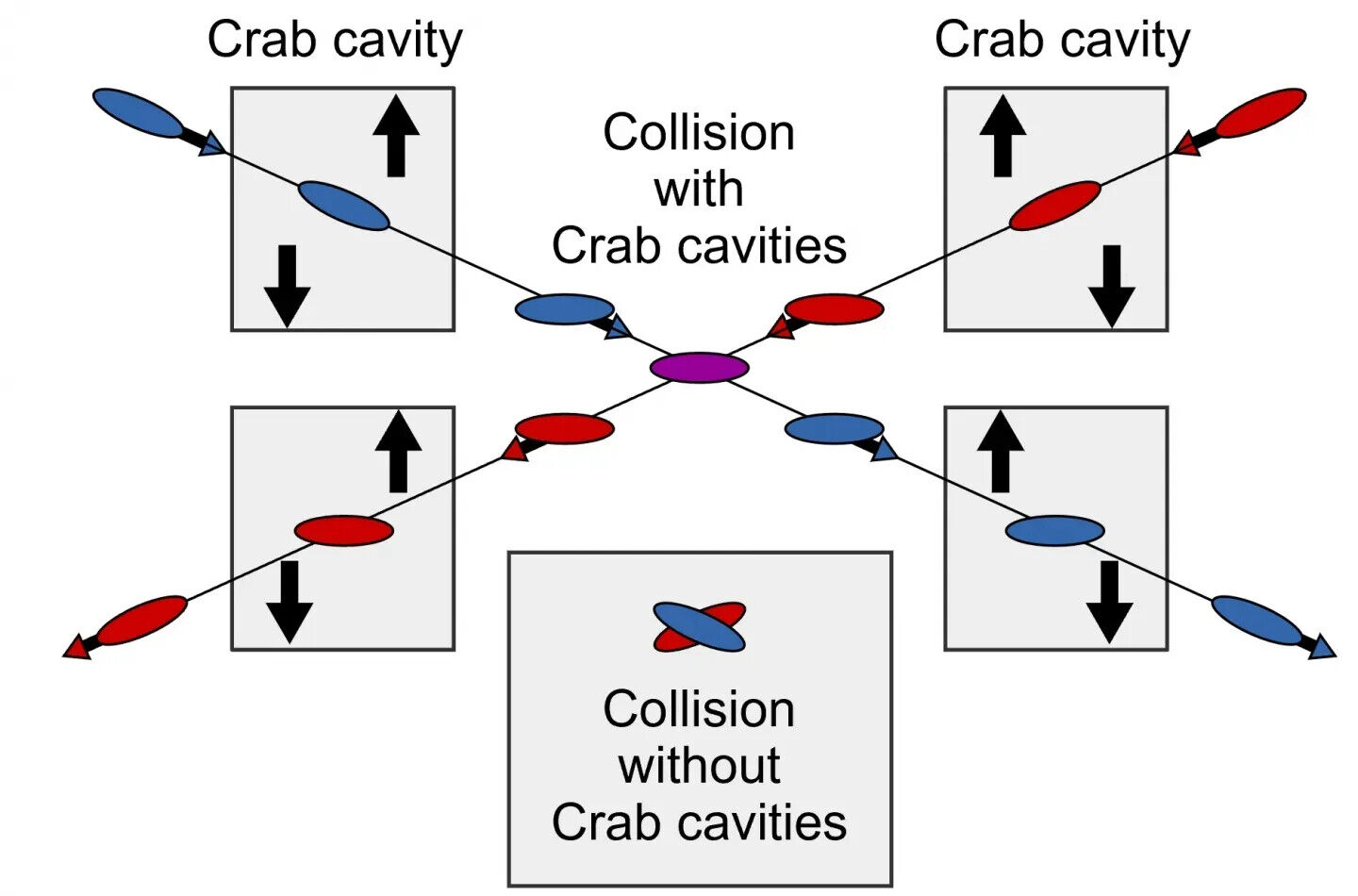
An illustration of the effect of the crab cavities on the proton bunches.
It sounds like a small adjustment. It is not. Building superconducting cavities that can rotate a bunch of protons travelling at almost the speed of light, precisely, every time, took years of development. They are among the technologies that pushed the whole schedule back.
The Detectors Are Being Rebuilt Too
The upgrade is not only to the collider. The giant detectors wrapped around the collision points, ATLAS and CMS, are being partly rebuilt into new instruments.
The reason is brutal arithmetic. Today, each time proton bunches cross, roughly 60 collisions happen at once. Under the High-Luminosity LHC, that number climbs to between 140 and 200 collisions in a single crossing. Sorting the interesting event from that pileup is like picking one specific conversation out of a stadium roar.
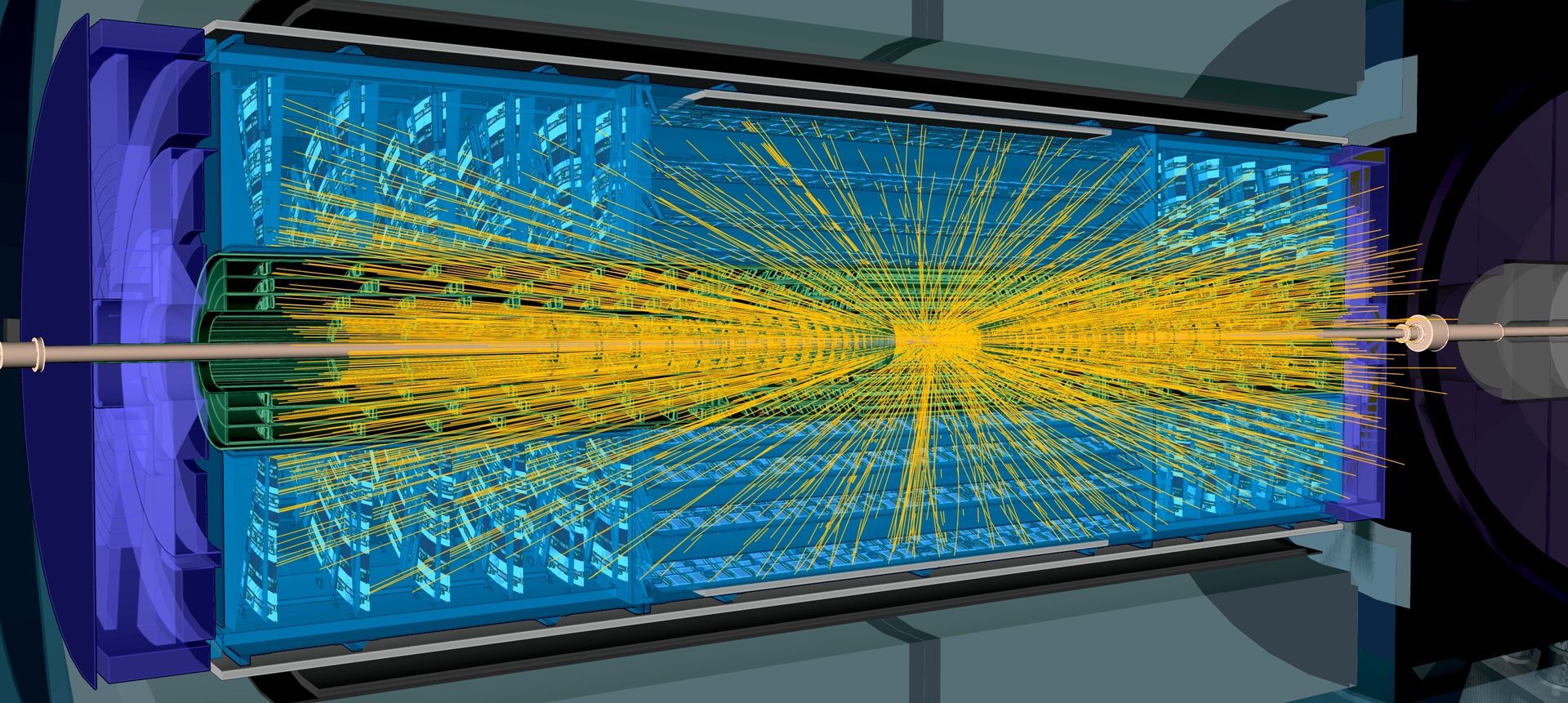
Simulation of a typical ATLAS event showing 100s of overlapping collisions expected at the High-Luminosity LHC.
To cope, ATLAS and CMS will completely replace their trigger systems, the electronics that decide, in real time, which of more than five billion interactions per second are worth recording. They are installing all-silicon tracking systems with billions of readout channels, and timing detectors that can measure when a particle arrives to within a few tens of picoseconds. A picosecond is a trillionth of a second.
Those detector upgrades are the real reason the shutdown slipped. CERN pushed the start of LS3 back by about seven and a half months, largely because building the new ATLAS and CMS components ate through the schedule contingency.
What The Silence Is For
Here is the part that surprises people. With no beams circulating for four years, you might expect the physics to stop. It does not.
The LHC spent seventeen years producing data faster than anyone could fully analyse it. Thousands of researchers will spend the shutdown mining that backlog, pulling out results from collisions that already happened. The discovery machine goes quiet; the discoveries do not.
And the point of all this rebuilding is a short list of questions the current machine could only gesture at. The clearest is the Higgs self-coupling: whether the Higgs boson interacts with itself, and how strongly.
That single measurement is a direct test of how the Higgs field gave mass to the universe's particles. It requires producing pairs of Higgs bosons, an event so rare the current LHC has barely enough to work with. The High-Luminosity run, collecting a projected 3000 inverse femtobarns of data, about ten times the total from Runs 1 through 3 combined, is built to finally put a number on it.
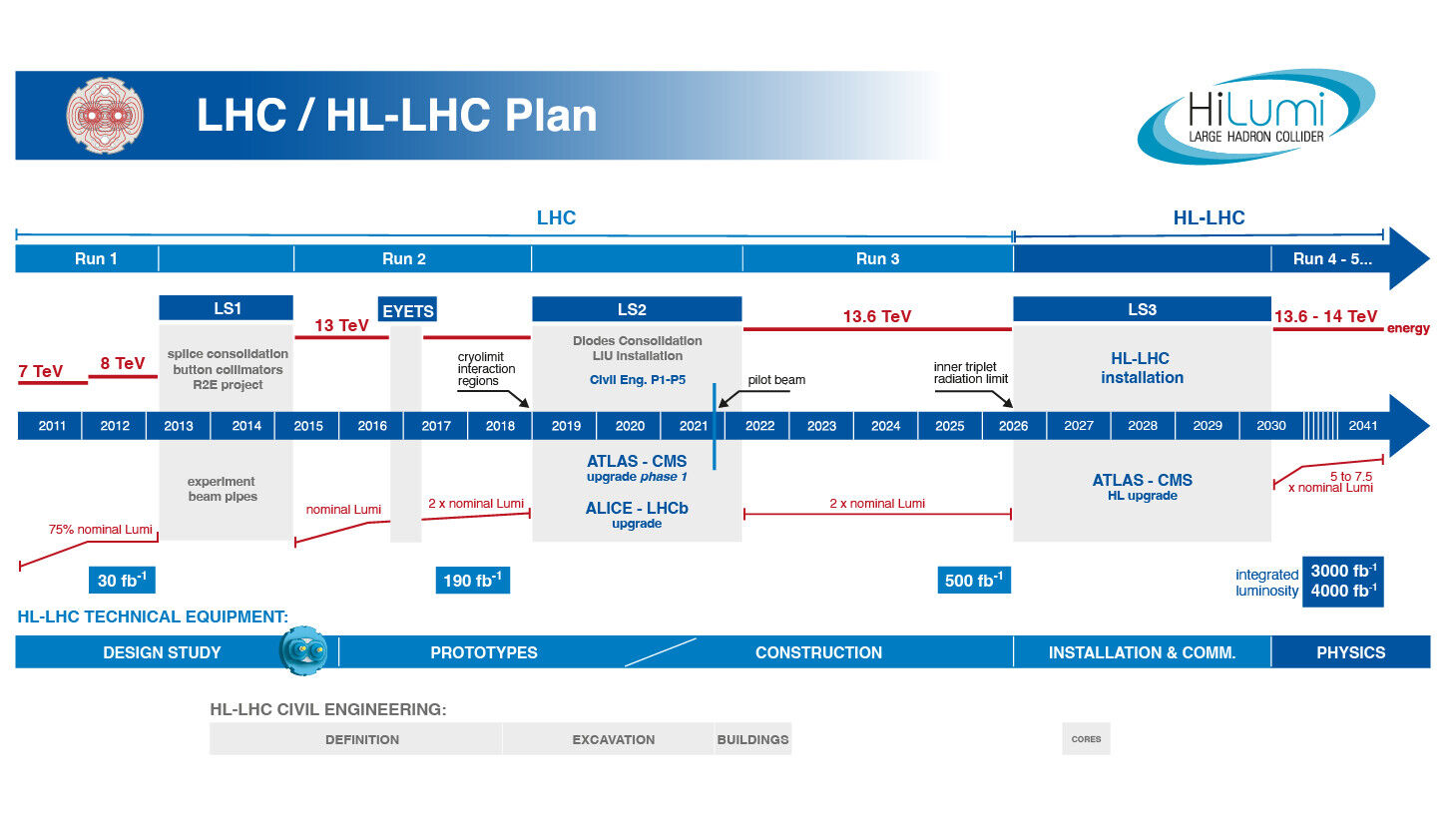
Timeline of the LHC and HL-LHC programme, highlighting major upgrades, energy milestones, and luminosity goals.
The Machine After This One
"Today we say goodbye to the LHC as we have known it," said Oliver Brüning, CERN's Director for Accelerators and Technology, on the day the beams stopped, "while preparing to welcome its successor."
The successor is not a new tunnel. It is the same ring, rebuilt from the inside, aimed at a physics programme meant to run into the early 2040s.
First beams in the upgraded machine are scheduled for 2030, with a gradual restart of the wider accelerator complex beginning in 2028. Between now and then, the tunnel stays open, the magnets come out by the kilometre, and the crab cavities go in.
The collisions will resume. When they do, the machine making them will be almost unrecognisable, chasing a number the old LHC could see but never quite reach.