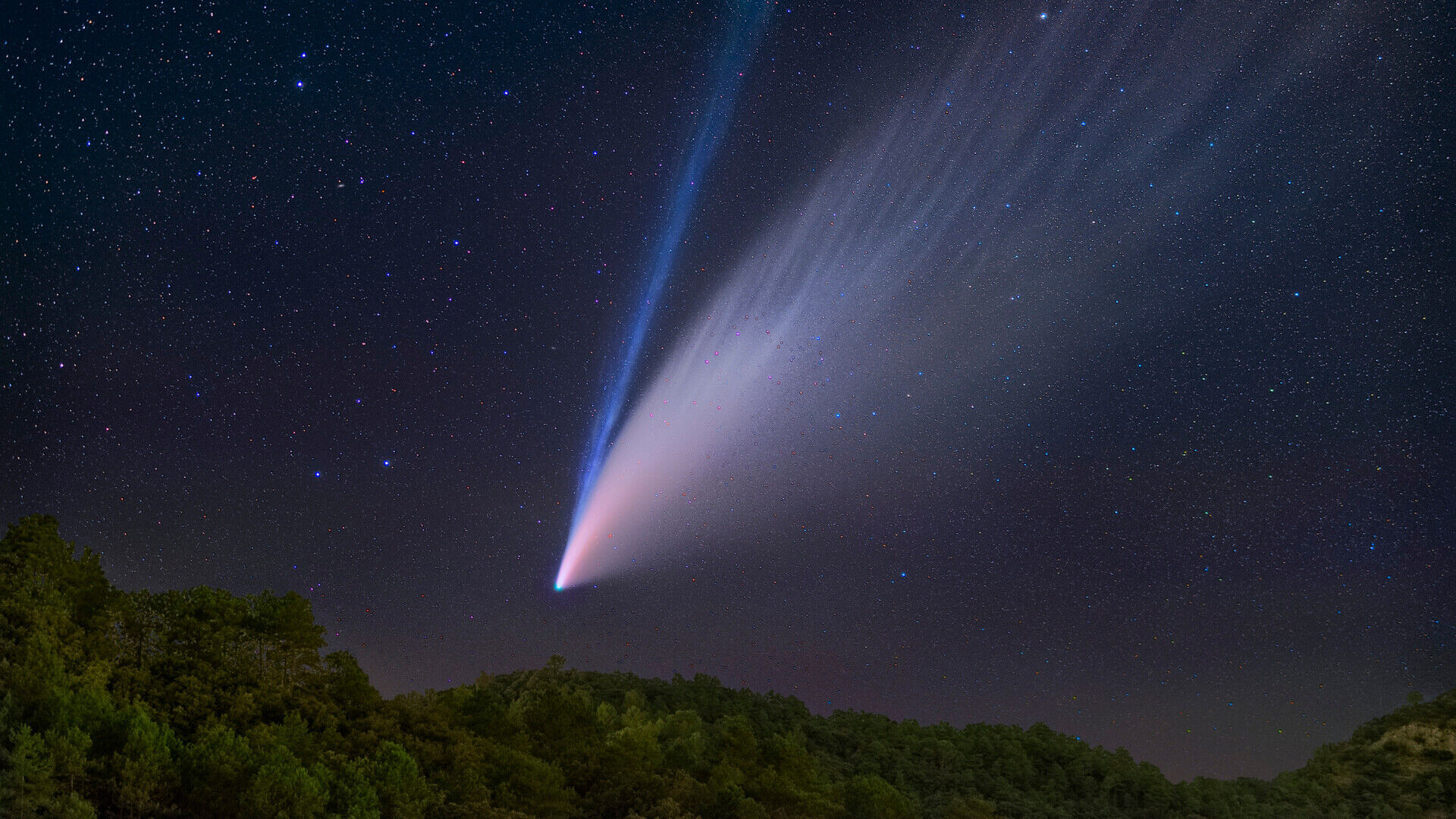
15 Night Sky Events to See in November – From a Comet to the Biggest Supermoon
November brings a spectacular mix of celestial sights—from the year’s biggest supermoon to dazzling meteor showers and planetary pairings that light up the night. Whether you’re an early riser or a sunset watcher, the skies this month promise plenty of moments worth looking up for.
Here’s your complete guide to the best night sky events this November—and how to see them.
Before we begin, make sure to download one of these space apps so that you can easily locate the planets according to your place.
Last Chance to See Comet C/2025 A6 (Lemmon) – November 1

Comet C/2025 A6 (Lemmon)
Comet C/2025 A6 (Lemmon) makes its final appearance after sunset, glowing faintly in the western sky within the constellation Serpens. It’s best viewed with binoculars or a small telescope from dark locations. The comet will soon fade from view as it continues its journey away from the Sun.
The Moon Meets Saturn – November 2
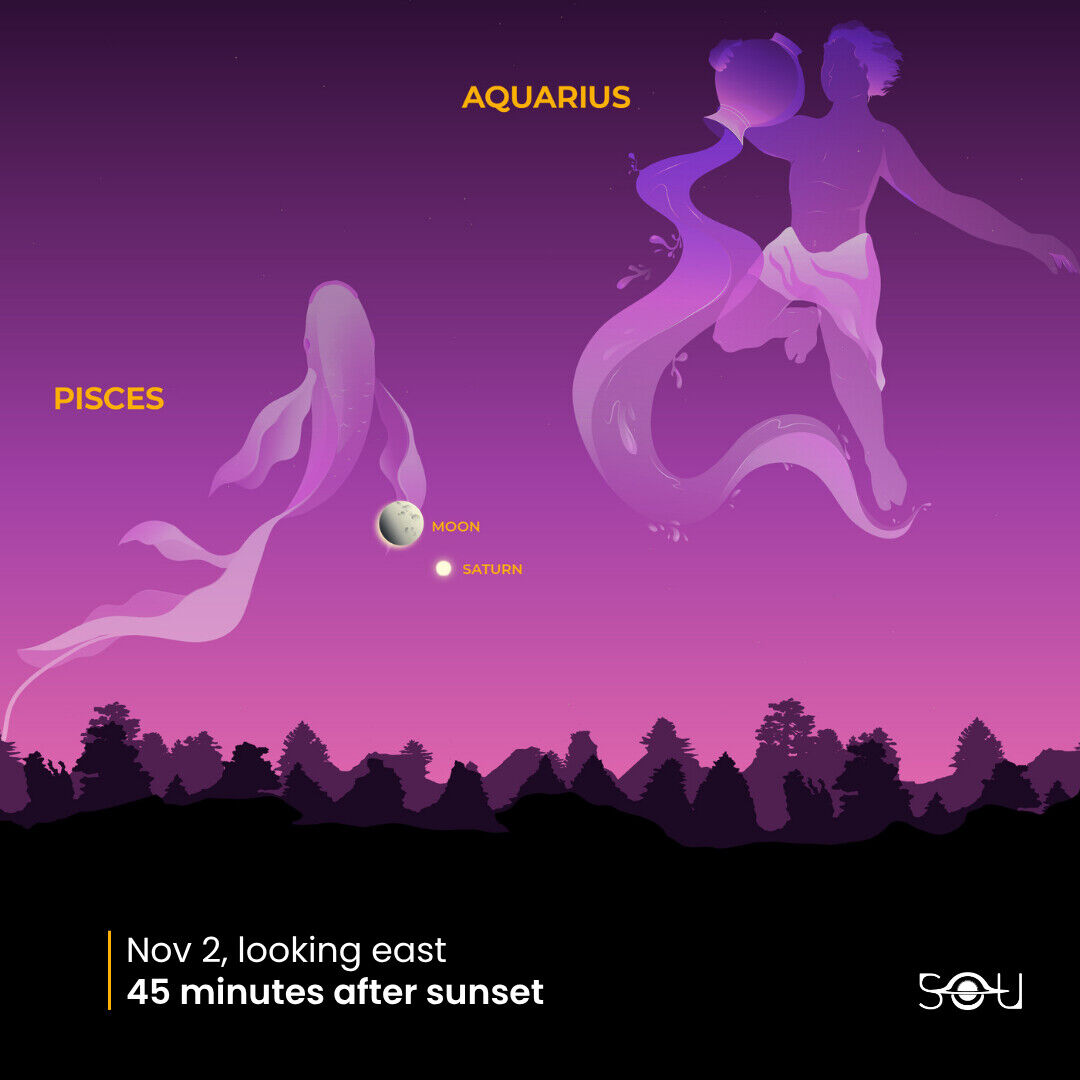
A near full Moon will pass close to Saturn on November 2
On the evening of November 2, a waxing gibbous Moon passes close to Saturn in Pisces. Saturn is still near its brightest since its recent opposition, making this pairing a great sight even from city skies.
A Cosmic Belt – November 4
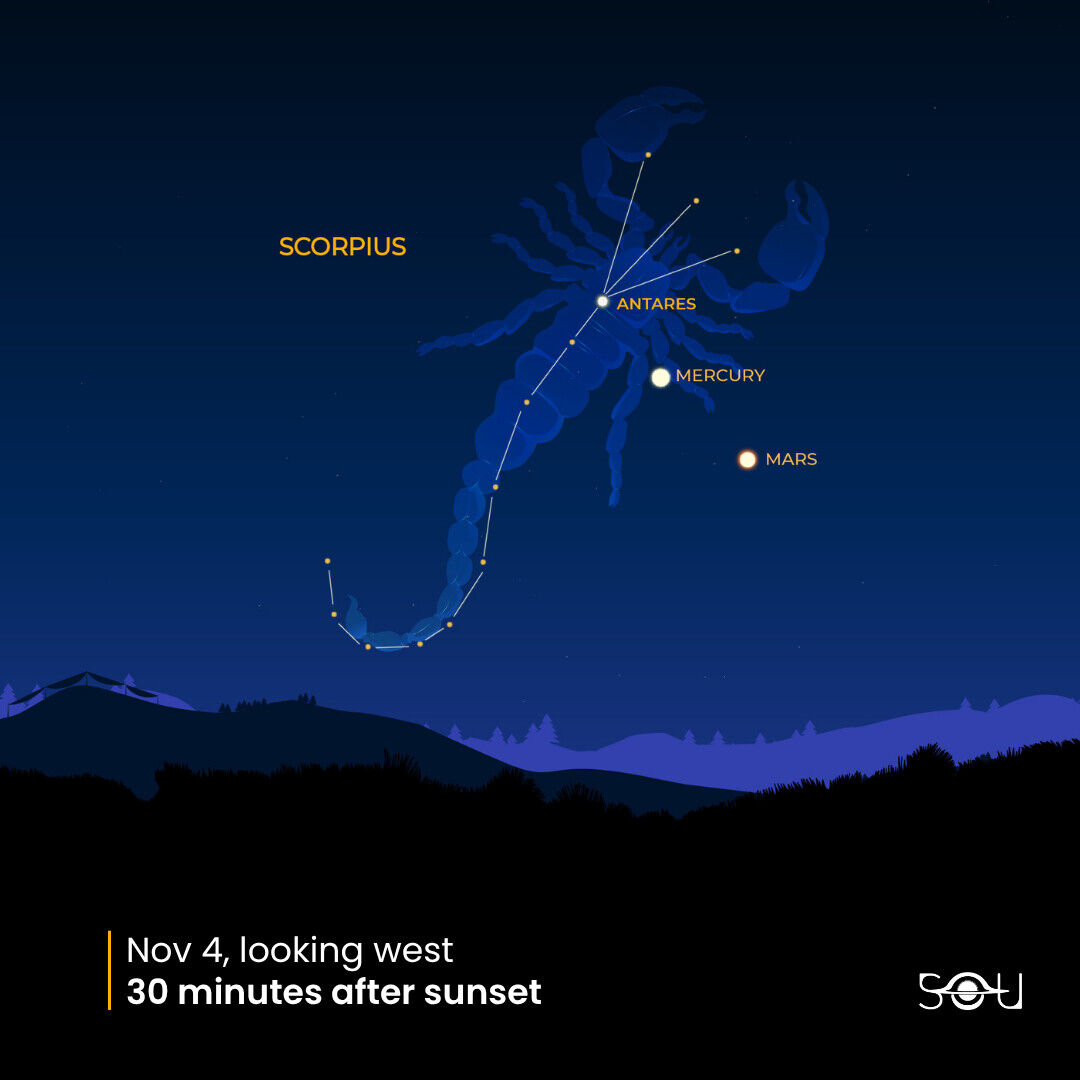
It will be challenging to spot the trio because of the daylight. So you will need clear horizons to spot them.
Look west shortly after sunset on November 4 to witness Mercury, Mars, and Antares—the red heart of Scorpius—forming a straight line reminiscent of Orion’s Belt. On the same evening, Mercury will appear half-lit (a phase called dichotomy). You’ll need a clear horizon to see this striking alignment before the trio sets.
The Biggest Supermoon of the Year – November 5
The Full Beaver Moon rises on November 5, marking the second supermoon of 2025—and the largest and brightest of the year.

A supermoon occurs when the Moon reaches its full phase near perigee, its closest point to Earth, appearing up to 14% larger and 30% brighter than usual. The November 5 supermoon will be 27,000 km (16,800 miles) closer to Earth than average.
Don’t miss this radiant sight as it climbs above the horizon just after sunset.
The Moon Meets the Pleiades – November 6
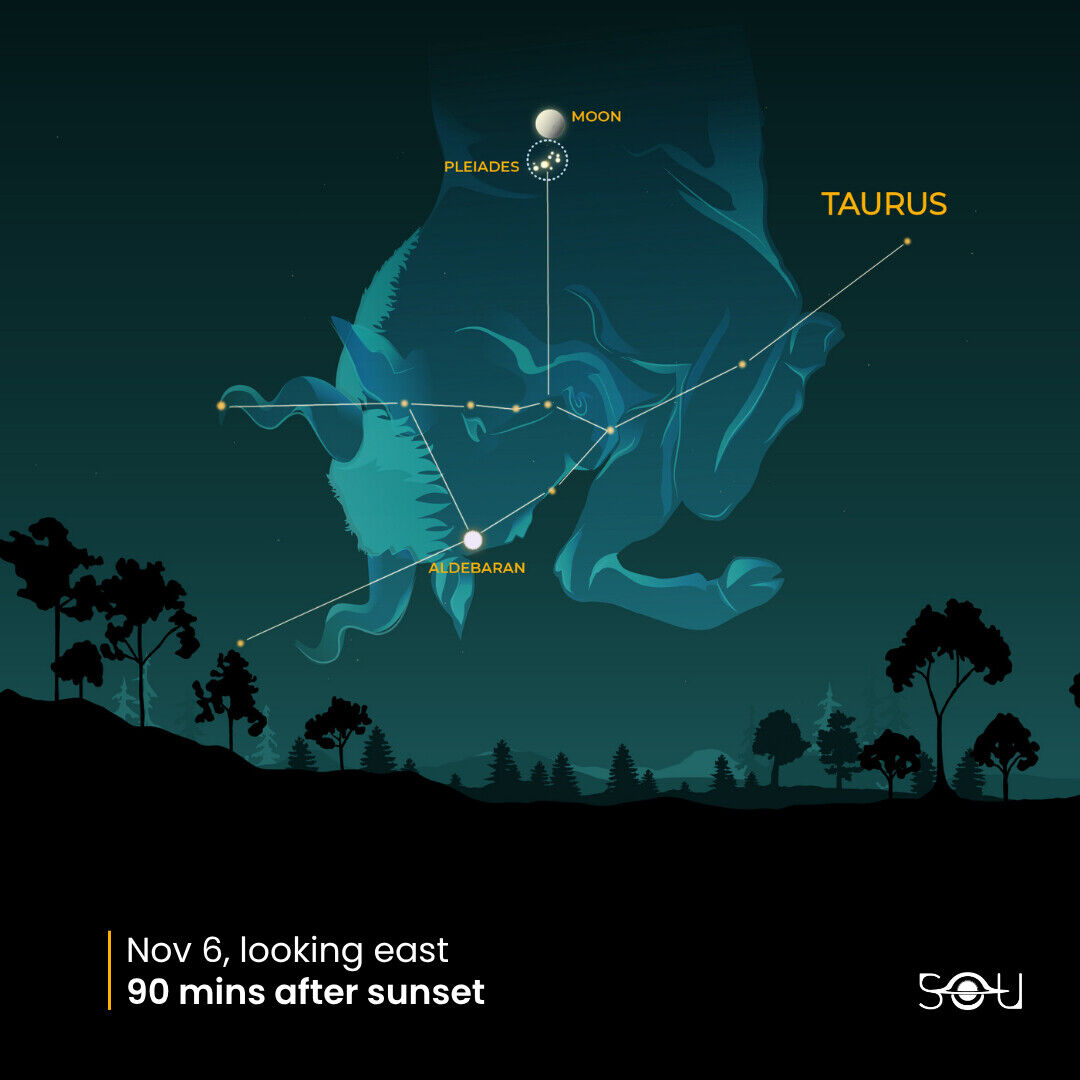
A near-full Moon will pass close to the Pleiades cluster and Uranus on November 6, 2025
A 16-day-old Moon will pass within one degree of the Pleiades star cluster and Uranus in Taurus. Known as the Seven Sisters, the cluster shines at magnitude 1.3 and is easily visible to the naked eye. The Moon’s proximity makes this one of the most photogenic celestial pairings of the month.
The Moon Meets Jupiter – November 10
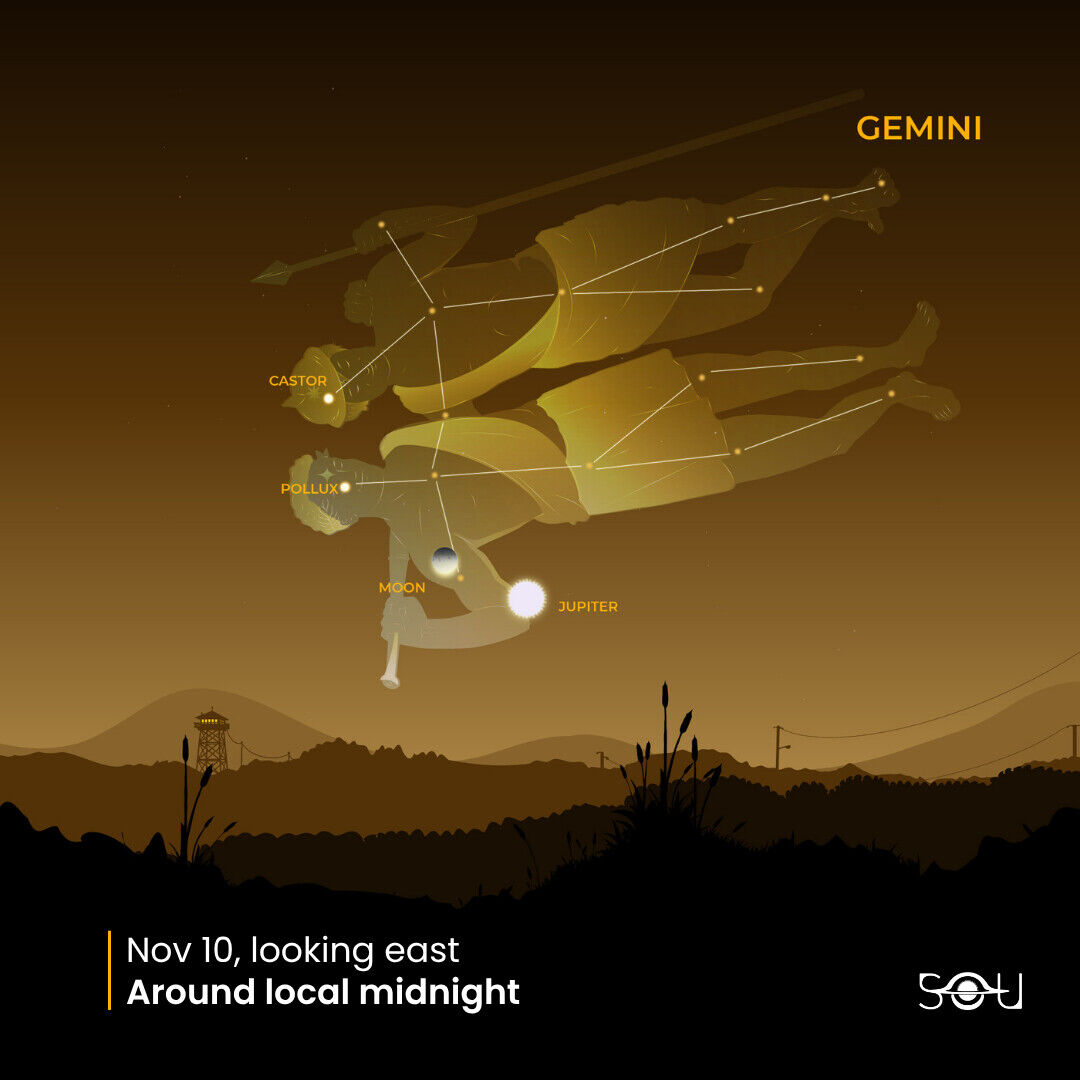
Jupiter is approaching its opposition and is well up in the sky by midnight local time
The Moon will drift near Jupiter and the twin stars Castor and Pollux in Gemini. The group rises after midnight and remains visible until dawn, reaching nearly overhead by sunrise—a rewarding view through binoculars or even with the naked eye.
Jupiter Enters Retrograde Motion – November 11
Starting November 11, Jupiter begins its retrograde motion, appearing to drift westward through Gemini. This apparent reversal is an optical illusion caused by Earth's motion around the Sun. It remains bright and visible in the eastern sky around midnight.
The Taurid Meteor Shower Peaks – November 12
The Northern Taurids, active from October 20 to December 10, peak on November 12. Although modest—producing about five meteors per hour—the Taurids are known for their slow, bright fireballs. Their radiant lies in Taurus and they’re visible all night long.
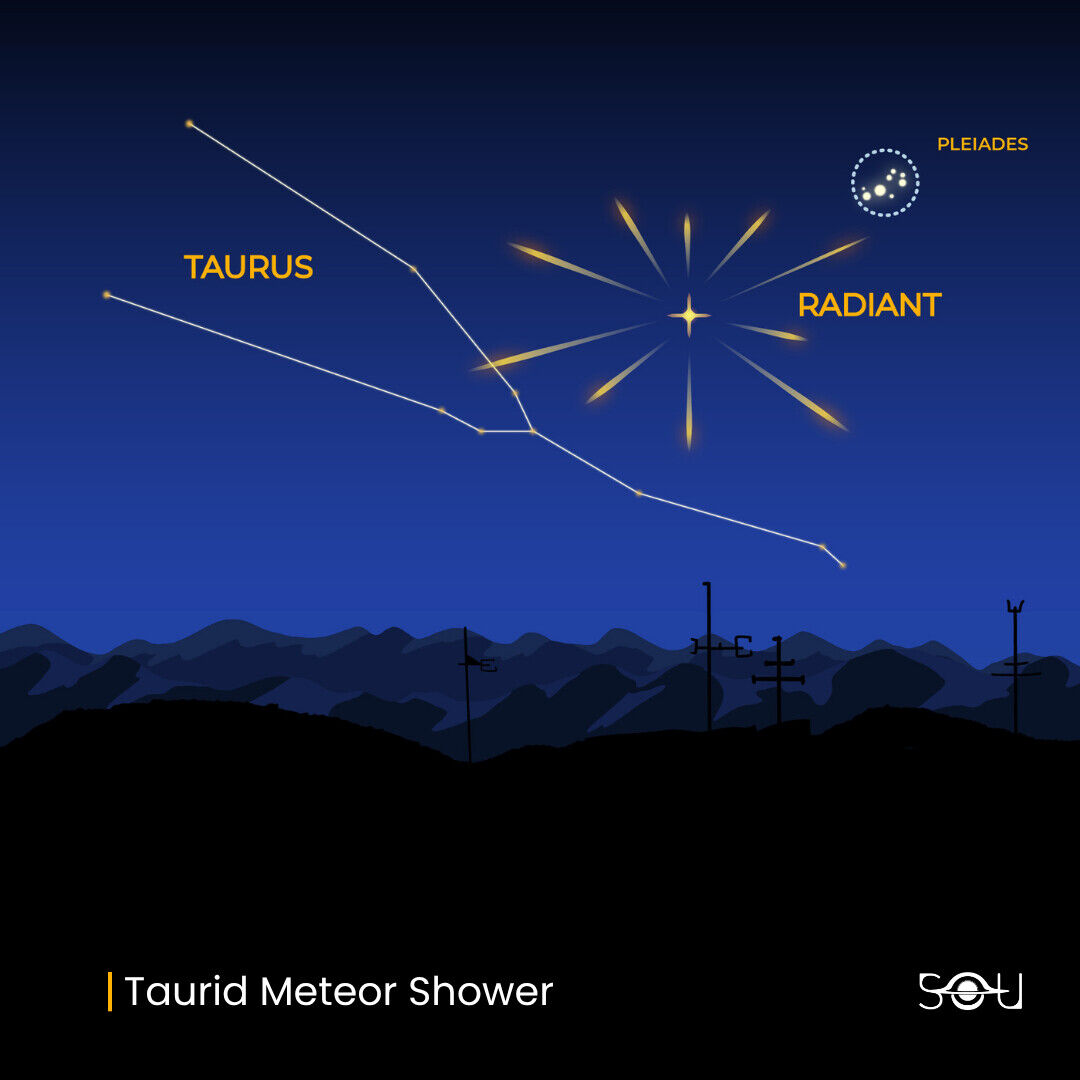
The radiant of the Northern Taurid meteor shower
Tip: No telescope is needed. Find a dark spot, lie back, and let your eyes adjust for 20 minutes.
The Moon Meets Regulus – November 13
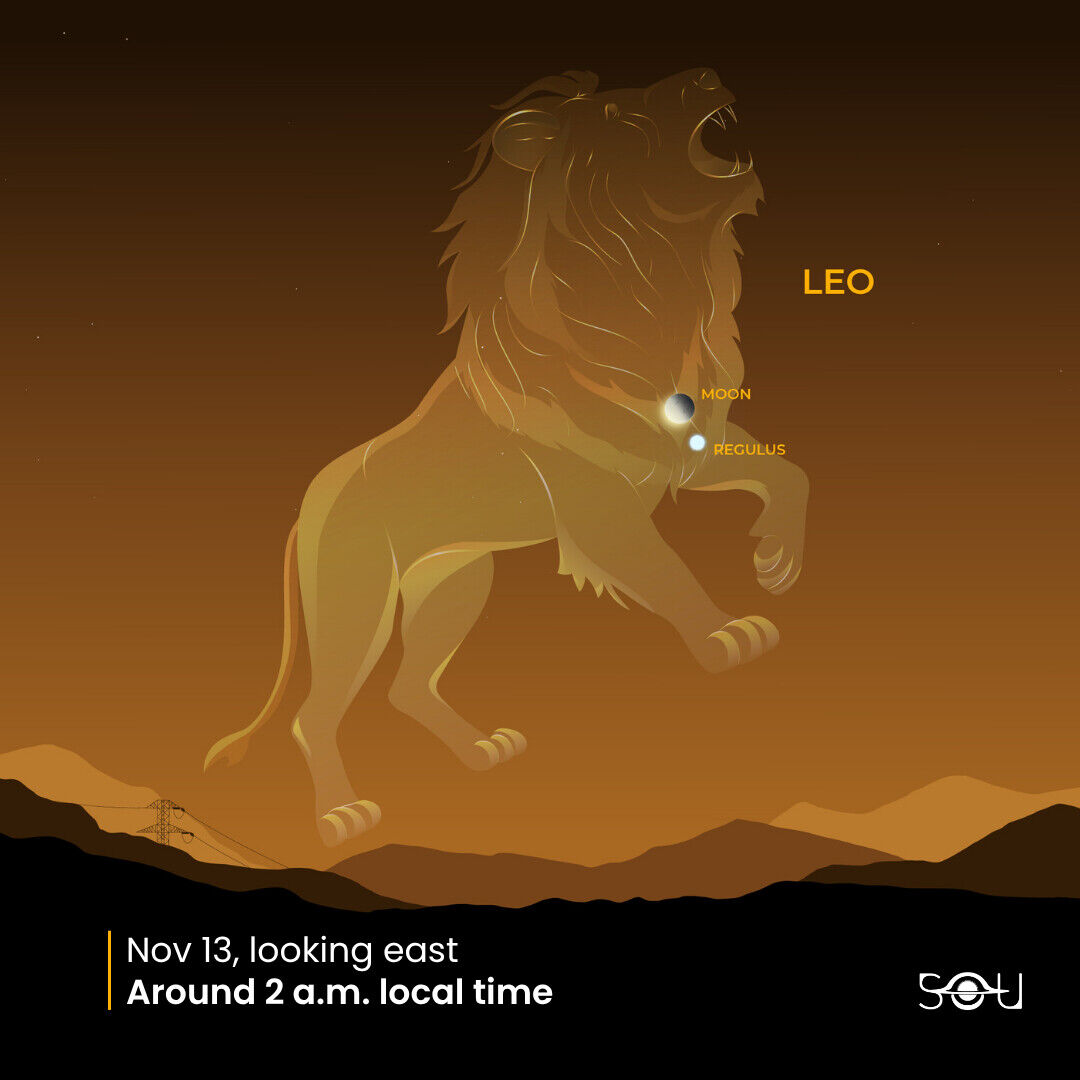
The pair will be well up in the early hours of November 13
In the early hours of November 13, the 23-day-old Moon glides near Regulus, the brightest star in Leo. The pair will rise about an hour after midnight, sparkling in the eastern sky until dawn.
The Leonid Meteor Shower – November 17
The Leonids, active from November 6–30, peak on the night of November 17–18. Expect up to 15 meteors per hour under dark skies, with best viewing just before dawn when the radiant in Leo is highest.
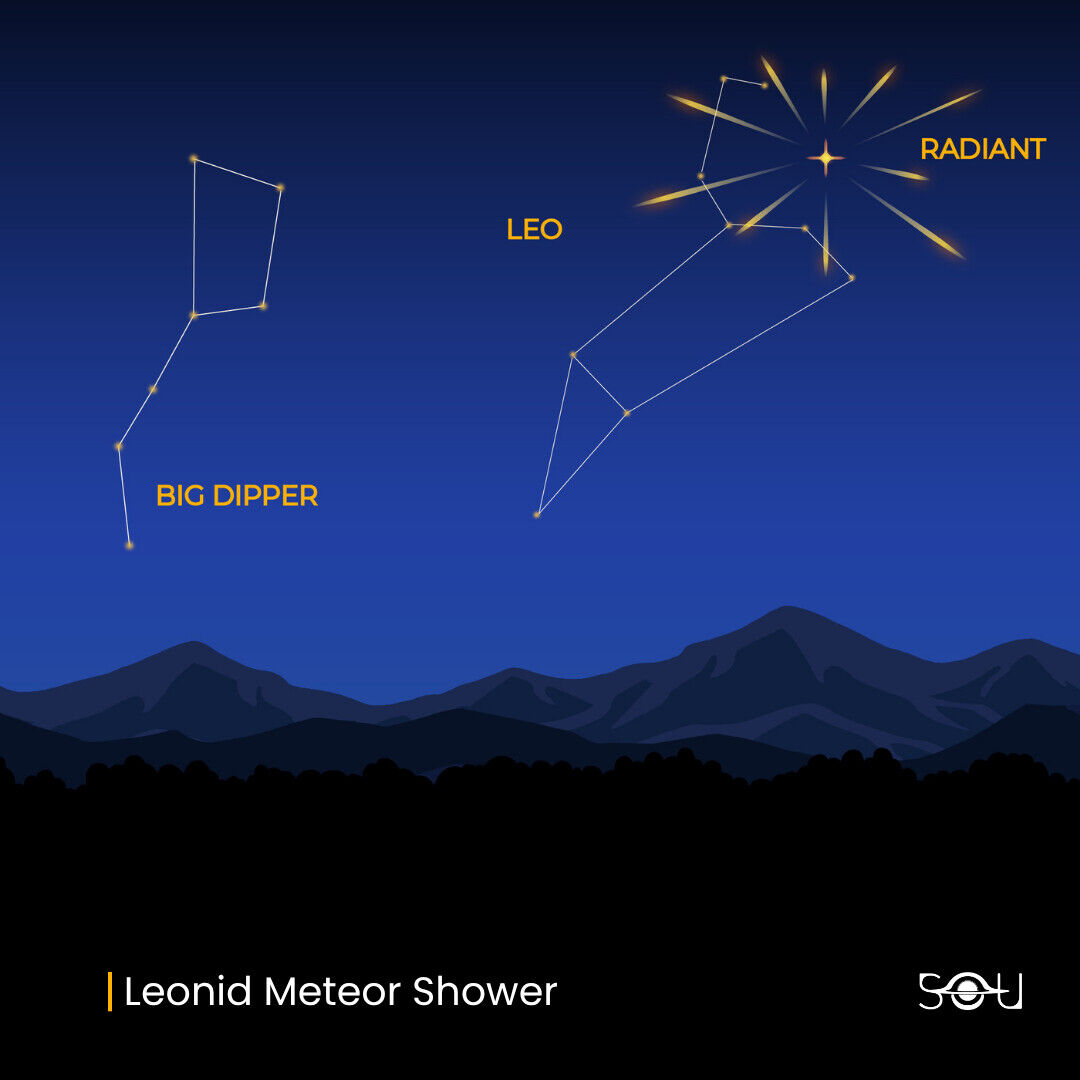
The radiant of the Leonid meteor shower
While most years bring moderate activity, the Leonids are legendary for their historic meteor storms, when thousands of meteors once lit up the sky each hour.
New Moon – November 20
The Moon passes close to the Sun, remaining invisible for a couple of nights—creating perfect dark-sky conditions for deep-sky observing and astrophotography.
Uranus at Opposition – November 21
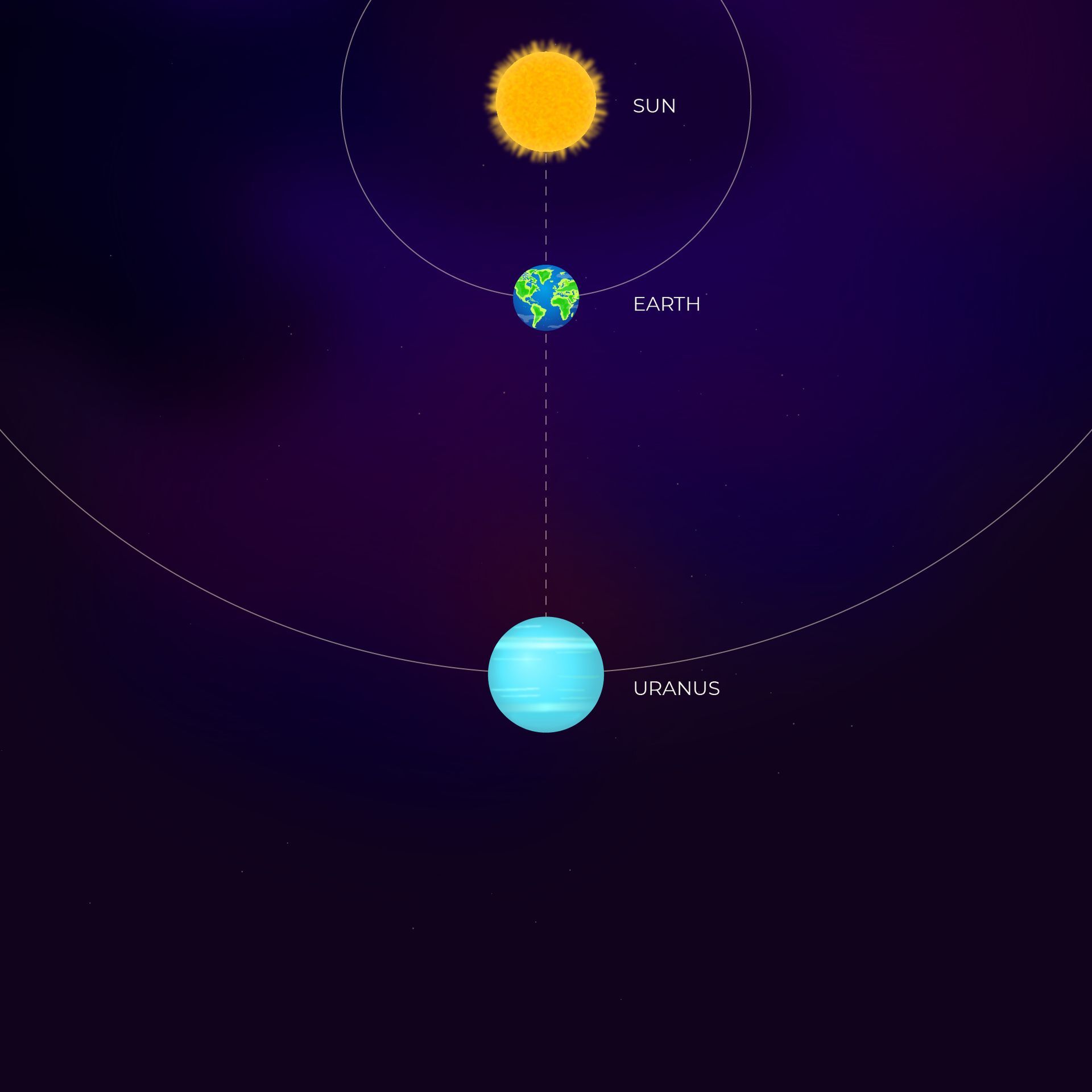
Uranus at Opposition
Uranus reaches opposition—its closest approach to Earth—on November 21. It rises in the east at sunset and stays visible all night, glowing faintly near the Pleiades in Taurus. You’ll need binoculars or a telescope to spot its tiny blue-green disk.
The α-Monocerotid Meteor Shower – November 21
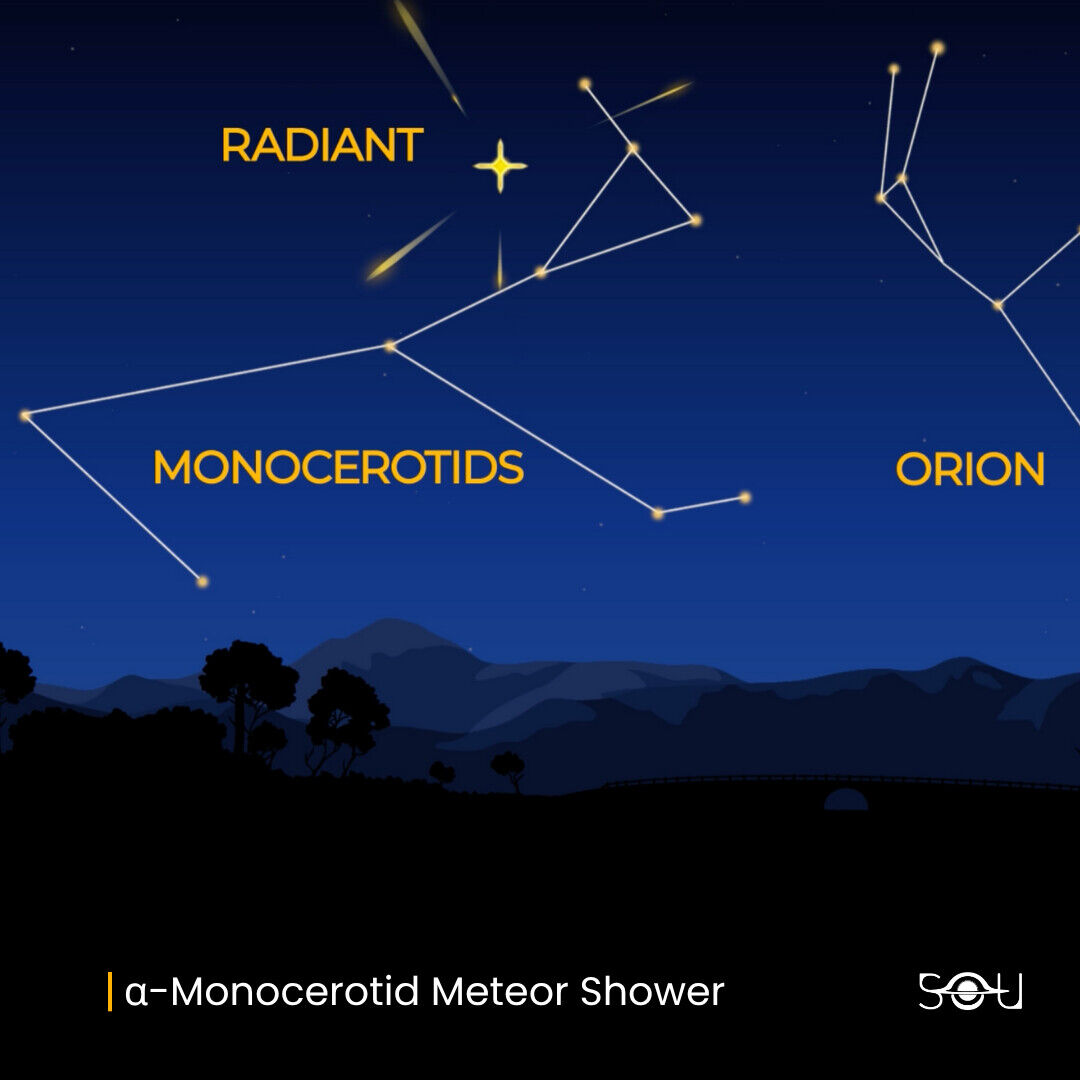
The radiant of the α-Monocerotid meteor shower
Also peaking on November 21, the α-Monocerotids usually produce only a handful of meteors per hour—but occasionally unleash spectacular outbursts. In rare years, rates have exceeded 1,000 meteors per hour, so it’s worth keeping an eye out from dark locations.
The November Orionids Peak – November 28
The November Orionids, active from November 13 to December 6, reach their peak around November 28, producing a handful of faint meteors—about 3 per hour—under dark skies. They’re a gentle reminder of the constant motion of debris through our solar system.
On the same night, Saturn will end its retrograde motion.
The Moon Meets Saturn – November 29
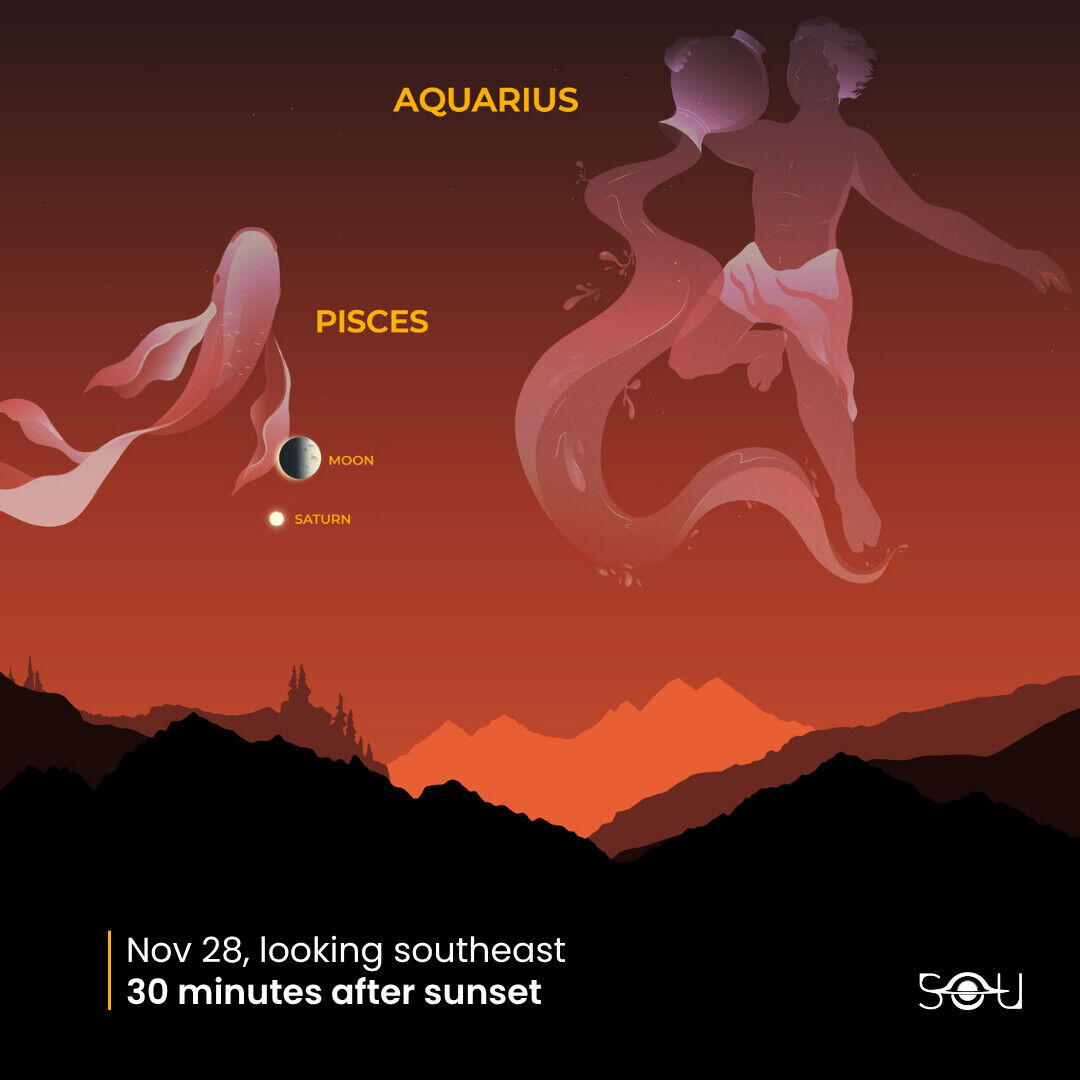
As the month ends, the 9-day-old waxing gibbous Moon will once again pass close to Saturn, this time near the border of Pisces and Aquarius.
November 2025 – Planet Round-Up
☿ Mercury
Visible low in the western dusk sky during the first week of November, then quickly lost in the Sun’s glare for the rest of the month.
♀ Venus
The brilliant “Morning Star” shines brightly in the eastern predawn sky through mid-November before slowly dipping closer to the Sun.
♂ Mars
Still hidden in the Sun’s glare, Mars remains invisible to the naked eye for most of the month.
♃ Jupiter
Now the dominant planet of the night, Jupiter rises in the east in Gemini and stands high near midnight—perfect for telescopic viewing.
♄ Saturn
Glowing with a steady golden light, Saturn lingers near Pisces, visible until about an hour past midnight.
♅ Uranus
Located near the Pleiades cluster in Taurus, Uranus can be seen shortly after sunset with binoculars or a telescope.
♆ Neptune
The distant blue planet lies close to Saturn and is visible only through a telescope under dark skies.
Happy skygazing!