10 Night Sky Events to Watch in June 2026 — From a Jupiter-Venus Conjunction to a Strawberry Micromoon
For most of 2026, Venus and Jupiter have been drifting toward each other across the evening sky. In June they finally meet, pulling within a degree and a half on the 8th and 9th, close enough that a careless glance reads them as one.
Mercury climbs into the same wedge of twilight, the crescent Moon sweeps through, the solstice lands mid-month, and the month ends with a low Strawberry Moon. Almost all of it happens in the west after sunset.
Before we begin, make sure to download one of these space apps to locate the stars and planets according to your place.
June 2–9 — Venus and Jupiter draw together, then meet
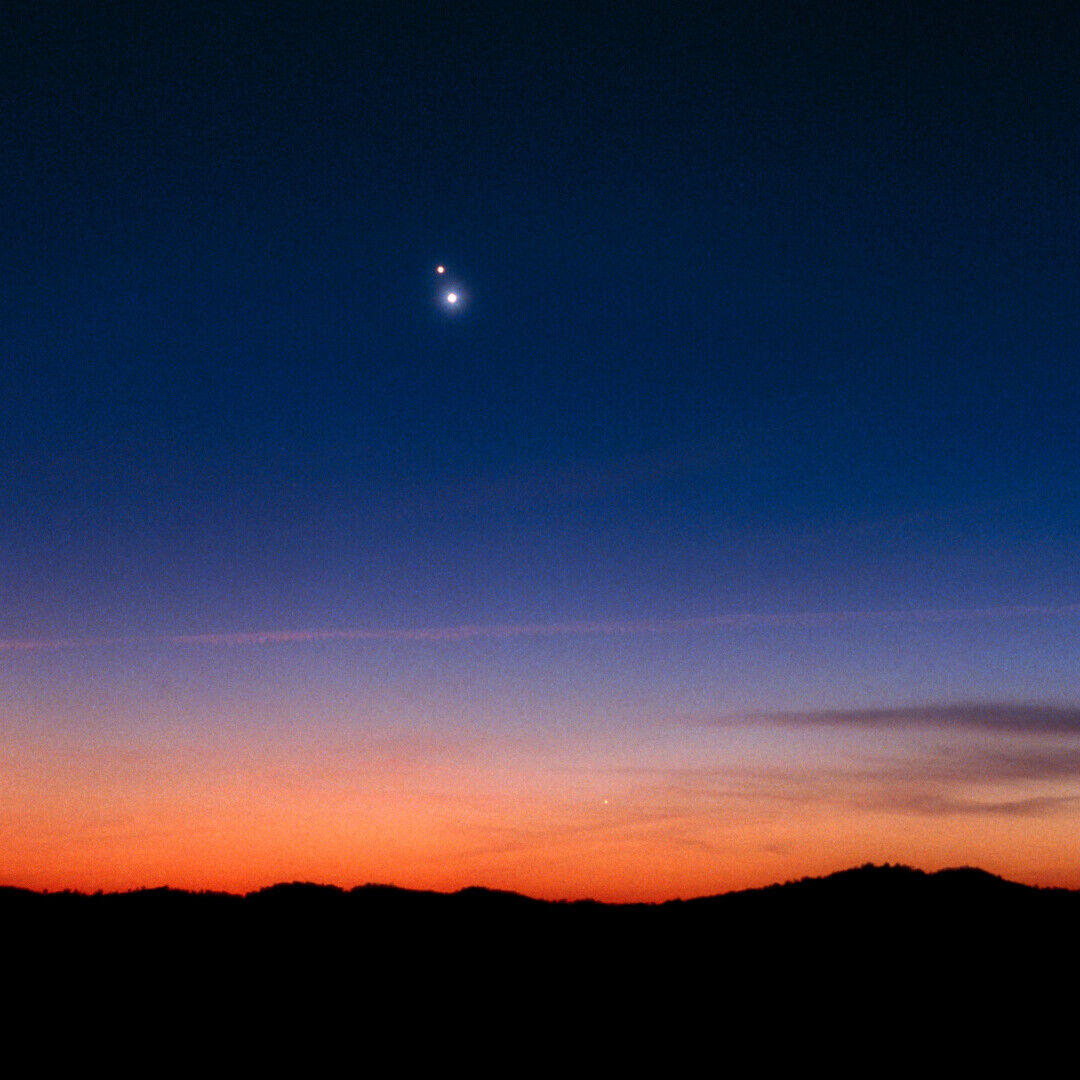
The conjunction of Jupiter and Venus on February 22, 1999, photographed from California, USA.
The headline event builds slowly. From June 2 through 8, Venus and Jupiter close the gap between them a little more each evening.
Step outside about 45 minutes after sunset, face west-northwest, and you can watch the two brightest planets in the sky inch toward each other night after night, low over the horizon near the Gemini twins Castor and Pollux.
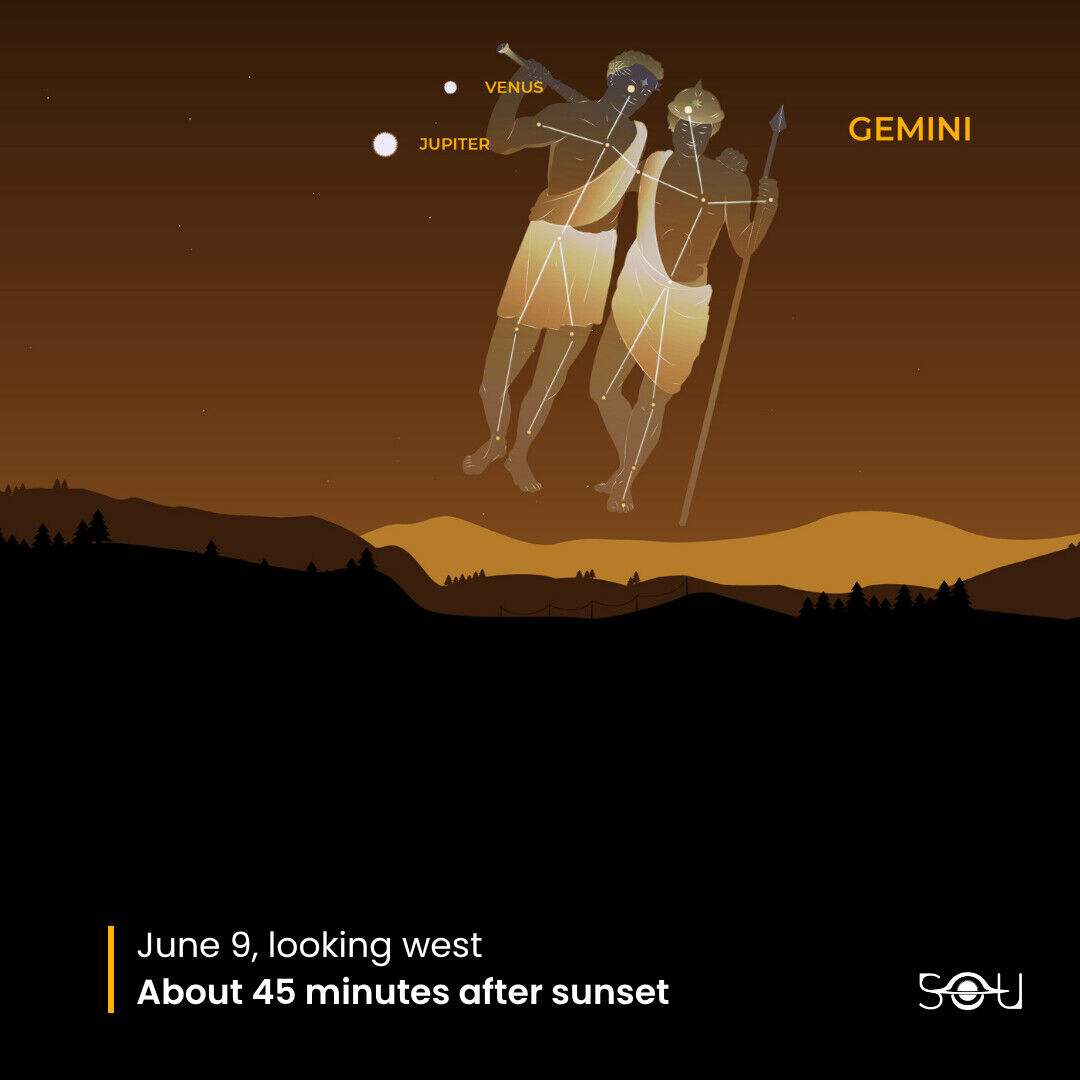
Venus, blazing at magnitude -4.0, is unmistakable; Jupiter, a touch fainter at about -1.8, sits just off it and closes in. They are closest on the evenings of June 8 and 9, separated by roughly a degree and a half, about three Moon-widths, or a pinky finger held at arm's length.
To the naked eye they read almost as a single brilliant point. Through binoculars both fit easily in one field, and a small telescope aimed at Jupiter will show its four largest moons strung out beside the glare of Venus. This is the closest the pair will appear all year. After the 9th they separate: Venus climbs higher into the evenings ahead, while Jupiter slides down toward the Sun and is lost in the glare by July.
Catch it now. Conjunctions this tight between the two brightest planets are not an every-year affair.
June 10 — A thin Moon meets Saturn before dawn
Turn around. While the planets gather in the western evening, the morning sky runs its own quieter show.
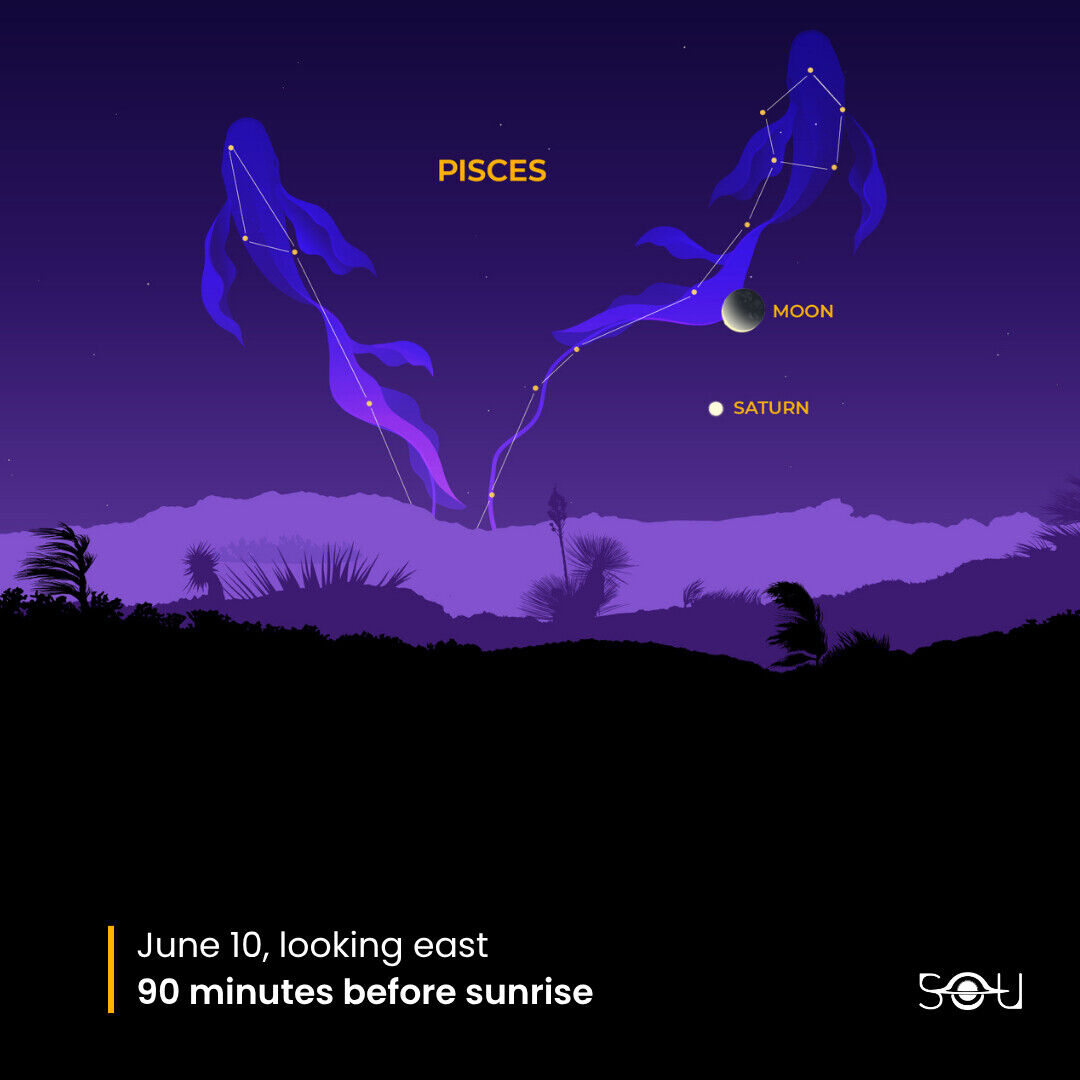
Before sunrise on June 10, a waning crescent Moon hangs within about five degrees, three finger widths, of Saturn, low in the east. Both rise after midnight and ride together until daylight washes them out.
Saturn is still climbing out of the morning twilight after spring's solar conjunction, so it sits low, but a backyard telescope turned on it now delivers one of the season's best views of the rings. Reddish Mars is nearby, below Saturn and harder to catch.
The same morning marks the peak of the Daytime Arietids, one of the strongest meteor showers of the entire year, and one almost nobody sees, because its radiant rises only just ahead of the Sun. Your one real chance is the narrow band of darkness right before dawn, looking east, for the occasional earthgrazer that skims the upper atmosphere on a long, shallow path.
June 11–12 — Mars, the Moon, and Saturn in a line
Over the next two mornings the crescent thins and drops toward Mars. On June 11, about an hour before sunrise, Mars, the Moon, and Saturn string themselves into a tight diagonal above the eastern horizon, a clean three-body line that wants an unobstructed view east to appreciate.
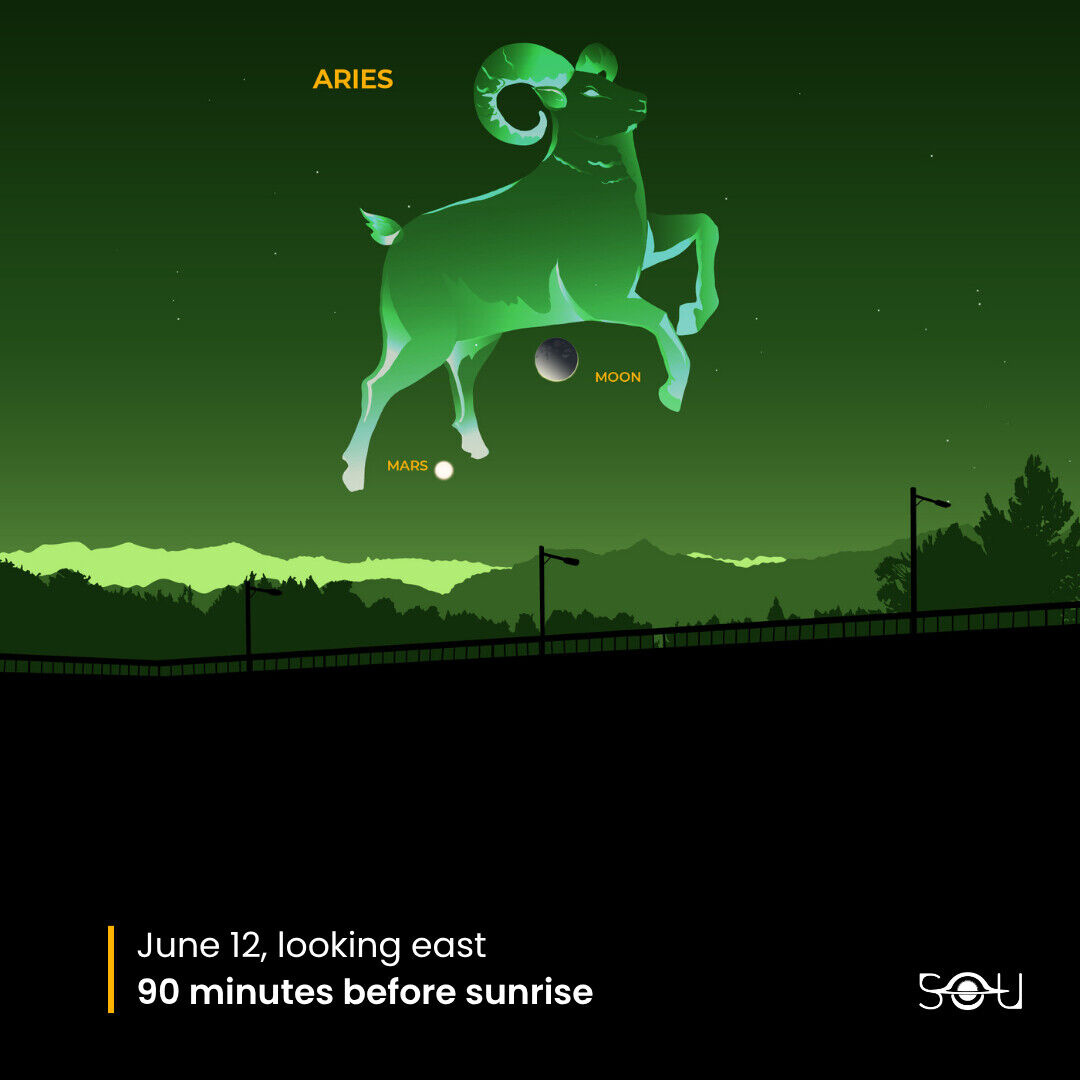
By June 12 the slender Moon sits beside Mars itself. At magnitude +1.3 the red planet is faint and low this month, still pulling clear of the Sun's glare among the stars of Taurus, and the Moon is the easiest way to find it.
June 15 — New Moon, and Mercury at its best
The Moon reaches new phase, handing the mid-month sky its darkest nights, the window to chase faint galaxies and the rising summer Milky Way far from city light.
The same day, Mercury reaches greatest eastern elongation, swinging 25 degrees from the Sun and as high into the evening sky as it will climb this round.
Look low in the west-northwest 30 to 45 minutes after sunset, below brilliant Venus and Jupiter; at around magnitude zero it outshines most stars, though it sits close to the horizon and fades fast in the days that follow. For the innermost planet, this is a respectable evening showing from both hemispheres.
June 16-18 — A celestial lineup in the evening sky
Now the returning crescent climbs back into the western evening and threads the entire planetary lineup over three nights.
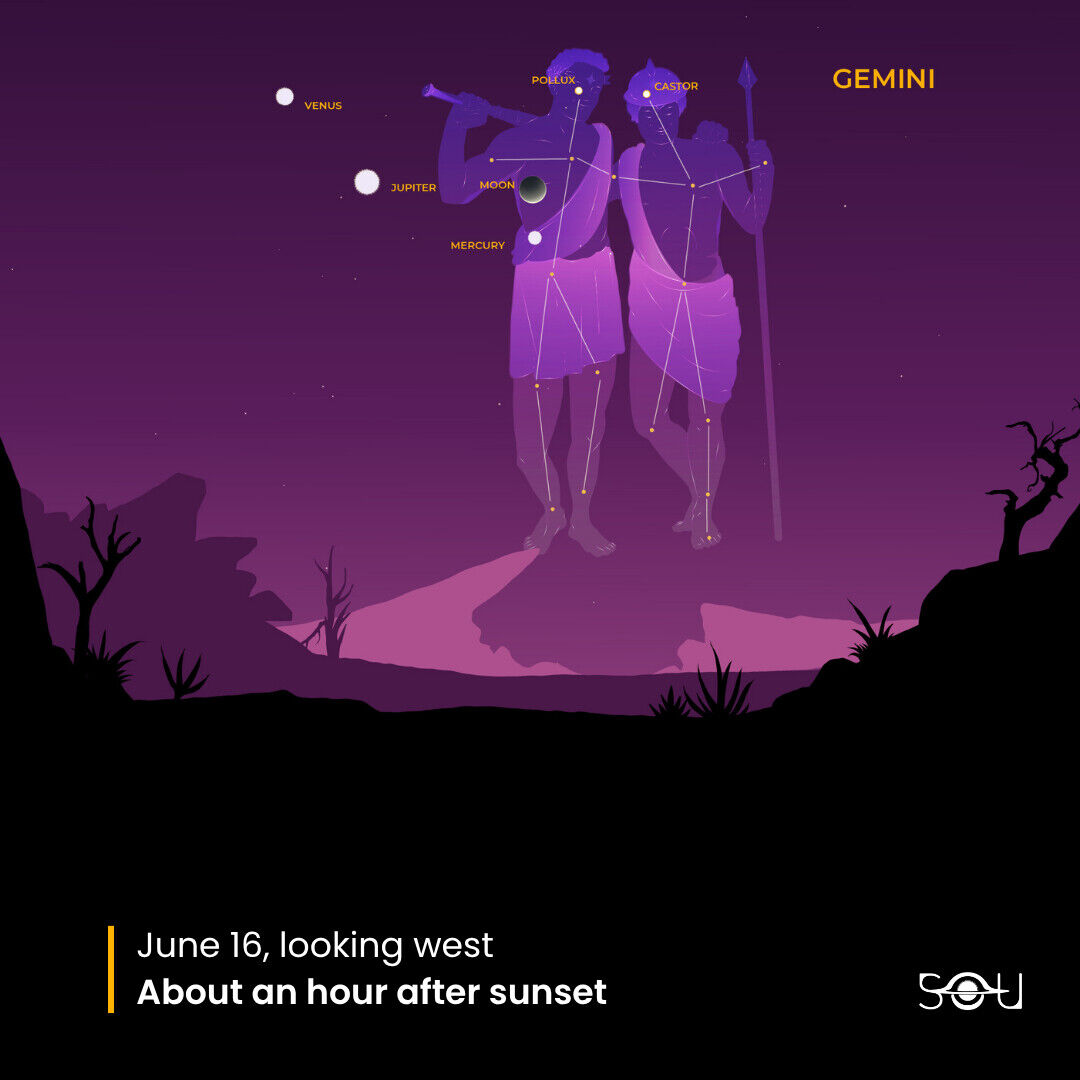
On June 16 a hair-thin Moon, lit softly by earthshine, forms a triangle with Jupiter and Mercury low in the twilight.
By June 17 it has climbed past Venus, and the western sky holds a remarkable string: the crescent Moon, brilliant Venus, bright Jupiter, and faint Mercury, laid out beneath Castor and Pollux.
The arrangement peaks on June 18. That evening, after sunset, five objects fall into a rough line climbing away from the horizon: Mercury lowest and fading, near Pollux; then Jupiter; then dazzling Venus, sitting near the Beehive Cluster in Cancer; then the waxing crescent Moon; and finally Regulus, the brightest star in Leo, anchoring the top.
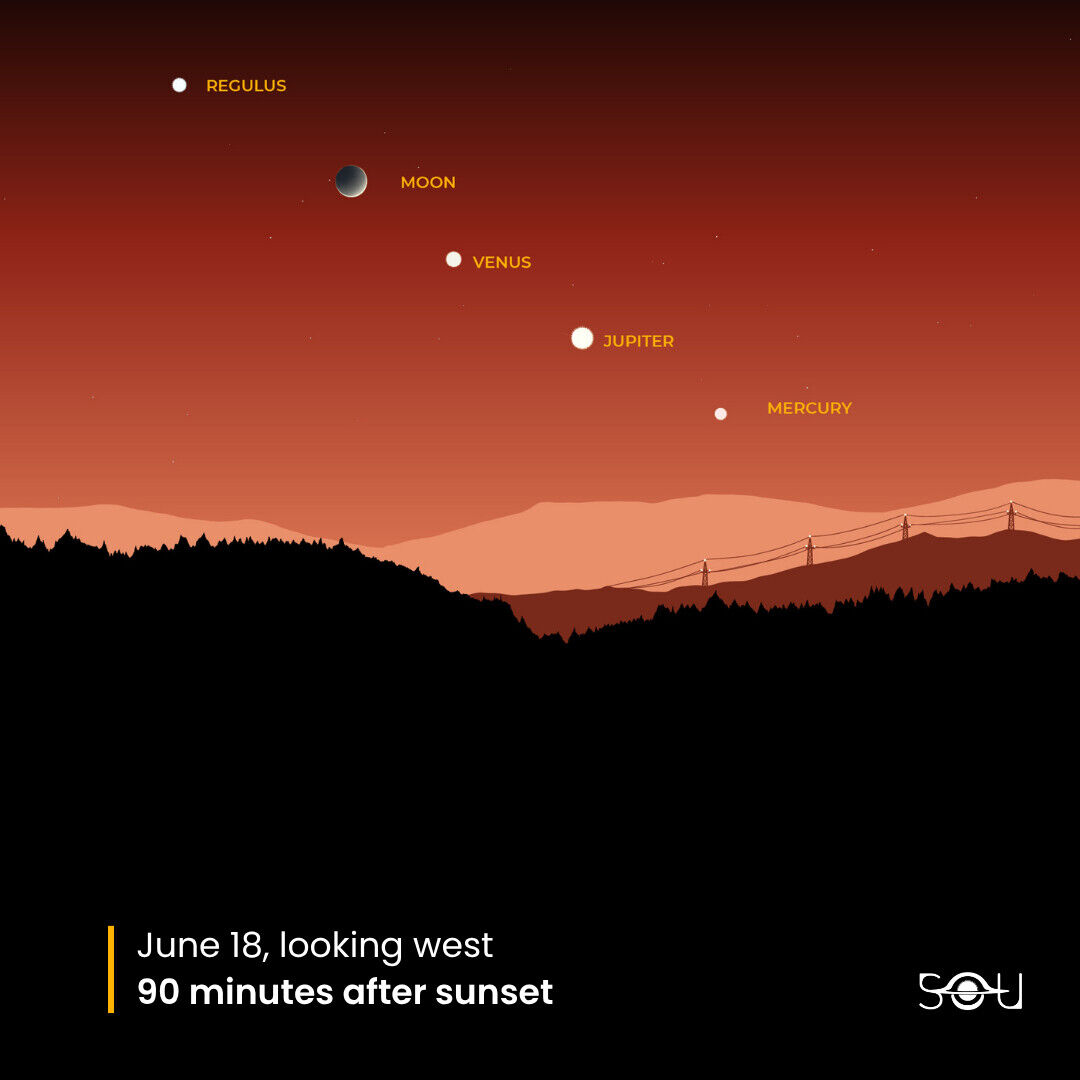
Mercury, Jupiter, Venus, Moon, and Regulus line up in the western dusk sky on June 18, 2026
It is the kind of tidy alignment that looks deliberate and is pure coincidence of orbits. You will want a flat, open western horizon and the patience to wait until the Sun is fully down before looking. Mercury and Jupiter sit low and sink fast, so start as soon as the sky begins to darken.
June 21 — The solstice, and a half-lit Moon
At 08:24 UTC (4:24 a.m. EDT) the Sun reaches its northernmost point in the sky, standing directly over the Tropic of Cancer, and the June solstice arrives.
For the Northern Hemisphere it is the longest day of the year, the Sun riding higher and setting farther north than on any other date; at high latitudes it brings the white nights of the midnight Sun. South of the equator the same instant marks the shortest day and the start of winter, and the heart of aurora australis season over Tasmania and southern New Zealand.
The Moon reaches first quarter the same day, a clean half disk well placed in the evening for tracing craters along the terminator.
June 23 — The Moon passes Spica
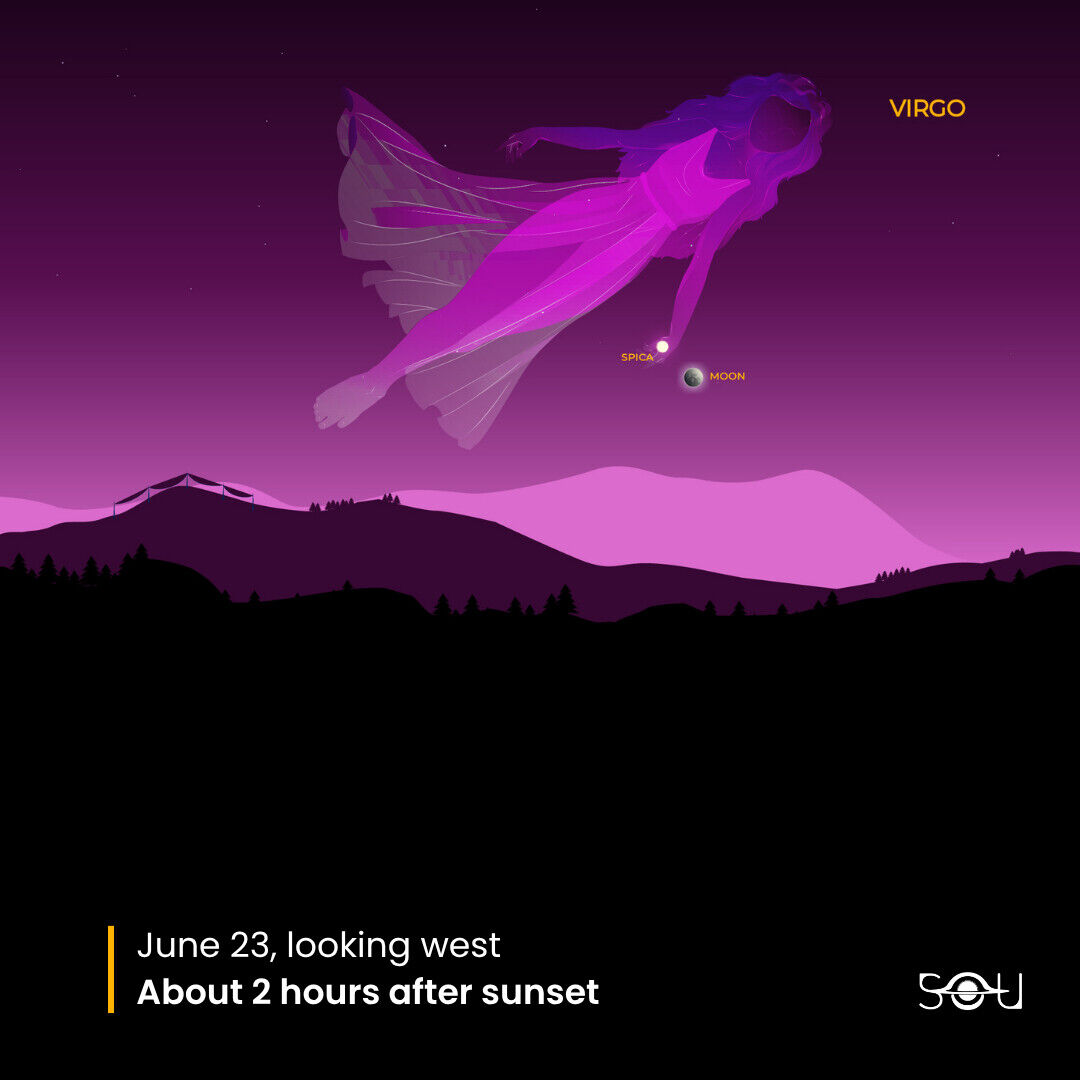
A waxing Moon, about two-thirds lit, glides within two degrees of Spica, the brightest star in Virgo, in the evening sky. Spica is a blue-white pair of stars far hotter than the Sun, and the Moon makes a reliable signpost to it; the two ride the southern sky together after dark.
June 21 — Mercury and Jupiter, low and fading
In the last gasp of the evening planet show, Mercury slides past Jupiter, the two within about four degrees of each other low in the west-northwest after sunset.
Mercury is dropping down out of its mid-month peak while Jupiter sinks toward the Sun, and within days both will be gone into the twilight. Binoculars help against the bright sky. Catch them before they go.
June 27 — The Moon brushes Antares, and the June Bootids peak
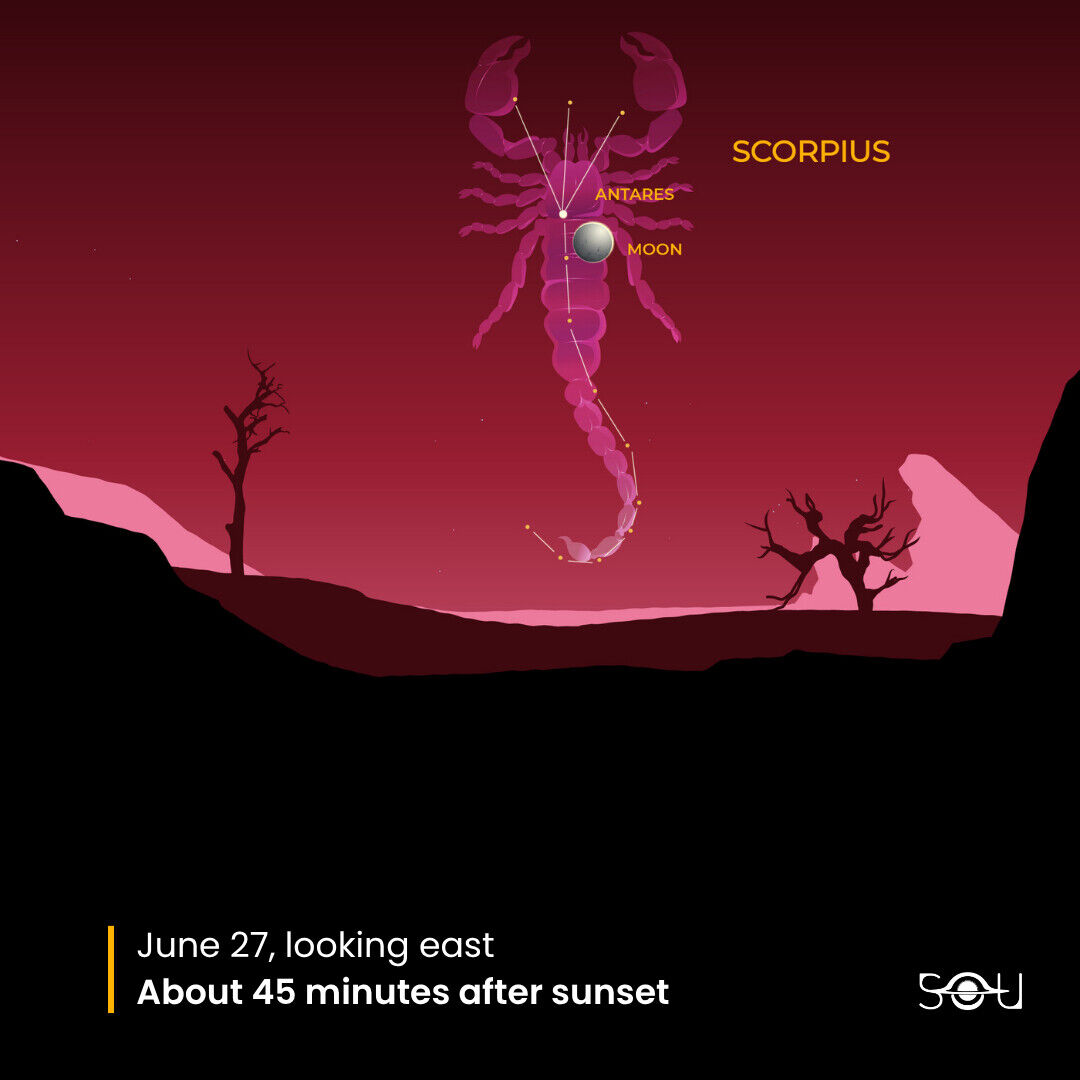
A nearly full Moon passes Antares almost dead on tonight, about a quarter of a degree from the red supergiant heart of Scorpius, close enough that from some places the Moon clips in front of the star.
The same night brings the peak of the June Bootids, debris from comet 7P/Pons-Winnecke. Most years the shower offers only a handful of meteors an hour, but it is famously unpredictable, with sudden bursts of a hundred or more on record and no reliable way to forecast them. The trouble in 2026 is the Moon, nearly full and flooding the sky, which buries all but the brightest streaks. Worth a glance if you are already out; not worth setting an alarm.
June 29 — The Strawberry Moon, another micromoon
June's full Moon turns full at 23:57 UTC on the 29th, which is 19:57 EDT, and rises low in Sagittarius as the first full Moon of northern summer.
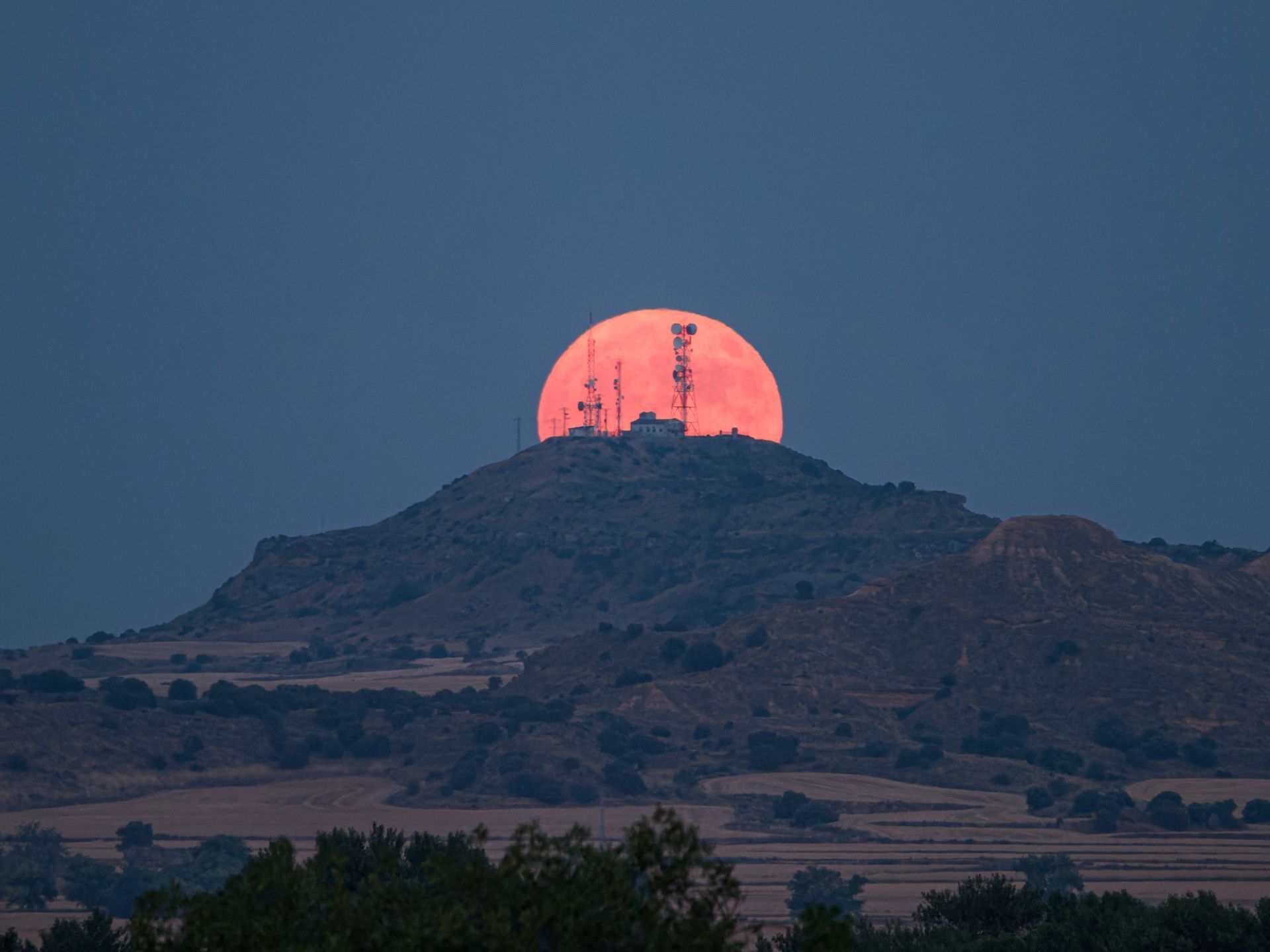
The old name has nothing to do with color; it tracks the brief season when wild strawberries ripen across the northeastern woodlands. Like May's Blue Moon, this one is a micromoon, full near apogee at roughly 405,000 kilometers away, so it hangs slightly smaller and dimmer than average. You will not notice the difference by eye.
Watch it climb out of the southeast at dusk, swollen and amber low on the horizon, and let the Moon illusion do its work.
June 2026 Planet Round-up
Mercury has its best evening showing of the season, reaching greatest eastern elongation on June 15 and sitting low in the western twilight below Venus and Jupiter before fading quickly in the final week.
Venus owns the western evening sky all month, the brightest point of light after sunset at magnitude -4.0, passing Jupiter on June 8 and 9 and then climbing steadily higher in the evenings that follow.
Mars is a faint, low predawn object at magnitude +1.3, lingering near the Sun's glare among the stars of Taurus and staying difficult to spot beneath Saturn in the eastern morning sky.
Jupiter is brilliant in the western evening early in June, alongside Venus at the conjunction, but sinks toward the horizon week by week and is swallowed by the Sun's glare by July.
Saturn climbs higher in the predawn eastern sky as the month goes on, still low but improving, with the rings beautifully placed for any small telescope.
Uranus, just emerging from last month's solar conjunction, stays buried in the bright morning twilight and is effectively out of reach.
Neptune is a telescope-only target at magnitude +7.9 in the predawn sky, riding near Saturn but far too faint for the naked eye.