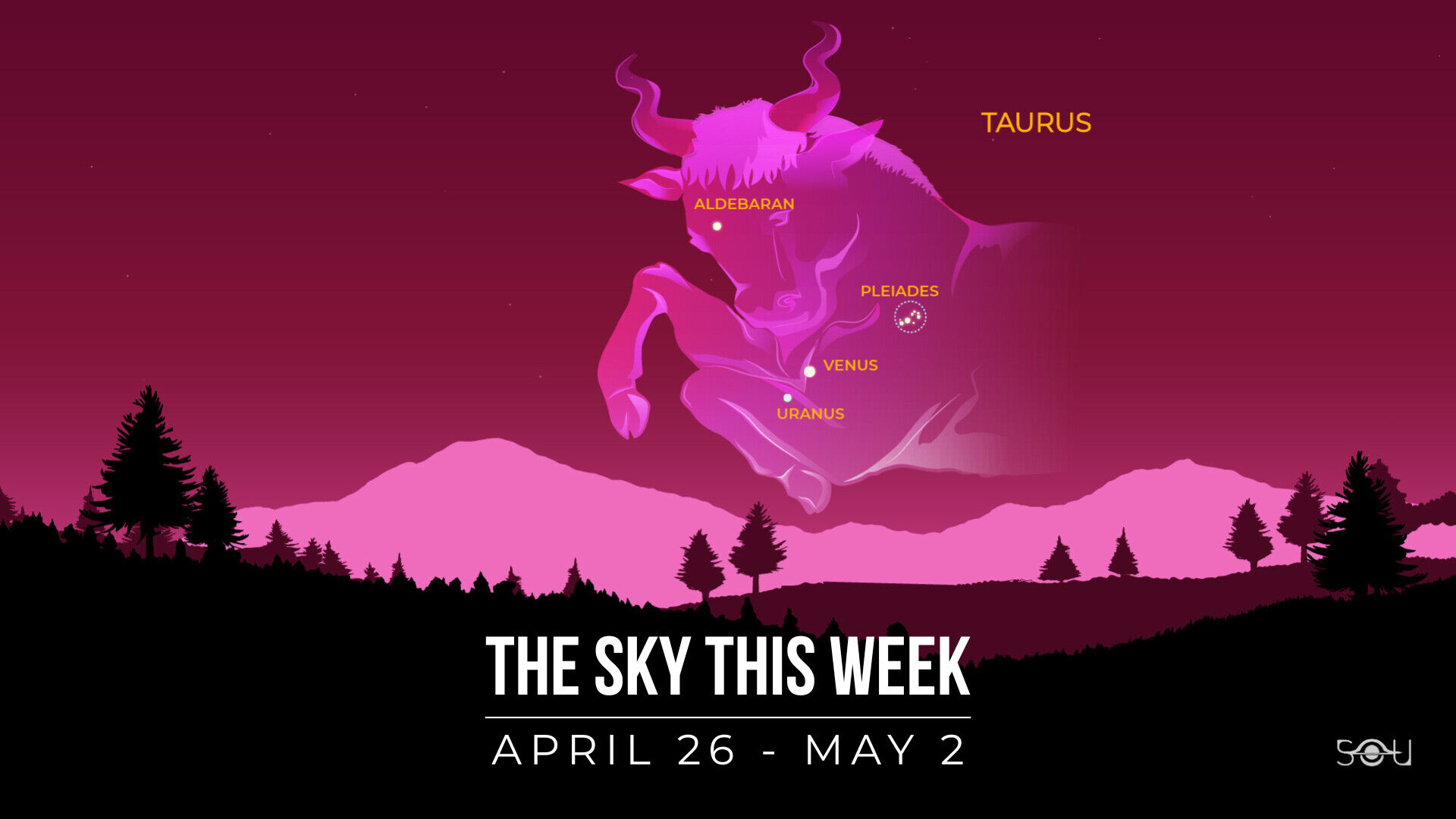
The Sky This Week, April 26 - May 2, 2026
This week, the Moon walks past two of spring’s brightest stars, Venus glides through the face of Taurus, a comet makes its closest approach to Earth, and May opens with a full Moon that is smaller than usual. Here’s what to look for, night by night.
April 26 — Moon Occults Regulus
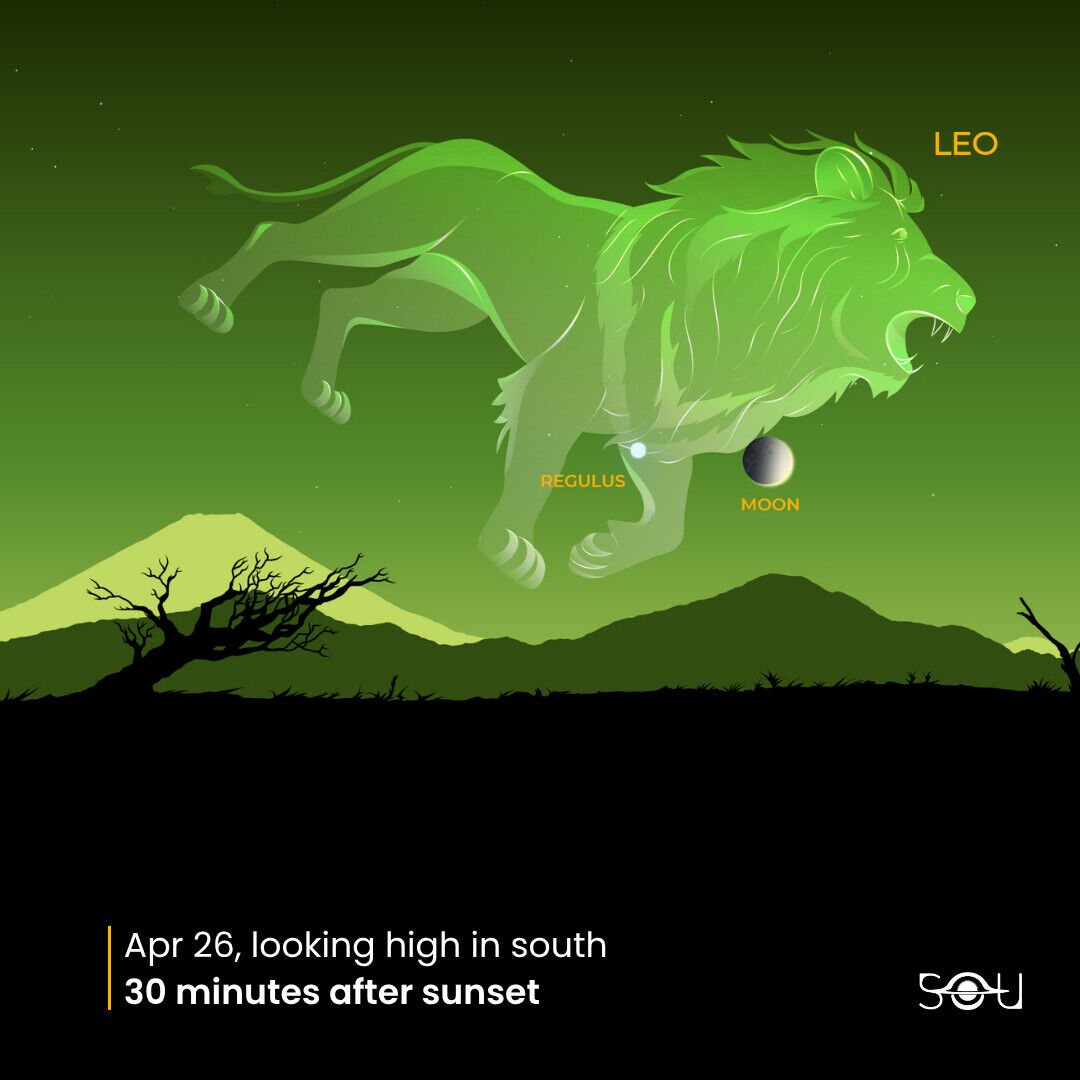
The week opens with one of the most dramatic events of 2026. On the night of April 25 into the early hours of April 26, the waxing gibbous Moon — about 70 percent illuminated — passes within twenty arcminutes of Regulus, the blue-white heart of Leo. From much of the world, the pairing is simply a beautiful close conjunction. But for observers in the eastern United States, the Caribbean, Central America, and northeastern South America — Brazil, Colombia, and Venezuela in particular — the Moon will actually pass in front of the star, blotting it out entirely in what astronomers call a lunar occultation.
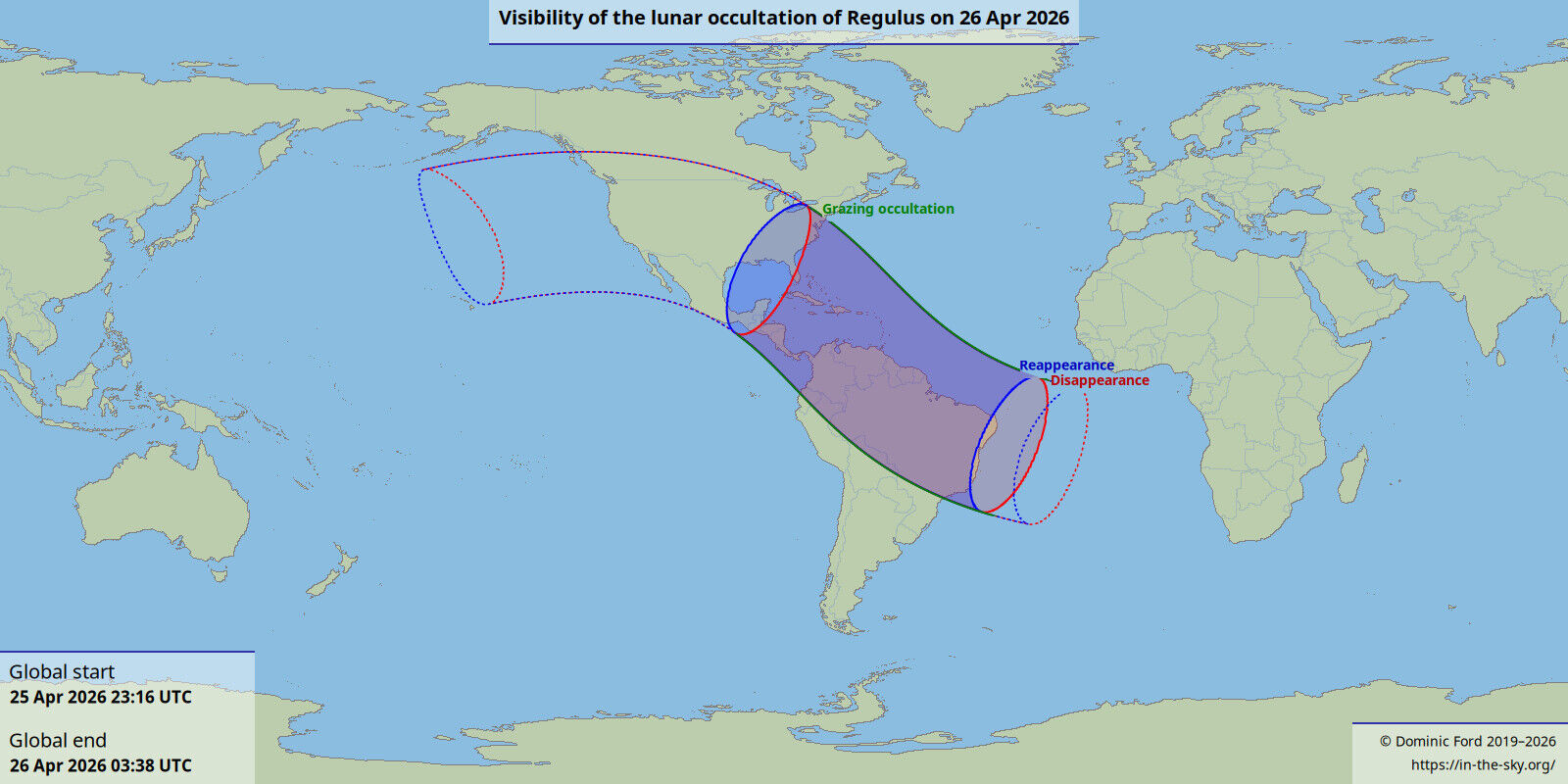
Map of lunar occultation of Regulus on April 26, 2026
Because the Moon has no atmosphere, Regulus will not fade. It will simply wink out, instantly, as if a switch had been flipped — and then, an hour or so later, snap back into being on the other side of the lunar limb. This is one of the best-placed Regulus occultations of 2026, and the next chance for North American observers won't come until 2036.
By the evening of April 26, the Moon has slid past Regulus and stands about 13 degrees to the star's lower left, now 80 percent illuminated and climbing toward full.
April 26 — Comet R3 PanSTARRS Comes Closest
_on_8_April_2026-1920x1080.jpg)
Comet C/2025 R3 (PanSTARRS) on 8 April 2026, 2:50 (UTC)
Comet C/2025 R3 (PANSTARRS) reaches its closest approach to Earth on April 26, passing roughly 45 million miles, or 72 million kilometres, from our planet. That is close in astronomical terms, but still safely distant — almost half the average distance between Earth and the Sun.
This comet has had a complicated few weeks. Before perihelion, it gave northern observers and astrophotographers a brief dawn show, rising very low before sunrise with a thin tail and a greenish coma. But around closest approach, it lies close to the Sun in our sky, making it difficult, and in many places impossible, to see visually.
The better post-perihelion window belongs to the Southern Hemisphere, where the comet begins to emerge low in the western sky after sunset in late April. Even there, it is not an easy catch. You will need a clear horizon, binoculars, and a sky still dark enough before the comet sinks into twilight. From the Northern Hemisphere, the comet becomes much less favourable after this point, fading as it pulls away from both Earth and the Sun.
Still, it is worth mentioning because you are looking at a visitor that has spent most of its life in the deep cold beyond the planets, only now being warmed, brightened, and reshaped by sunlight.
April 29-30 — Moon Meets Spica
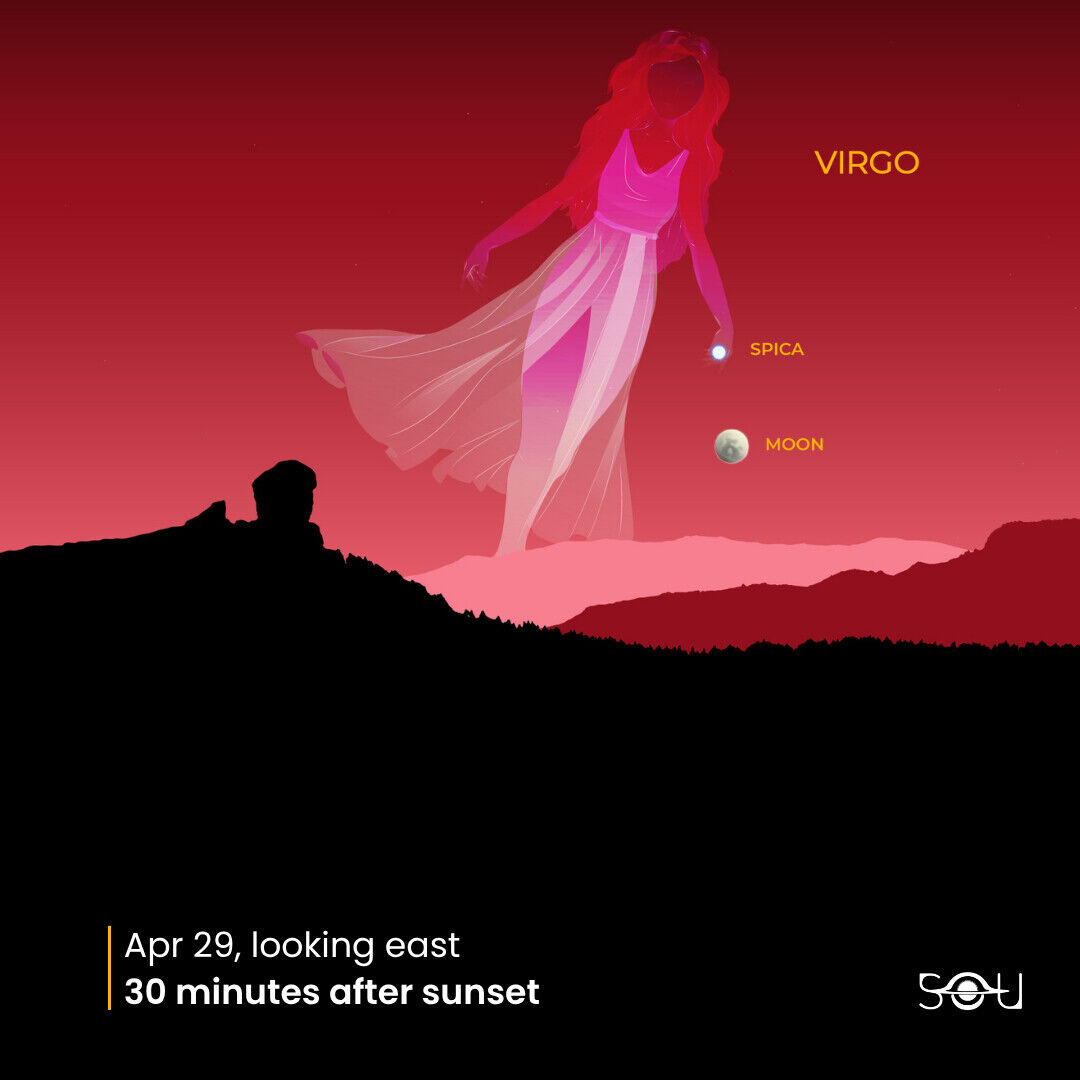
The Moon rises alongside Spica in Virgo on April 29-30, 2026, visible 30 minutes after sunset looking east.
Late on April 29 into the early hours of April 30, the nearly full Moon, about 98 percent illuminated, passes close to Spica, the brightest star in Virgo. The pair is at its best before dawn on Thursday, when Spica sits only a couple of degrees from the Moon.
By Thursday evening, the Moon has already moved noticeably onward, leaving Spica farther behind. The pairing is easy to see with the naked eye, though the Moon’s bright glare will wash out many fainter stars nearby.
April 30 — Venus Brushes Past Aldebaran
While the Moon and Spica rise in the east, the western sky offers a very different scene. Venus, now climbing higher into the evening twilight, passes through Taurus and brushes past Aldebaran, the red-orange eye of the Bull.
Look west-northwest about 45 minutes to an hour after sunset. Venus will be impossible to miss, shining as the brightest starlike object in the sky. Aldebaran will appear nearby, warmer and dimmer, set against the loose V-shaped pattern of the Hyades star cluster.
The contrast is beautiful. Venus is a cloud-covered world next door, reflecting sunlight from just a few light-minutes away. Aldebaran is an aging red giant about 65 light-years distant, no longer young and blue, but swollen and amber with age.
Higher in the western sky, Jupiter is still visible in Gemini, shining steadily near the twin stars Castor and Pollux. Each evening now, Venus climbs a little higher while Jupiter sinks a little lower. They are still far apart, but the gap between them is slowly closing. In early June, the two brightest planets will meet in a much tighter evening conjunction.
May 1 — The Micro Flower Moon
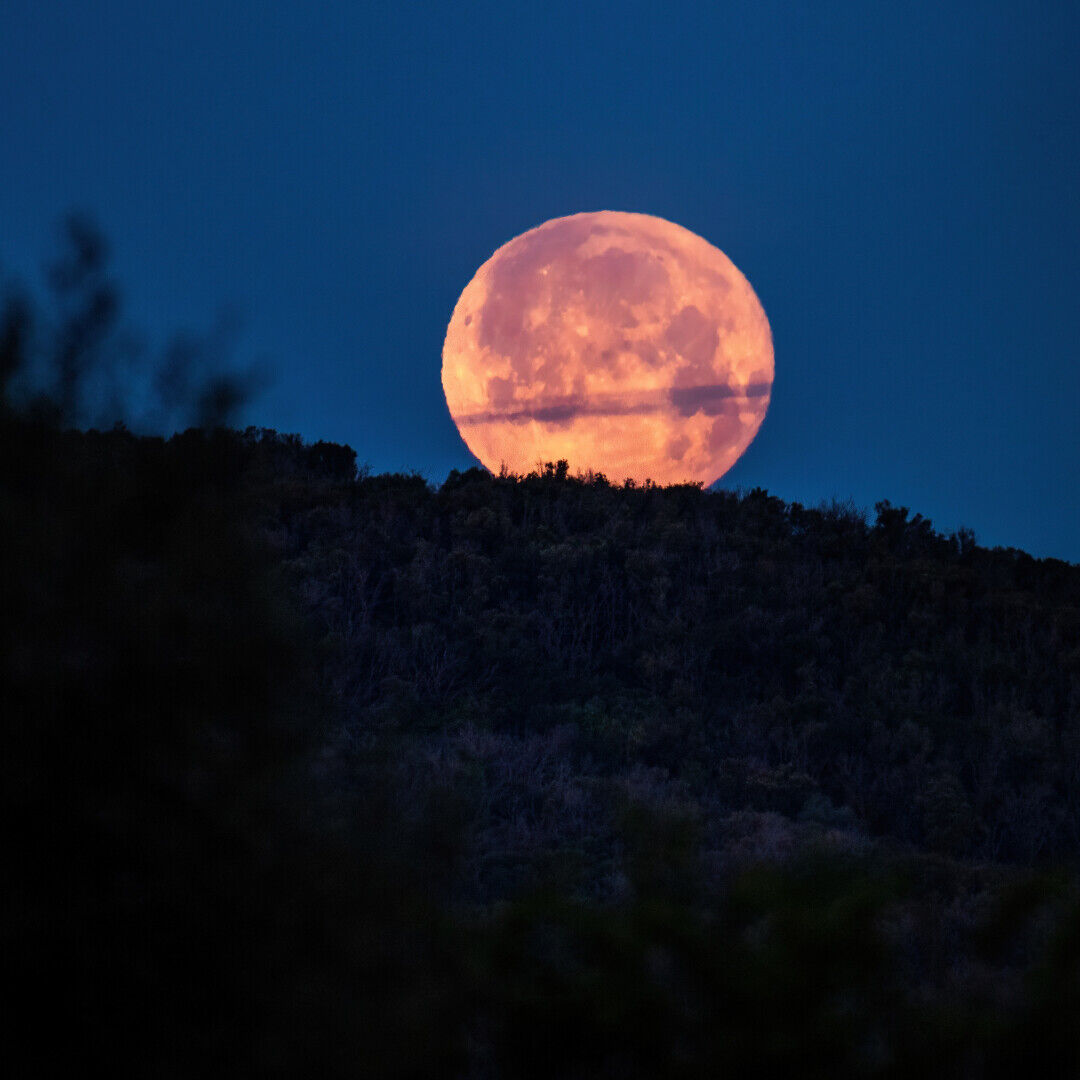
A Micro Flower Moon will rise across the world on May 1, 2026
May begins with a full Moon.
The Flower Moon rises around sunset on May 1, glowing low in the southeast as the Sun slips away in the opposite direction. Its name comes from the blooms of spring in the Northern Hemisphere, but the Moon itself will not look floral or unusually coloured. Like all full Moons near the horizon, it may appear golden or orange simply because its light is passing through a thicker layer of Earth’s atmosphere.
This one, however, has a small twist. The May 2026 Flower Moon is also a micromoon, meaning it occurs when the Moon is near apogee — the farthest point from Earth in its elliptical orbit. It will appear slightly smaller and dimmer than a full Moon that occurs near perigee, though the difference is subtle to the eye.
A full Moon is not the best time to study lunar craters; the sunlight falls almost straight down on the lunar surface, erasing the dramatic shadows that make mountains and valleys stand out. But it is the best time to simply watch the Moon rise: huge-looking, golden, and familiar, lifting itself over trees, rooftops, or a distant horizon.
Next week: the Moon begins to wane, the Eta Aquariid meteor shower reaches its peak, and dust from Halley’s Comet returns to Earth’s sky.
Also Read
The Five Space Apps That Will Change The Way You Look At The Night Sky