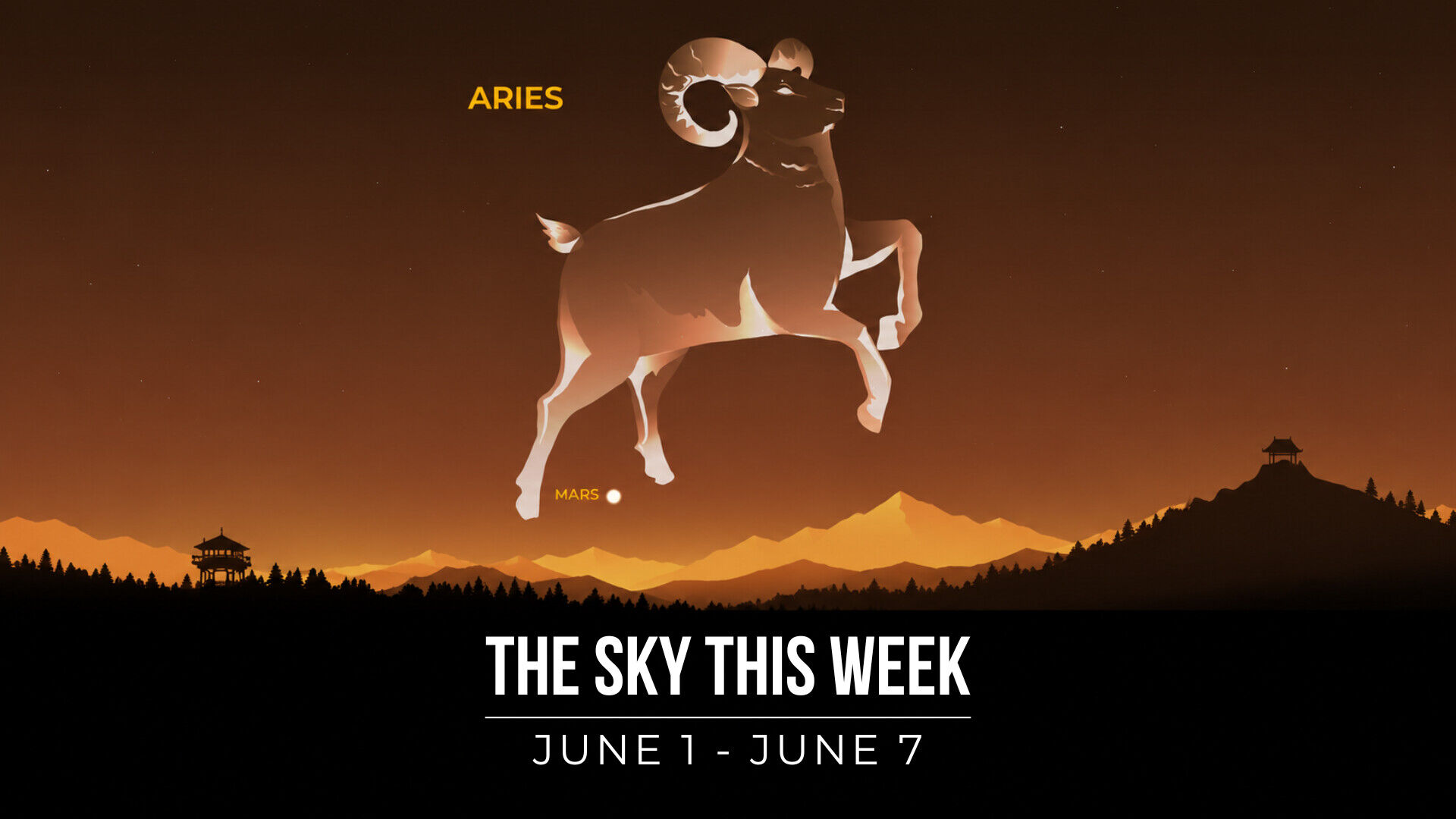
The Sky This Week, June 1 - June 7, 2026
The best show this week sits low in the west just after sunset, and it gets better every evening. Venus and Jupiter, the two brightest planets in the sky, are converging toward a close conjunction on the 8th and 9th, and all week the gap between them keeps shrinking.
The Moon, just past its Blue Moon turn on May 31, now rises late and keeps to the small hours, so the early evenings stay dark.
Off in the predawn east, Saturn climbs a little higher each morning with faint Mars trailing below it. And late in the evening, Vega clears the northeast as the first marker of northern summer. Here is what to look for, night by night.
Read the full report on top night sky events in June 2026 here
June 1 — Venus and Jupiter begin their final approach
Face west-northwest as the twilight deepens and two points will outshine everything near them. The brilliant one, near magnitude -4, is Venus. The slightly softer one just above it, around magnitude -2, is Jupiter.
/me
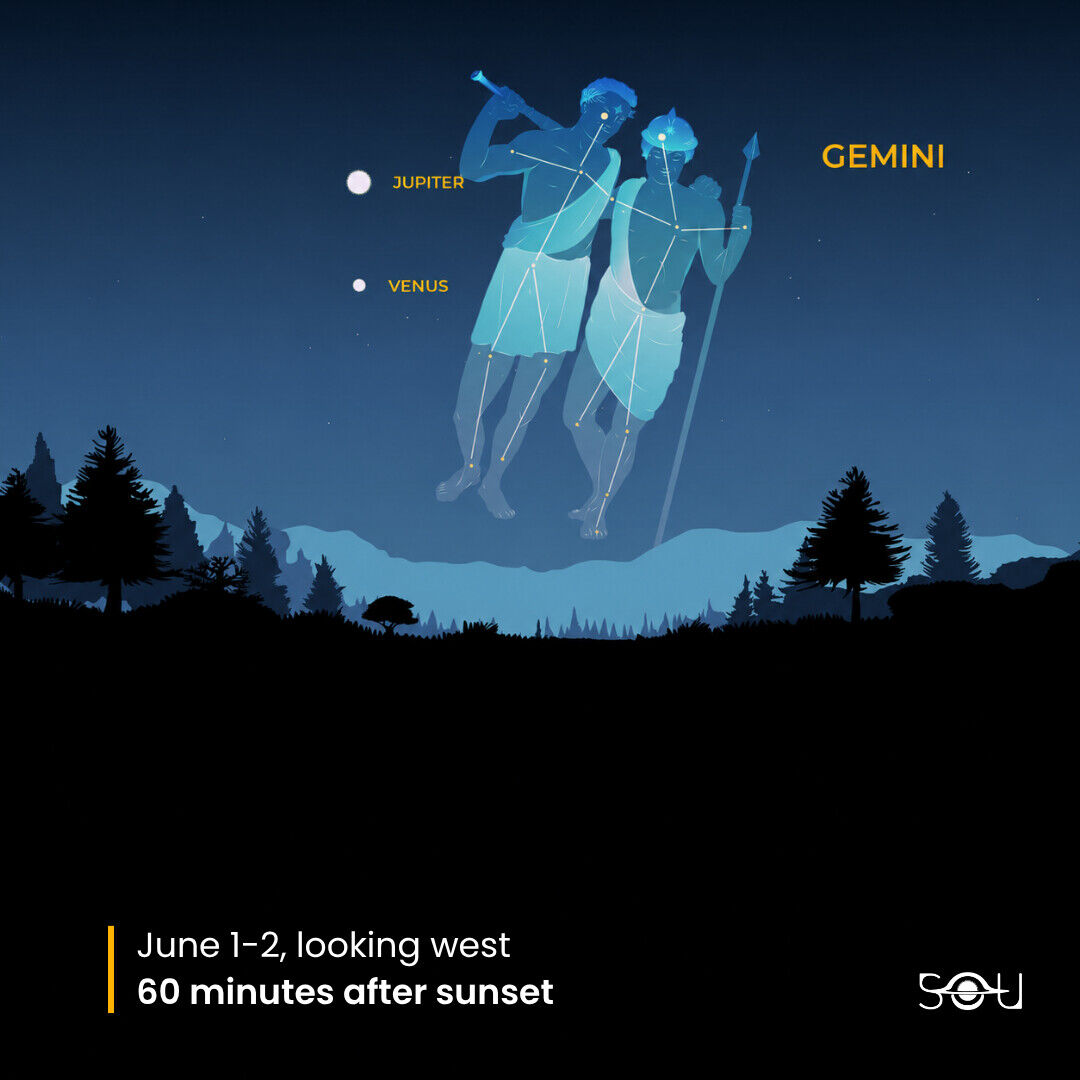
For now Jupiter rides higher, but Venus is climbing fast and will overtake it by the 8th and 9th. They sit low, so the window is short: roughly the first 45 minutes after the Sun is gone, before the pair follows it under the horizon.
Binoculars catch both in a single field. From mid-northern latitudes they hug the horizon, so an open, flat western view is everything. Observers south of the equator see the same pairing.
June 2 — Vega and the Summer Triangle return to the evening
With the Moon held off until well after midnight, the eastern evening sky turns dark enough to watch summer's signature pattern rise.
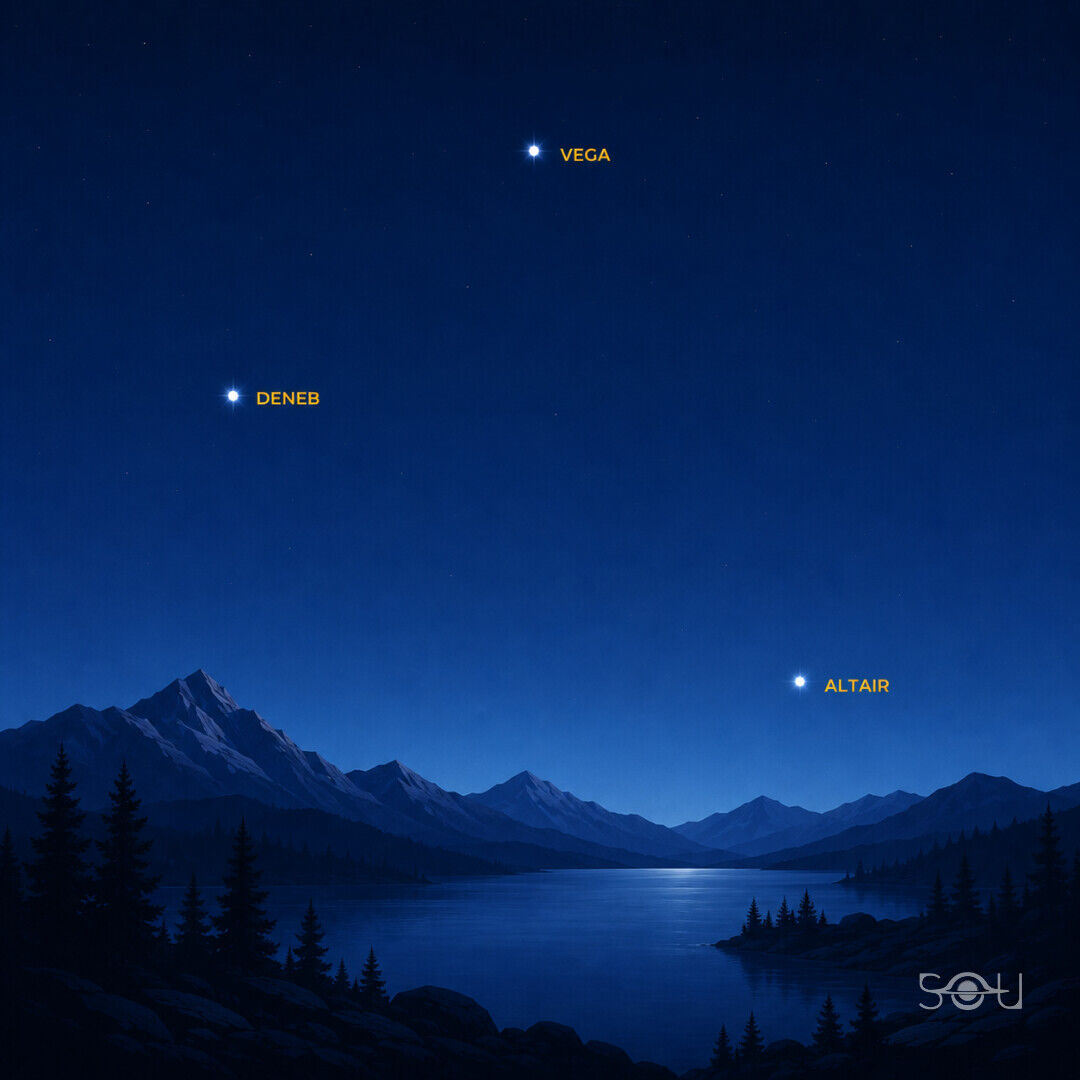
Vega comes up first in the northeast, blue-white and one of the brightest stars of the coming season. Deneb follows to its lower left, and Altair later and lower still, the three of them marking the Summer Triangle.
For Northern Hemisphere watchers this is the seasonal cue; from the Southern Hemisphere the Triangle stays low in the north.
If you live far enough north, above roughly 50 degrees latitude, scan the northern horizon in late twilight for noctilucent clouds, the electric-blue ice wisps that ride the edge of space through June and July
June 3 — Saturn and Mars before dawn
Before sunrise the action moves to the opposite horizon. Saturn stands about 20 degrees up in the east-southeast an hour before dawn, yellow-white and steady, drifting through the dim stars of Pisces. It gains a little altitude each morning, though it sits low enough that its rings are still a poor telescopic target; that improves later in the summer as it climbs.
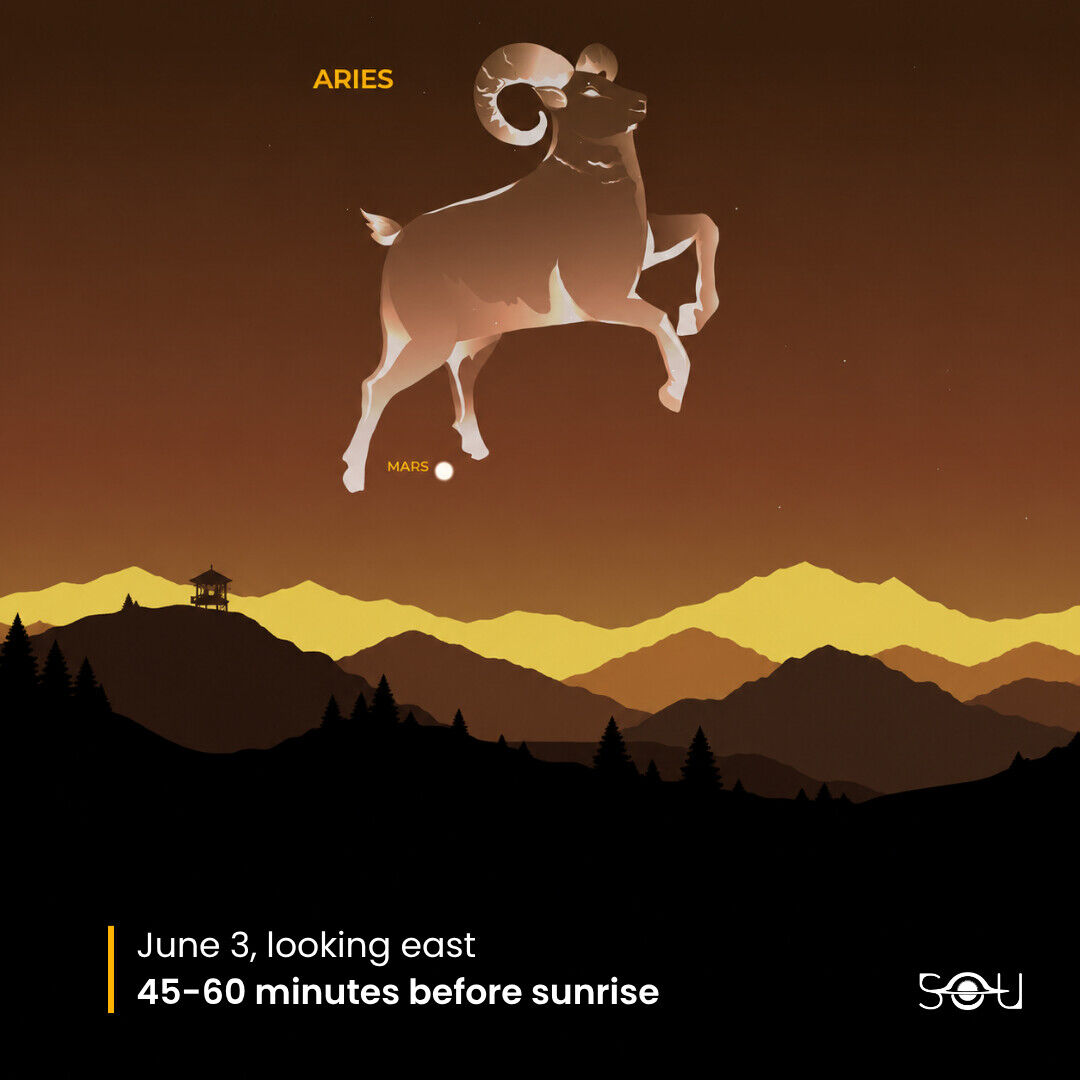
Mars in the predawn sky of June 3, 2026
Well below it, closer to the east-northeast horizon, reddish Mars is only recently back from the far side of the Sun. At about magnitude +1.3 it is faint for Mars and low enough that binoculars help. Both planets are within reach from either hemisphere.
June 5 — Scorpius and the heart of the Milky Way
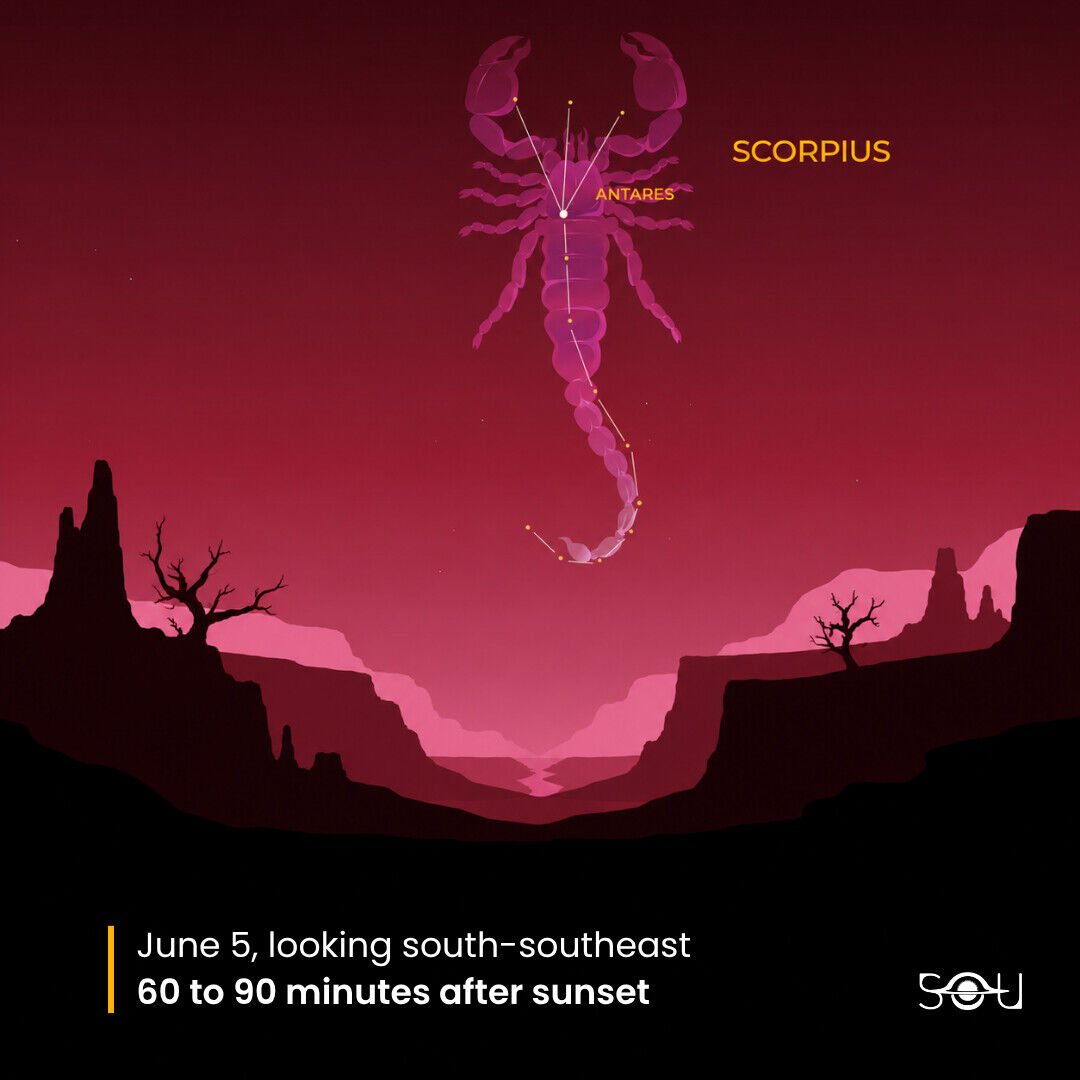
Low in the south-southeast, the curved sting of Scorpius is climbing back into the evening, led by Antares, the red supergiant that marks the scorpion's heart. As the week's later moonrise opens a wider stretch of dark sky, the band of the Milky Way begins to rise behind it.
This is the direction of our galaxy's center, the densest, brightest part of the band, packed with star clouds and dark dust lanes. From a genuinely dark site it looks like drifting smoke. The view rewards the Southern Hemisphere most, where this whole region passes high overhead, but northern watchers get a fine low pass through the late evening.
June 5 — Arietids peak, and Mercury joins the lineup
Today brings the year's strongest daytime meteor shower, the Arietids. Their radiant in Aries rises just ahead of the Sun, so this is mostly a radio and radar event rather than a visual one. The slim chance comes in the last dark hour before dawn, looking east, when a few long, slow earthgrazers can skim the upper atmosphere before twilight drowns them.
That same evening, look west-northwest again: Venus has tightened to about 2.3 degrees from Jupiter, and Mercury now joins them low in the twilight, well below the bright pair and climbing toward its best evening showing on June 15.
Next week, Venus and Jupiter finish their long approach and pass barely a finger's width apart on the evening of June 9, while Mercury climbs out of the sunset to join them low in the western twilight.
Also Read