15 Night Sky Events to See in December 2025 — From the Geminids to the Year’s Last Supermoon
As 2025 draws to a close, the night sky delivers a breathtaking finale. December brings the year’s brightest meteor shower, the last supermoon of the year, and even a celestial farewell on New Year’s Eve. Whether you’re in the Northern or Southern Hemisphere, there’s a reason to step outside and look up every week this month.
Here’s your complete guide to the must-see astronomical events of December 2025.
Before we begin, make sure to download one of these space apps so that you can easily locate the planets according to your place.
December 1–2 – The Phoenicid Meteor Shower

The Phoenicid meteor shower originates from the constellation of Phoenix
The Phoenicids will be active from November 28 to December 9, peaking on the night of December 2. The shower’s radiant lies in the constellation Phoenix, making it best visible from the Southern Hemisphere. While occasional outbursts are possible, a waxing gibbous Moon will make faint meteors harder to spot this year.
December 3 – The Moon Meets the Pleiades
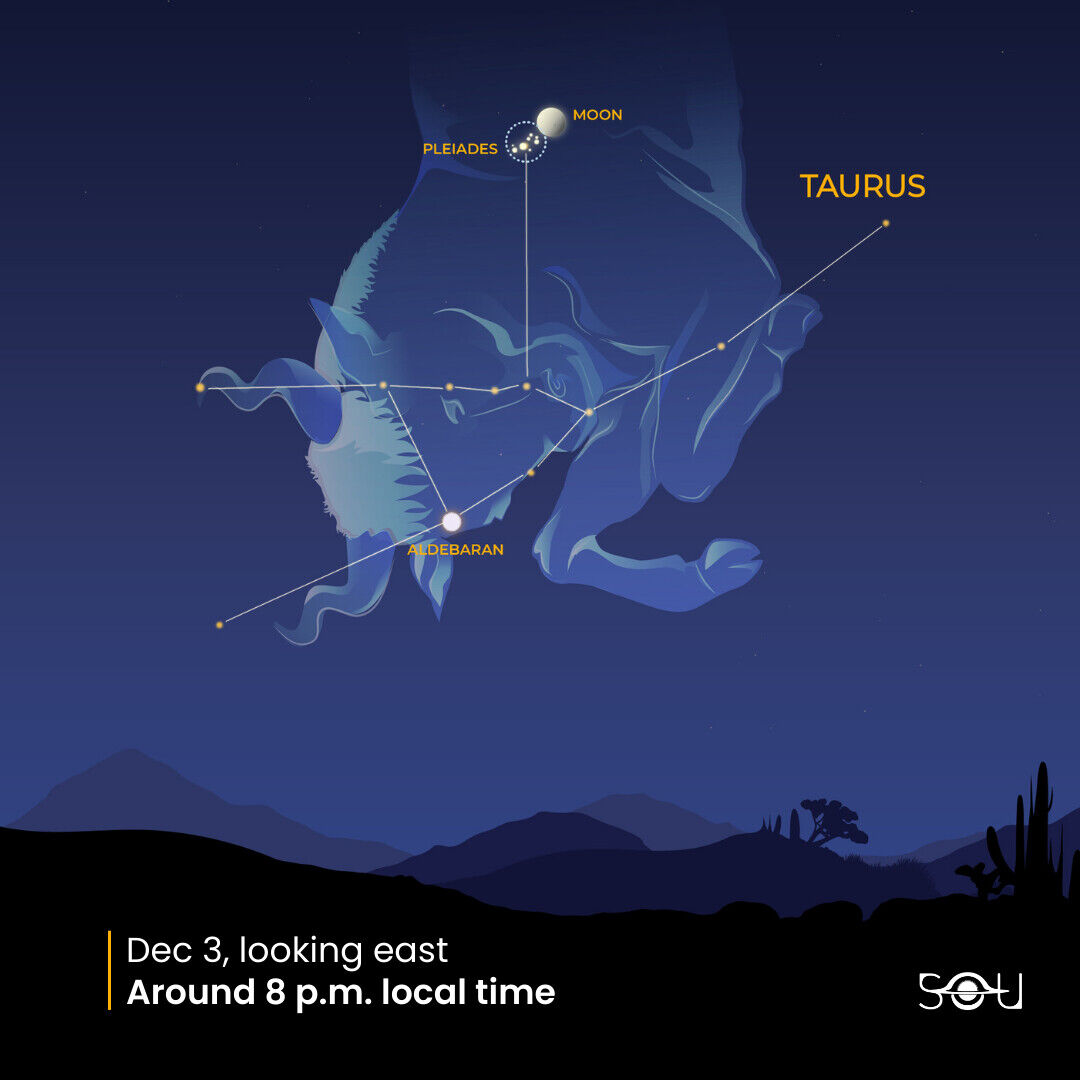
A near-full Moon will pass close to the Pleiades cluster and Uranus on December 3, 2025
On December 3, a 14-day-old Moon will glide within just one degree of the Pleiades star cluster in Taurus. The Pleiades—also known as the Seven Sisters—shine at magnitude 1.3, easily visible to the naked eye. This picturesque pairing is perfect for binoculars or wide-field photography.
December 4 – Mercury at Highest Altitude
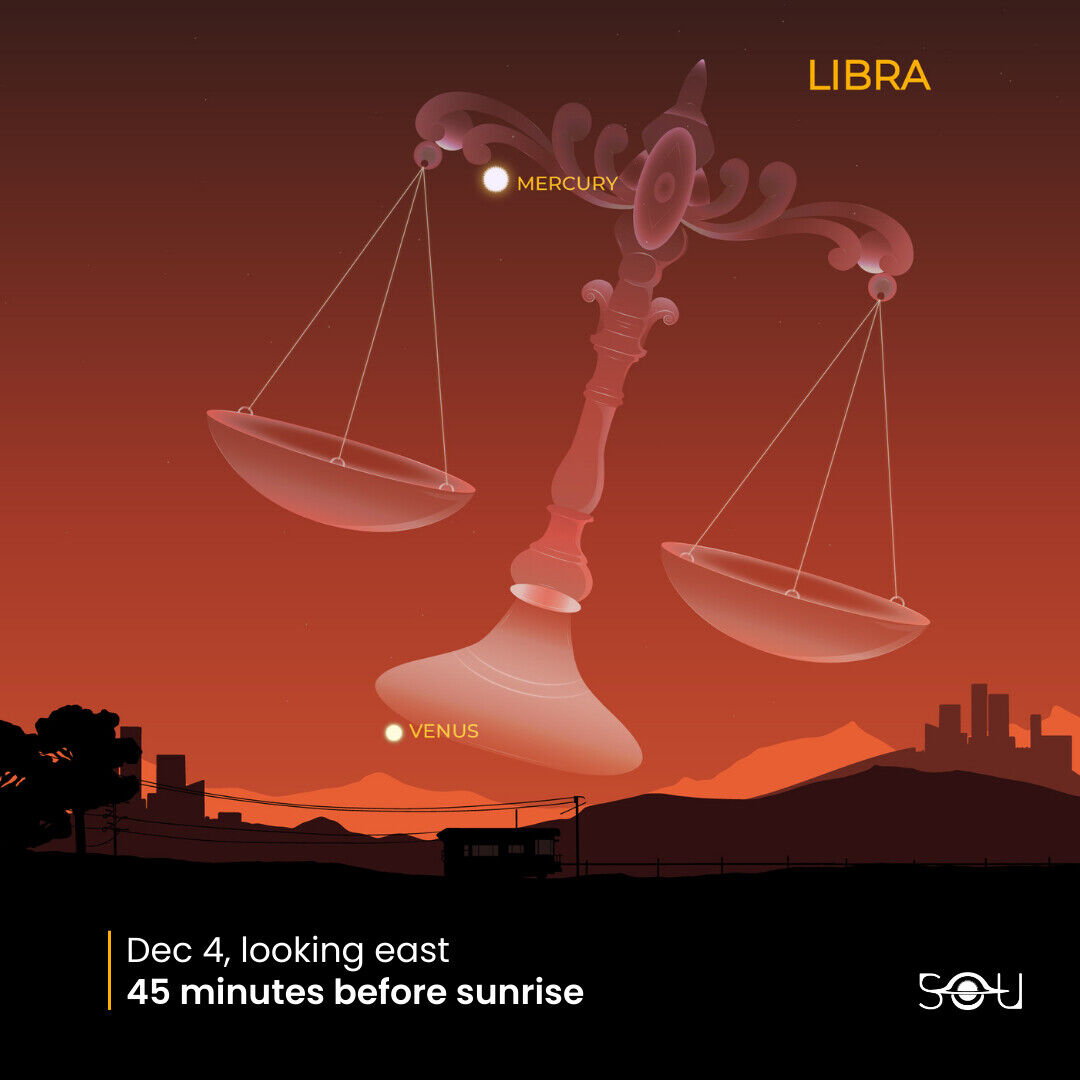
Mercury reaches its highest point in the morning sky on December 4. Visible briefly before sunrise in the east, the tiny planet glows low above the horizon. Use binoculars and a clear view to the east for your best chance to catch it before it fades into the morning twilight.
December 4 – The Last Supermoon of the Year
The Full Cold Moon on December 4 marks the final supermoon of 2025—and the third in a rare four-supermoon streak.
When the Moon turns full near perigee (its closest point to Earth), it appears up to 14% larger and 30% brighter than usual. Look east after sunset to see the year’s last luminous giant rising into the winter sky.
December 7-8 – Puppid–Velid Meteor Shower
Active from December 1 to 15, the Puppid–Velid meteor shower peaks around December 7–8. Its radiant lies in Vela, making it a Southern Hemisphere spectacle. Unfortunately, bright moonlight will limit visibility this year, but patient observers may still catch a few bright streaks near midnight.
December 7 – The Moon Meets Jupiter

Jupiter is approaching its opposition and is well up in the sky by midnight local time
Late on December 7, the Moon will pass close to Jupiter and the twin stars Castor and Pollux in Gemini. The group rises around 8:30 p.m. local time and reaches its highest point around 3:00 a.m. local time, creating a striking alignment high in the western sky by dawn.
December 9 – Monocerotid Meteor Shower
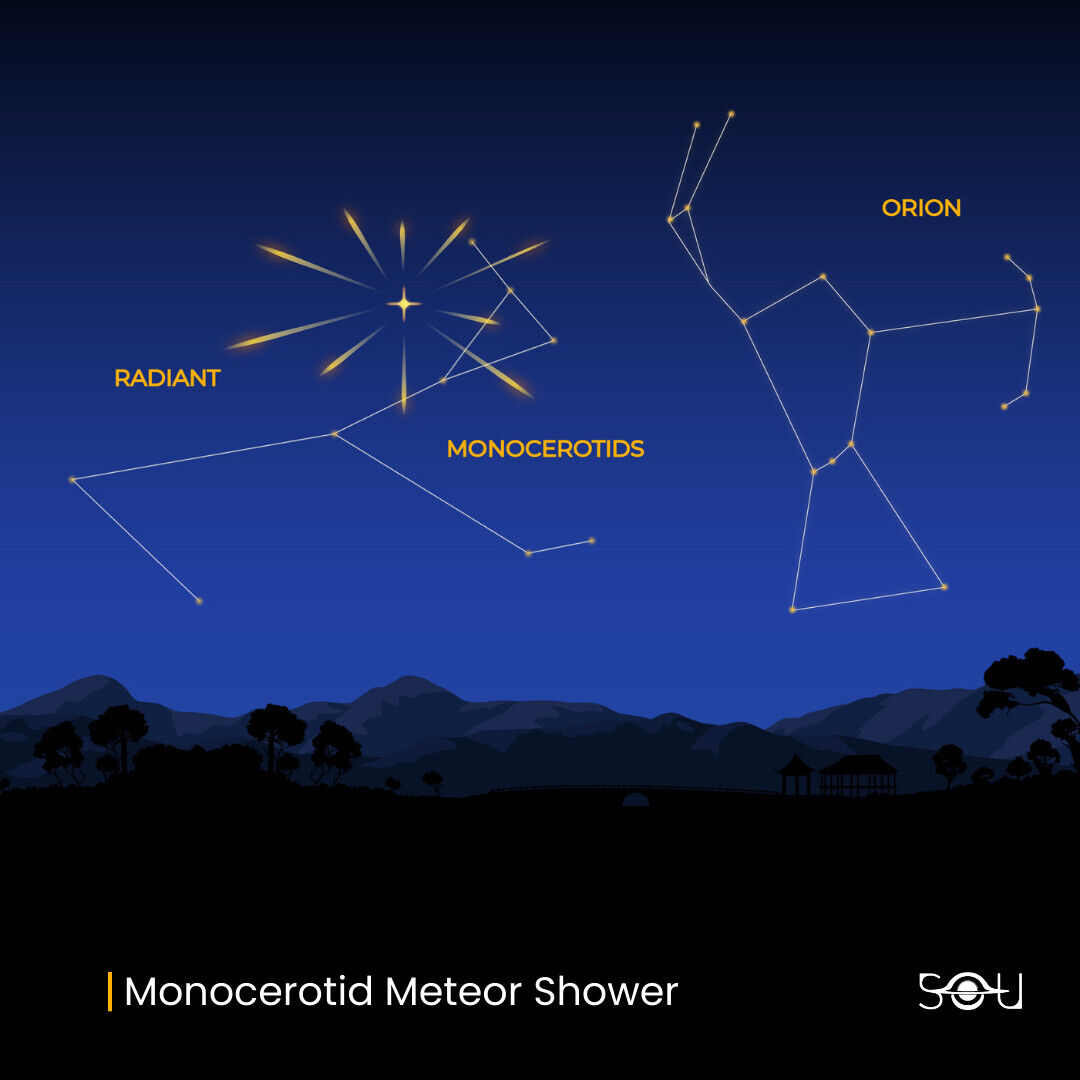
The radiant of the Monocerotid meteor shower lies in the constellation Monoceros, near Orion
The Monocerotids, active from December 5 to 20, peak on December 9. The radiant lies in the constellation Monoceros, near Orion and Gemini. This is a faint shower, producing only 2–3 meteors per hour, but worth watching for its occasional slow, graceful streaks.
December 10 – The Moon Meets Regulus
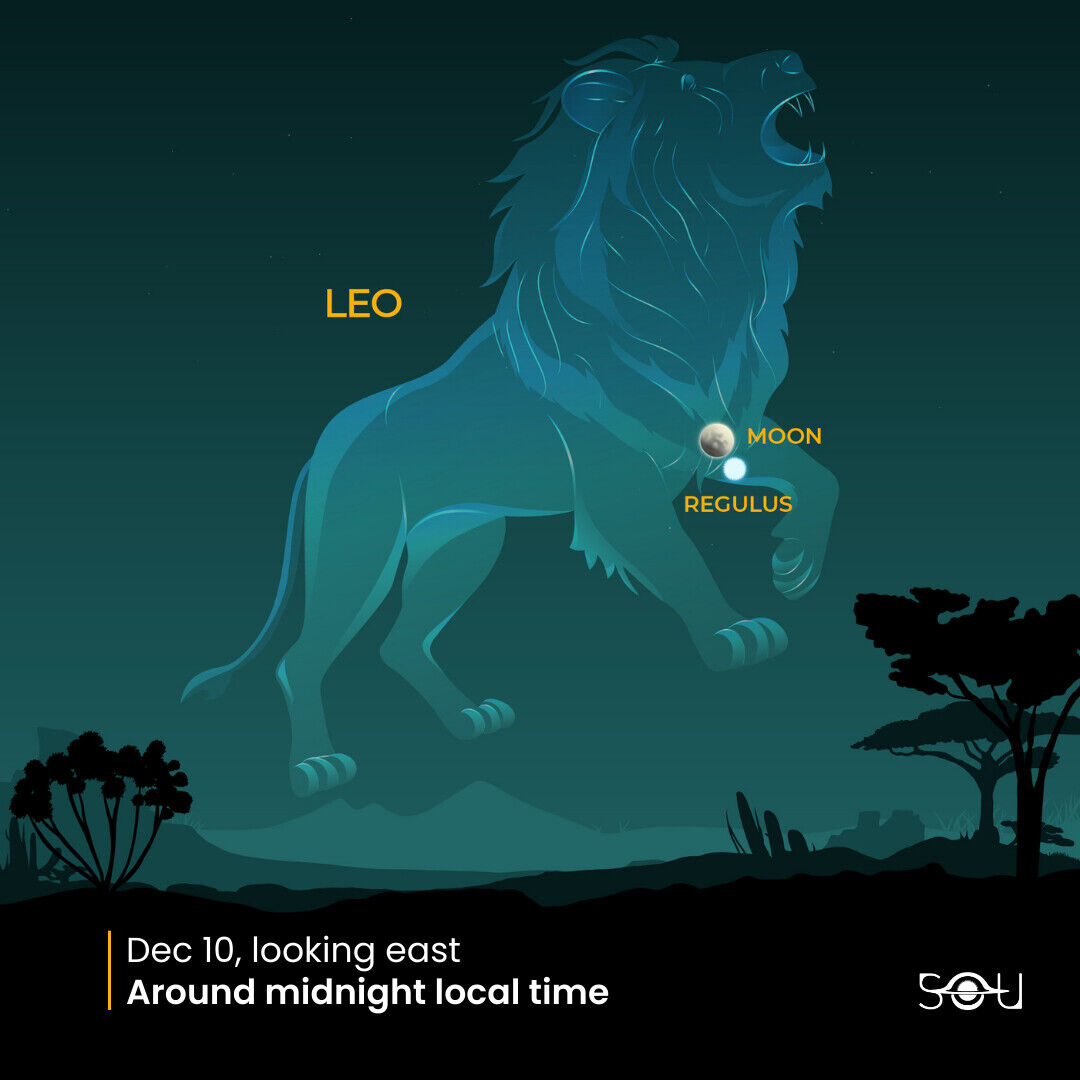
The 20-day-old Moon will pass close to Regulus, the brightest star in Leo, on December 10. The pair rises an hour before midnight, shining side by side until dawn—a great photo opportunity for long-exposure enthusiasts.
December 12 – σ-Hydrid Meteor Shower
The σ-Hydrids (Sigma Hydrids) peak on December 12, with a modest rate of 3–7 meteors per hour. The radiant lies in Hydra, best viewed from the eastern horizon after midnight.
December 13 – The Large Magellanic Cloud at Its Best
On December 13, the Large Magellanic Cloud—a dwarf companion galaxy to the Milky Way—reaches its highest point around local midnight. At magnitude 0.9, it’s easily visible to the naked eye from dark-sky locations in the Southern Hemisphere. A small telescope reveals its mottled, ghostly glow.
December 13-14 – The Geminid Meteor Shower

The radiant of the Geminid meteor shower lies in the constellation Gemini. For best views, look slightly away from the radiant point.
The Geminids, the most spectacular meteor shower of the year, will peak on the night of December 14.
Active from December 6–17, this shower can produce up to 120 meteors per hour under perfectly dark skies. Its radiant lies in Gemini, near the bright star Castor, and meteors often display vibrant colors—white, yellow, blue, red, or green.

December 2025 Night Sky Events
For best results, head to a dark site, look slightly away from the radiant, and allow your eyes 30 minutes to adjust.
December 17-19 – The Moon at Apogee and New Moon
On December 17, the Moon reaches apogee, its farthest point from Earth, appearing slightly smaller than usual. Two days later, on December 19, it turns new, vanishing in the Sun’s glare and giving stargazers dark skies for deep-sky observing.
December 21 – The Winter Solstice
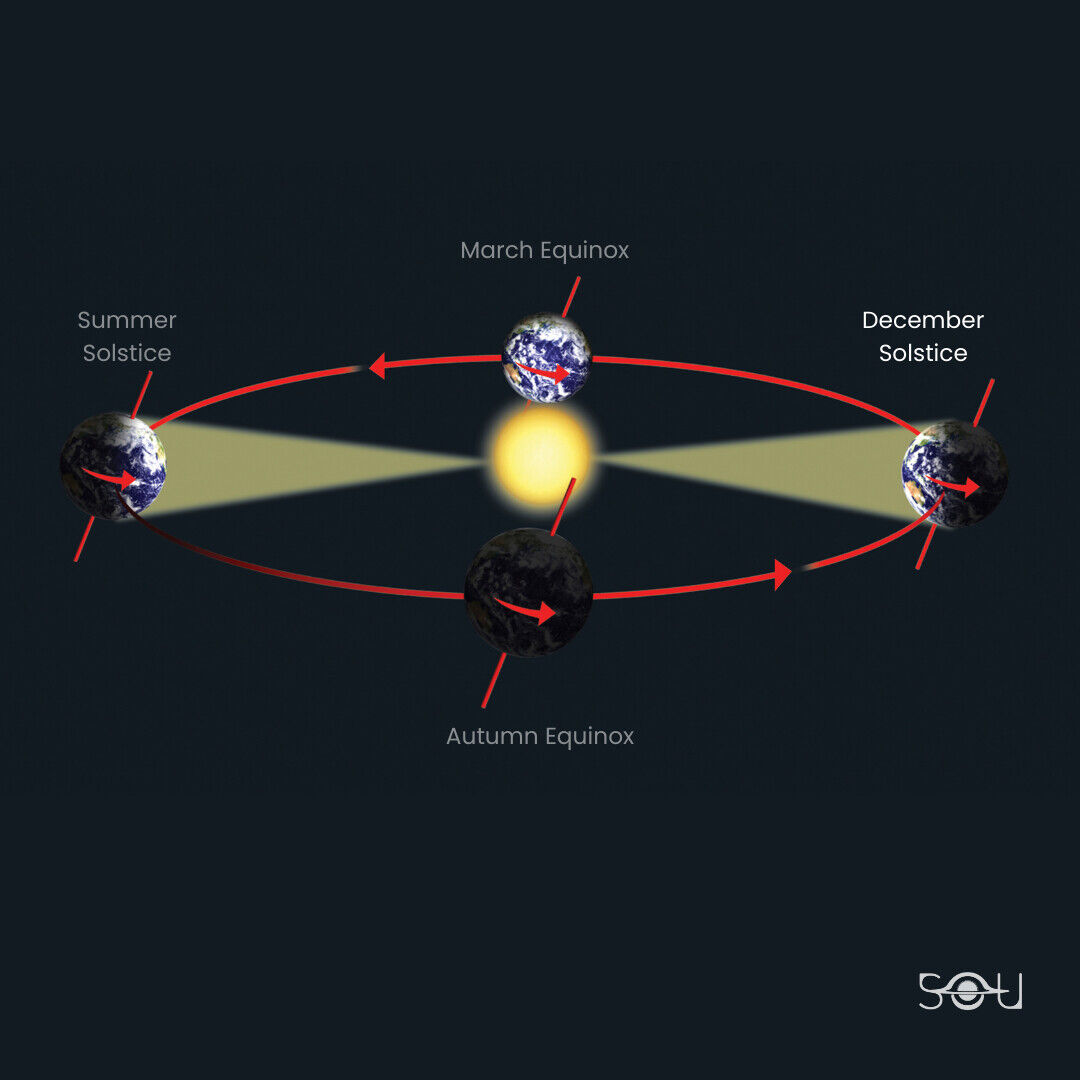
On the day of December Solstice, the Sun shines directly over the Tropic of Capricorn, marking the first day of winter in the Northern Hemisphere.
On December 21, the Sun will shine directly above the Tropic of Capricorn, marking the start of winter in the Northern Hemisphere and summer in the Southern Hemisphere. It brings the longest night of the year in the north and the shortest day in the south—an astronomical turning point celebrated worldwide.
December 22 – The Ursid Meteor Shower
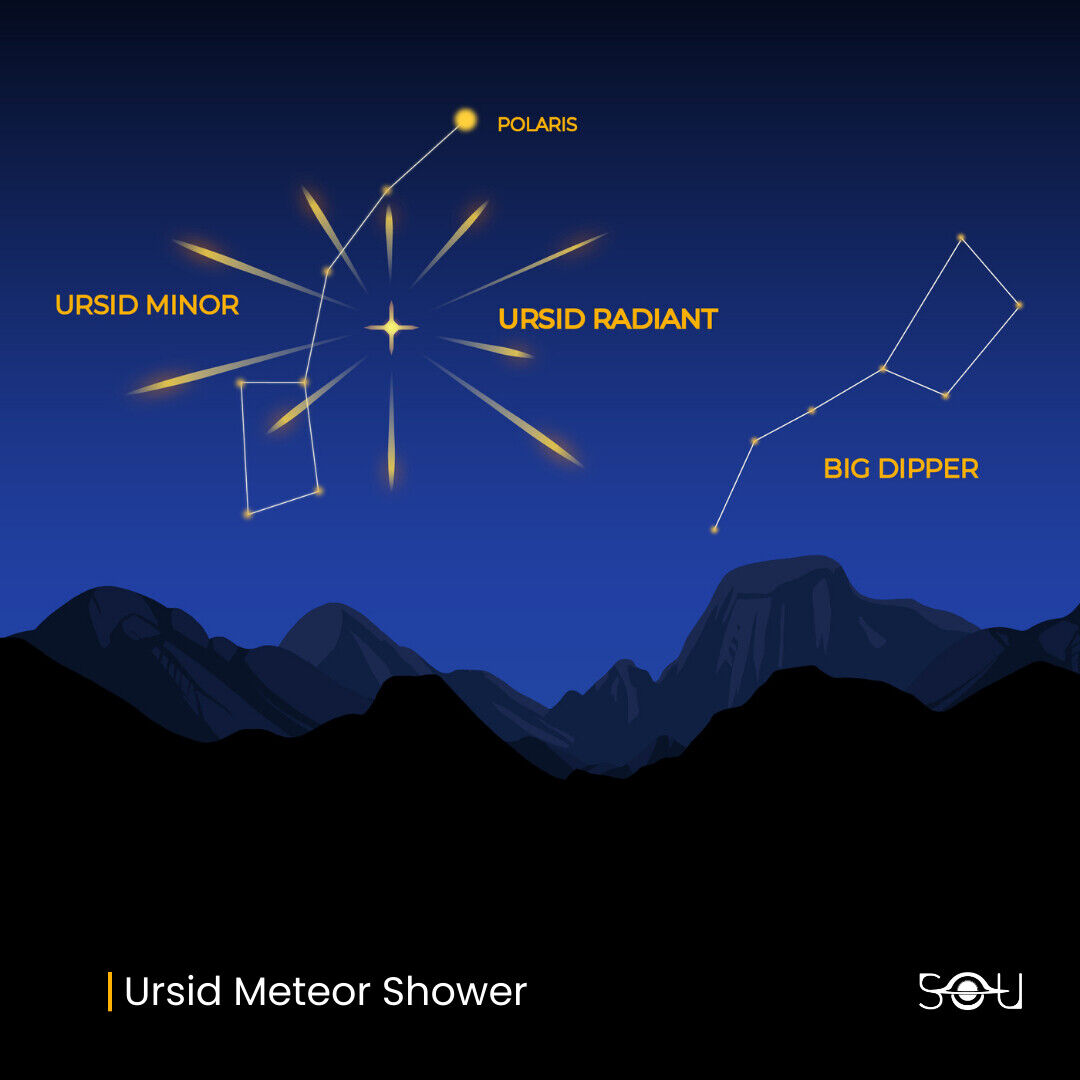
The Ursids, the final meteor shower of 2025, peak on the night of December 22–23. With rates of 10–15 meteors per hour, they’re best viewed in the early morning hours before dawn, when the radiant in Ursa Minor stands high in the sky.
December 26 – The Moon Meets Saturn
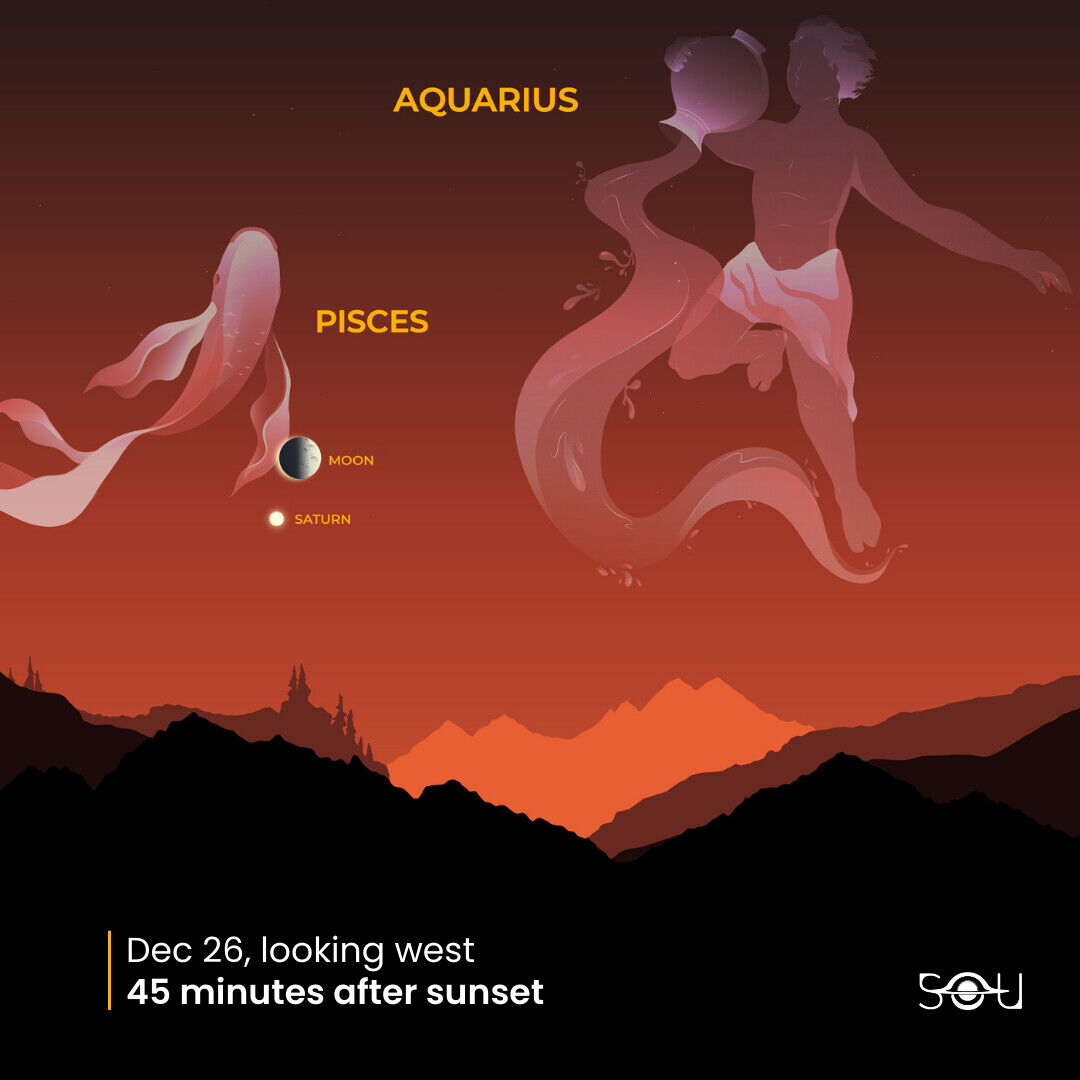
A 7-day-old waxing gibbous Moon will pass close to Saturn near the Pisces–Aquarius border on December 26. Look southwest after sunset for this elegant pairing before Saturn sets around midnight.
December 31 – The Moon Meets the Pleiades
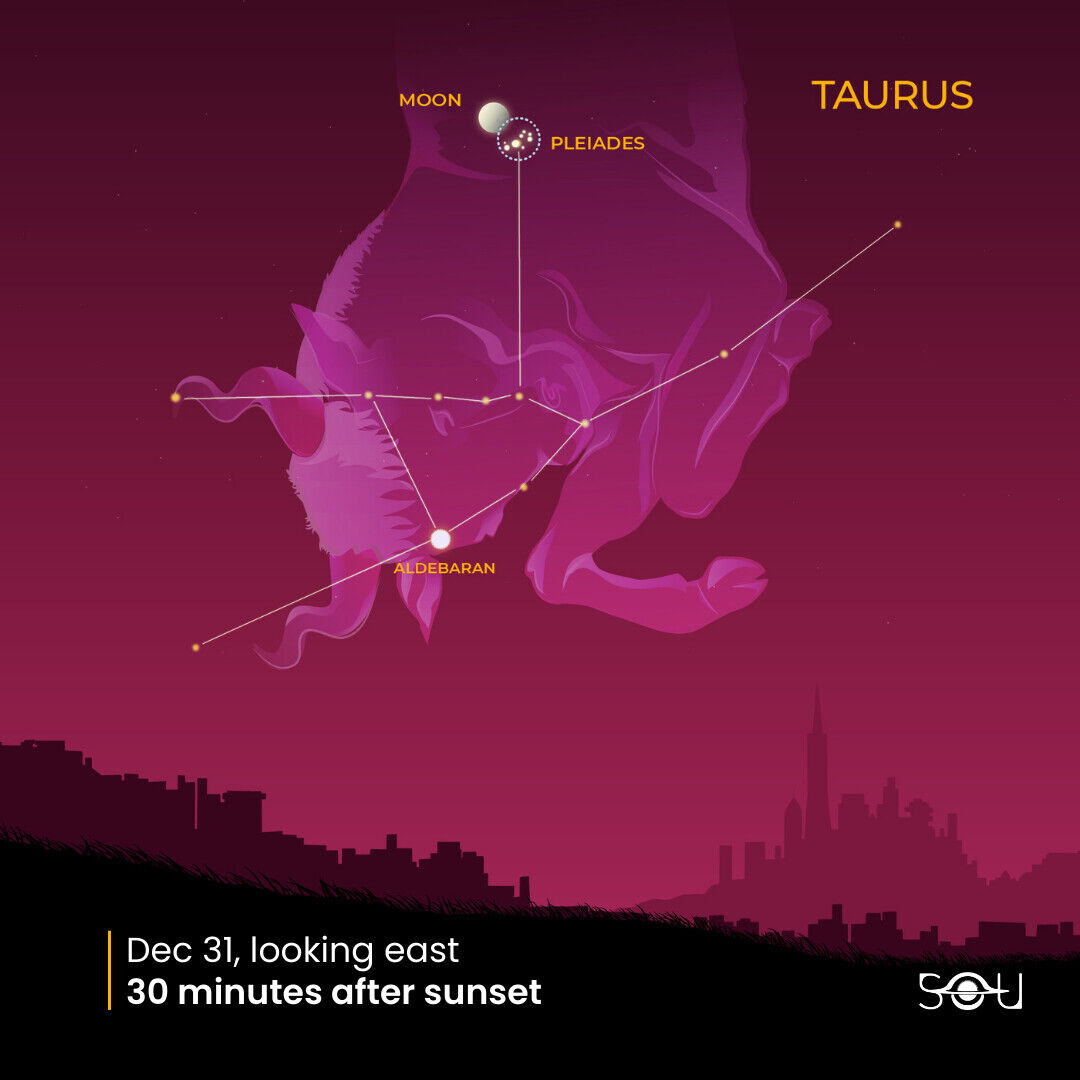
The year ends as it began—with the Moon returning to the Pleiades on December 31. The 11-day-old Moon will once again pass within one degree of the famous star cluster in Taurus, closing out 2025 with a familiar cosmic sight.
December 31 – Another Revolution Completed
As Earth completes another journey around the Sun, we’re reminded of how much wonder each orbit brings. From blazing comets and meteor storms to planetary dances and lunar brilliance—2025 was a year worth looking up for.
Happy New Year from The Secrets of the Universe!
December 2025 – Planet Round-Up
☿ Mercury
Mercury will be visible in the eastern predawn sky during the first three weeks of December. After that, it slips into the Sun’s glare and remains unobservable for the rest of the month.
♀ Venus
Venus stays completely hidden in the Sun’s glare throughout December. It will reappear late in the month and begin emerging in the western sky at dusk.
♂ Mars
Mars is currently passing behind the Sun, leaving it lost in the Sun’s glare and invisible to the naked eye for several more weeks.
♃ Jupiter
Jupiter continues to brighten as it approaches opposition, making it the brightest point of light in the night sky aside from the Moon.
♄ Saturn
Saturn remains visible until about local midnight, positioned near the border of Pisces and Aquarius and glowing with its characteristic golden hue.
♅ Uranus
Uranus sits close to the Pleiades cluster in Taurus and becomes visible shortly after sunset with the help of binoculars or a small telescope.
♆ Neptune
Neptune, having recently reached opposition, can be found near Saturn and appears as a faint blue dot when viewed through a telescope.
Happy skygazing!